

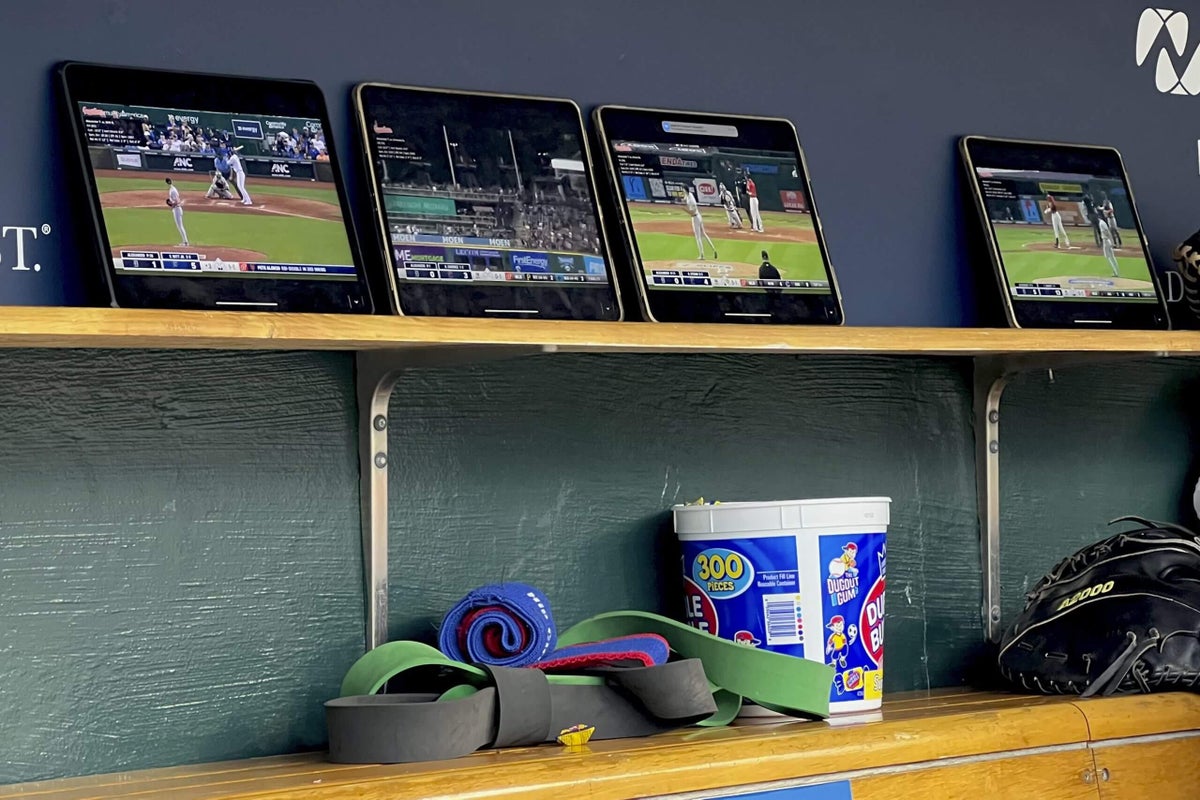
In a crackdown that has rankled some front offices across the league, Major League Baseball has effectively outlawed the growing practice of using league-provided dugout iPads to access generative artificial intelligence, which some teams had increasingly leaned upon to help shape in-game strategy
According to a commissioner’s office memo obtained by The Athletic, teams were pushing the boundaries of guidelines governing the use of technology by “in many cases” installing custom apps that expanded the use of the iPads “beyond their originally intended purpose to include recommendations regarding substitutions, pitch calling, and other in-game decisions traditionally made by players and coaches.”
As much as a third of the league used the dugout iPads for at least one of these purposes, according to people with knowledge of the technology who spoke on the condition of anonymity to discuss the issue candidly. The league memo was issued June 11 and gave teams more than a month to adjust before the ban took effect on Wednesday, in time for the start of the season’s second half Thursday
The mid-season policy change has been met with frustration by some front-office members tasked with innovation. “It’s caused quite the stir,” said one high-ranking official of an MLB team’s research and development department. But even members of more data-friendly front offices say the trend raised eyebrows within the industry because of how many decisions made by managers and coaches could be aided by or even potentially replaced by technology, such as pitch calling or player substitutions.
MLB seemed to harbor similar concerns. The league’s review ultimately found “all clubs were compliant” with the league’s rules governing sign stealing and electronic-device usage, per MLB’s memo. The tech ban therefore did not come with punishment
However, the issue proved urgent enough for the league to act mid-season in hopes of curbing the growth of these apps
Said one front office executive: “Gotta stop the cheating before there’s cheating now.”
MLB declined comment but referred to the memo, which was issued by the league’s executive vice president of baseball operations, Morgan Sword. The players’ union also declined comment
League-provided iPads were first introduced into dugouts league-wide in 2016, though their usage was more tightly regulated in 2021 after sign-stealing scandals rocked the sport
“For the first time, we’re going to be allowing players to view live in-game video via an iPad in the dugout or bullpen during the game,” former MLB executive Chris Marinak said in March 2021. “The iPads are issued by MLB and fully controlled so that the players can only use the app that we’ve put on the device. They can’t access the internet for browsing or social media or any other kind of functions. The iPads are completely locked down and monitored with the software that we have on there.”
In-game video has been and remains available but only on a delay, usually only once an inning is completed. Rules posted in every clubhouse also prohibit non-field personnel from coming into the dugout during the game, an effort to limit inputting live information into the iPads
But over time, players and teams have pushed for a loosening of some restrictions surrounding the iPads. Coaches and players wanted the ability to customize what the tablets could do for them, and the league allowed these liberties
Entering this season, the league-issued iPads provided access to data through three tabs, according to a person with knowledge of the system who spoke on the condition of anonymity to be able to speak candidly. The first contained all the MLB-provided Statcast data and multiple video angles. The second tab contained all data related to the Automated Ball-Strike system (ABS). The third tab — known across the league as the “custom tab” — housed each team’s specialized data, akin to information found in old-school, paper-filled binders. Examples include matchup info, defensive positioning and player tendencies, which teams argued were necessities.
Going forward, teams can still upload static information, which is data that would be available before first pitch, though clubs were told that anything uploaded would ultimately remain subject to review by MLB
Pitch-calling from the dugout may be at the center of this battle and is one of the usages the league appears to be targeting
The Athletic canvassed multiple players, general managers, coaches, research and development analysts and other front-office executives with knowledge of dugout iPad usage for their thoughts on the change. They weren’t authorized to speak publicly about the league’s reasoning for the change or their own teams’ use of customizable apps. A consensus emerged: some teams input information from the ongoing game to improve the generative AI models’ ability to anticipate the next pitch that would be thrown, or to recommend what should be thrown.
Jack Lambert, director of baseball operations at Driveline Baseball, an independent player development operation, said he believed pitch-calling was a logical way teams could leverage the tech
“With someone live-scoring the game, teams could chart pitch type and location to get dynamically updating game plans,” Lambert said. “Those plans could determine if their approach at the plate should change as they face the lineup a second (or) third time in the game, and could also be applied to live pitch-calling.”
While it’s unknown exactly how many teams have used the league-provided iPads for pitch-calling, the practice of calling pitches from the dugout — rather than delegating that responsibility, as is traditional — has grown. The Miami Marlins spearheaded the trend of having pitches called from the dugout, and other teams have subsequently adopted it. Multiple people briefed on the set-ups said that currently as many as six teams are making “pitch suggestions” from the dugout, as some clubs call them.
It’s unclear exactly how many teams were using the iPads with live in-game information, because teams are reluctant to talk about their innovations and lose any possible edge. But the league’s effort to change what’s visible on the tablets suggests the league was concerned
Now, teams seemingly must return to the old-fashioned way of running numbers before the game. Fans will still get to blame the human managers for strategic mistakes, at least for now
— The Athletic’s Evan Drellich, Brittany Ghiroli and Jayson Stark contributed to this report
