

More than 2,000 Americans have been sickened this summer by a microscopic parasite that contaminates fresh produce and can cause days of diarrhea, creating an unusually large outbreak that, paradoxically, may give investigators their best chance to identify its
Cyclospora is one of the hardest foodborne pathogens to trace to itst causes the illness and when symptoms appear, making it tough for those infected to remember what they ate to pinpoint the problem. Health officials are alarmed by the rapidly growing number of cases, which they say are likely undercounted because some people recover without medical care and are not tested
Advertisement
Authorities have not yet identified a specific produce grower, supplier, or type of produce responsible for the latest outbreak. But this season’s unusually high number of illnesses, now reported in at least 21 states, means more information and more patients to help identify shared foods, shopping habits and restaurant visits among those sickened to help identify determine the source
“With the number of cases we’re seeing nationwide, I would hope, and I would suspect, that we would have a pretty good idea of what are the food vehicles that are likely to be causing these illnesses,” said Frank Yiannas, a former Food and Drug Administration deputy commissioner for food policy and response
Janet Hamilton, executive director of the Council of State and Territorial Epidemiologists, which represents the state disease detectives who investigate outbreaks, said with so many cases “we know there has to be a. It’s not spread person to person.”
“We also know thelton added
Advertisement
Cyclosporiasis cases are reported year-round in the United States, but are most common during the spring and summer months, with the season generally spanning between May 1 through August 31. In the U.S., past outbreaks have been linked to various types of fresh produce, such as basil, raspberries, salad mixes, cilantro and snow peas
The national rise is being driven largely by several states reporting higher-than-average numbers of cases, while others say their totals remain near seasonal norms
Michigan and Ohio are reporting the largest numbers. Michigan has seen illnesses climb to more than 1,200 cases – roughly 25 times the number the state typically records in an entire year. Michigan is now posting daily updates as investigators search for theehydration, officials said
Last month, Michigan officials received more than 170 reports of the disease in its southeastern region along the border with Ohio in nine days. The state sent health care providers an alert, noting the “unusual number of cases” authorities identified in little over a week
Advertisement
“There’s greater awareness so more people are watching for symptoms, more people are getting tested,” said Natasha Bagdasarian, the chief medical executive for Michigan. “Cyclospora is not something that is routinely tested for when someone has GI symptoms, and as a result, I think we’re picking up more cases.”
In Ohio, at least 28 people have been hospitalized, state health authorities said. As of July 8, Ohio is reporting 477 cases state and county officials said, with most occurring since June 20
“This is a serious illness that can cause dehydration and require people to seek emergency medical care, and it should be taken seriously,” Ohio health director Bruce Vanderhoff said
What is Cyclosporiasis and what are the symptoms?
Cyclosporiasis is an illness caused by the cyclospora parasite that infects the small intestine and lives inside a human host for part of its life cycle. It is not usually life-threatening, and usually causes watery diarrhea with frequent and sometimes “explosive” bowel movements, according to the Centers for Disease Control and Prevention. People can become infected by consuming food or water that contains the parasite. It is not transmitted human to human. Not everyone who gets infected experiences symptoms.
Advertisement
People may be at an increased risk for infection when living or traveling in tropical or subtropical regions of the world where the parasite is regularly occurring in an area or region
But unlike other gastrointestinal illnesses where vomiting may be the predominant symptom, this infection is characterized predominantly by diarrhea, especially watery diarrhea, Bagdasarian said. Other symptoms may include abdominal cramping, some nausea and maybe some low-grade fevers
Other gastrointestinal illnesses may resolve in a few days, but symptoms of cyclosporiasis, if untreated, can last for weeks
“So folks can feel somewhat better, and then, again, feel very unwell and it can last for several weeks,” Bagdasarian said
Advertisement
A delay in diagnosis can add to delay in seeking medical care, she said
The illness usually is treated with the antibiotic trimethoprim-sulfamethoxazole, also known as Bactrim, Septra, or Cotrim
What experts recommend to lower risk
Until the culprit or culprits behind the recent wave of illnesses is identified, health officials say there are ways to reduce risk
Wash hands with soap and water before and after handling or preparing raw fruits and vegetables
Wash all fruits and vegetables thoroughly under running water before eating, cutting or cooking
Scrub firm fruits and vegetables, such as melons and cucumbers, with a clean produce brush
Advertisement
Michigan has provided more specific recommendations for entities in its southeastern region where most cases have been reported. They note that most foods are safest when cooked
Lettuce/leafy greens: buy whole heads of lettuce (rather than prewashed, bagged lettuce or salad mixes), throw away the outer 2–3 layers of leaves and wash the inner leaves under running water
Cilantro, basil: Wash thoroughly under running water, separating the leaves
Green onions: Trim the root end and remove the outer layer, wash thoroughly under running water
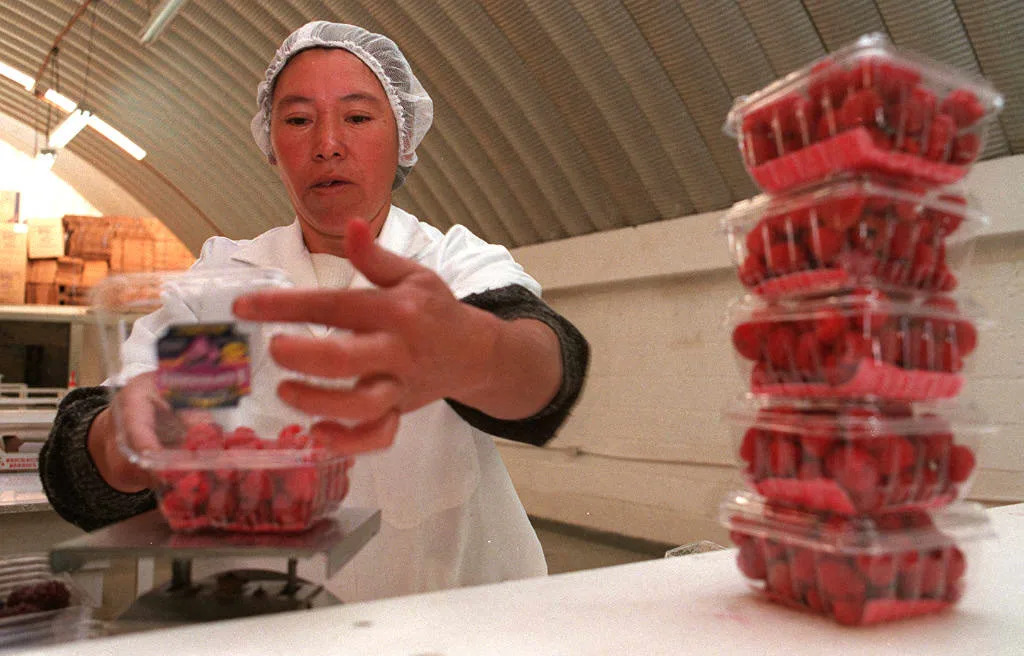
Raspberries: Their bumpy surface makes them especially hard to clean; the parasite can hide in the tiny crevices. Consider frozen raspberries as an alternative (freezing may reduce but does not guarantee elimination of the parasite)
Snow peas: Wash under running water and rub the surface
Why this outbreak is elusive
Understanding the full scope of how many people have fallen ill is difficult. Case counts on the CDC’s webpage lag behind state figures because some states report probable and confirmed cases. Some states delay sending information until case investigations are completed
Data on the CDC’s website, which will now be updated every two weeks, reflect mostly confirmed cases, Blau said. The agency’s most recent numbers, as of June 16, show 145 cases were reported in people who became sick after eating food in the U.S. and did not report any travel during the 14 days before they got sick, the CDC said
Advertisement
Tracing thencubation period that delays the appearance of symptoms and can make people sick for up to two weeks. Diagnosis also requires a specific test, not one that doctors typically order when patients complain of gastrointestinal illnesses
“Compared to other foodborne outbreaks, the symptoms show up anywhere from two days to two weeks, where some of the more common foodborne outbreaks, the duration between exposure and illness is one or two days,” said Dianna Blau, the acting chief of CDC’s parasitic diseases branch
Labor-intensive investigations must rely on patients’ recall of what they ate going back as far as two weeks. They need to remember what groceries they bought (including specific brands), how they have handled their produce, and which restaurants or fast-food chains they ate at. Michigan authorities are analyzing records of people’s purchases tracked through supermarket loyalty cards to help with their investigation
Genetic analysis of the pathogen is also more difficult. For outbreaks caused by more common foodborne bacteria and viruses, scientists are able to obtain complete genetic fingerprints to determine whether patients were infected by the same organism, which helps trace outbreaks to a common source
Advertisement
Cyclospora’s genetic material “is a lot larger” and the genetic fingerprinting only captures part of the material, said Blau. “And if you have less information, obviously, it’s harder to have the complete picture.”
Tracing foodborne outbreaks is complicated because the U.S. food distribution system is so complex that a single supplier may provide different types of produce to restaurants, fast-food chains and grocery stores
“If there was contaminated material on the shelves a couple of weeks ago, it may have gone to a variety of locations,” Bagdasarian said. “So it’s less about finding one smoking gun and potentially more about finding several. So all of this makes the investigation particularly challenging.”
Often, a particular food time may not have been consumed by itself, but incorporated into a variety of foods, making it difficult for ill individuals to recall. Last year, a cyclospora outbreak that sickened dozens was linked to parsley that was part of a salad, Blau said
– – –
Graphics:
Where Cyclosporiasis outbreaks have been reported in 2026
Related Content
