

Italy Stands with Greece, Spain and More as EU Rejects Airport Plea to Suspend Biometric EES Despite Massive Border Delays and Threat of Summer Travel Chaos – Travel And Tour World
Italy Stands with Greece, Spain and More as EU Rejects Airport Plea to Suspend Biometric EES Despite Massive Border Delays and Threat of Summer Travel Chaos
By: Debomita Dutta
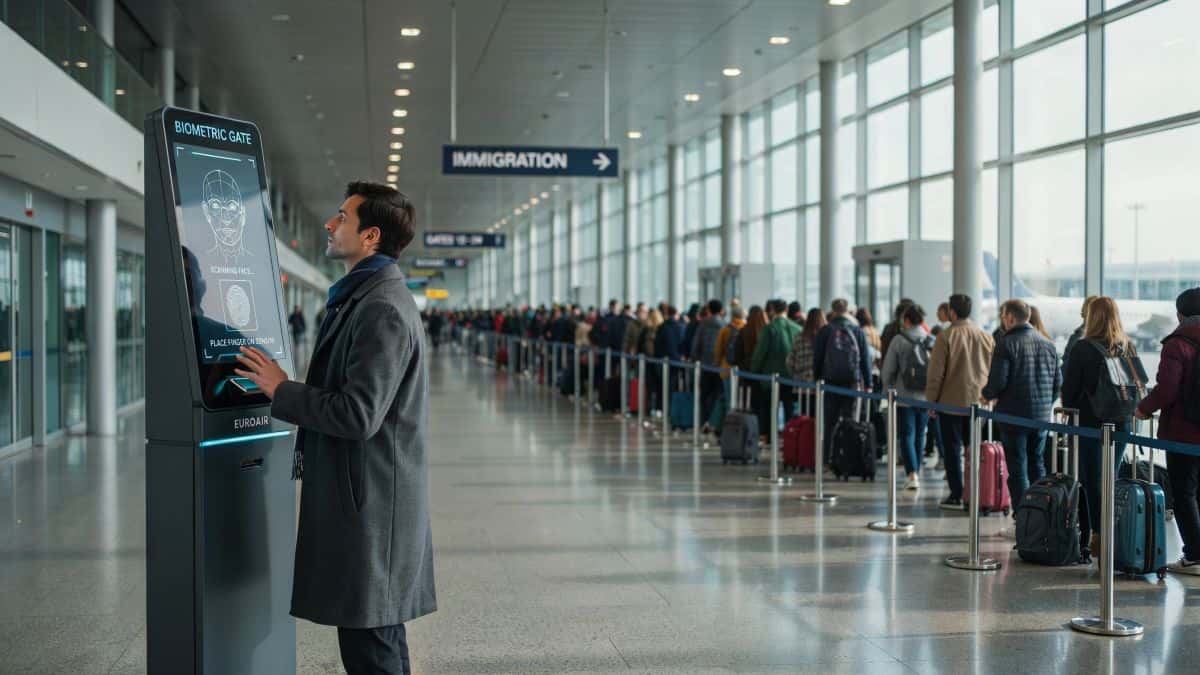
Image generated with Ai
In Italy, Greece, Spain, and across the Schengen Zone, the European Union is actively enforcing its mandatory Entry/Exit System (EES) across 1,500 external checkpoints, officially rejecting high-stakes petitions from the International Air Transport Association (IATA) and ACI EUROPE to freeze the biometric rollout until mid-2027. Despite peak summer travel chaos and processing wait times spiking up to 5 hours at high-density tourist hubs, the European Commission maintains that a suspension is logistically unviable. To prevent total operational collapse, Mediterranean gateways are dynamically bypassing the system via emergency manual fallbacks, while the companion ETIAS traveler pre-authorization system has been officially delayed into 2027. According to official border operational data tracked by eu-LISA and Frontex, the automated network has successfully registered over 110 million journeys and intercepted 44,500 illegal entry attempts, shifting accountability for the ongoing terminal delays directly onto local airport infrastructure deficits and acute staffing shortages rather than central software performance.
This comprehensive analysis details the systemic bottlenecks shifting across Mediterranean transit corridors, the administrative decoupling of ETIAS, and the critical pre-flight compliance protocols international travelers must adopt to navigate Europe’s newly digitized external borders
Advertisement
Modernizing Border Control
The implementation of the EES officially concluded its core transitional phase on April 10, 2026, shifting the territory into a mandatory compliance framework. Developed under the technical oversight of the European Union Agency for the Operational Management of Large-Scale IT Systems (eu-LISA), this security protocol targets identity theft, undocumented migration, and border vulnerabilities by gathering high-resolution digital facial profiles and four-fingerprint digital scans from non-EU visitors upon arrival.
- Mandatory Biometric Logs: Captures facial imagery and four distinct fingerprint scans during initial entry setup.
- Extended Record Lifecycles: Stores personal profiles securely within the central eu-LISA mainframe for a three-year period.
- Elimination of Physical Stamps: Replaces human-read ink passport logging with automated, cross-border digital time stamps.
- Schengen-Wide Integration: Synchronizes data instantly across all 29 member states to monitor multi-country itineraries.
| Metric | System Profile | Target Population |
| Managing Agency | eu-LISA | Non-EU / Third-Country Nationals |
| Legal Stay Limit | 90 Days per 180-Day Window | Visa-Exempt & Visa-Required Visitors |
| Infrastructure Base | 1,500 External Checkpoints | Peak Processing Volume: Millions Daily |
EU Defiantly Rejects Airport and Airline Pleas to Freeze the EES
The European Commission has officially rejected a joint, high-stakes petition from ACI EUROPE (Airports Council International), Airlines for Europe (A4E), and the International Air Transport Association (IATA) to freeze the EES rollout until mid-2027. Despite warnings from top aviation executives—including Fraport CEO Stefan Schulte, who stated that EES queue management is what “keeps airport CEOs across Europe awake at night”—the EU maintains that a full suspension is logistically impossible. EU home affairs officials note that out of 1,500 external border checkpoints, only roughly 20 are experiencing critical structural pressure, making an all-encompassing system pause legally unnecessary.
Advertisement
- Logistical Chaos of Disabling Data: The EU warns that pausing the system selectively would result in fragmented traveler records, leaving passengers logged as “entered” but never “exited.”
- Security Commitments Overriding Convenience: Built to eliminate loopholes exposed by historical European security breaches, the system has already tracked 110 million journeys and successfully flagged over 44,500 illegal entry attempts.
- Refusal of Summer Extension: The legislative window permitting local airports to pause automated checks during extreme peak bottlenecks features a strict sunset clause ending in September 2026.
- Accountability Shifted to Local Hubs: EU Home Affairs Commissioner Magnus Brunner explicitly shifted accountability away from central software, blaming local airport infrastructure deficits and local staffing shortages.
Italy Suffers Major Transit Delays as Flight Departures Sink
Italian aviation hubs are facing intense processing bottlenecks under the strict biometric rules. Industry data revealed that processing times for non-EU travelers jumped by up to 70% at major gateways like Milan Linate and Milan Bergamo, causing travelers to miss tight flight connections. While Rome Fiumicino managed slightly better due to its greater initial kiosk installation footprint, the structural layout of legacy terminals has struggled to accommodate the prolonged 60-to-90-second enrollment sequence required for each first-time visitor.
- Severe Processing Backlogs: Milan Linate reported an incident involving over 100 passengers stranded simultaneously at a single control line.
- Airlines Issue Warning: Major low-cost carriers like Ryanair and easyJet issued formal alerts regarding severe terminal queue risks.
- Discretionary Operational Relief: Italian border officials are utilizing temporary, informal policy adjustments to manage terminal overflow.
- Infrastructure Space Deficits: Legacy terminal architecture cannot easily expand to host mandatory physical biometric hardware installations.
| Target Airport | Average Extra Processing Time | Primary Affected Passenger Demographics |
| Milan Linate (LIN) | +70% per passenger | UK Business & Premium Leisure Travelers |
| Milan Bergamo (BGY) | High-density queue spikes | Budget Holiday Passengers |
| Rome Fiumicino (FCO) | Fixed 1–2 hours at peak | International Long-Haul Arrivals |
Greece Halts Biometric Collection to Shield Vital Tourist Income
Faced with severe terminal bottlenecks and a threat to its vital summer tourism sector, Greece took decisive action at its air borders. Greek airport administrators, including executives at Fraport Greece, have called out fundamental structural flaws in the software mechanics. To prevent total operational collapse during intense arrival banks, Greece has repeatedly leveraged emergency fallback provisions, temporarily suspending biometric data collection for specific international arrival cohorts and reverting to traditional manual passport inspection methods.
Advertisement
Advertisement
- Unilateral Policy Freeze: Greek authorities suspended biometric tracking protocols for select foreign visitors during peak hours.
- Island Gateway Protection: Prioritized traffic flow at high-volume holiday destinations including Crete, Rhodes, and Corfu.
- Mitigated Terminal Congestion: Kept passenger wait times low across regional airports lacking automated kiosk installations.
- Manual Verification Fallback: Reverted immigration checkpoints to standard physical documentation processing during traffic surges.
| Border Station | Operational Stance | Local Peak Traffic Factor |
| Heraklion International (HER) | Partial Manual Fallback | High-density seasonal charter waves |
| Rhodes International (RHO) | Biometric Suspended on Peak Days | Intensive weekend leisure arrivals |
| Athens International (ATH) | Hybrid Checkpoint Enforcement | Consistent international long-haul connections |
Spain Faces Airport Overcrowding at High Volume Coastal Hubs
Spain’s approach to the digital transition has created a highly variable border experience for international arrivals. The nation adopted a complex hybrid operational model, dynamically toggling between biometric data capture and manual documentation processing based on live crowd densities. This strategy has concentrated severe processing delays at major leisure travel hubs like Málaga-Costa del Sol and Alicante-Elche, where the overwhelming majority of incoming international flights carry third-country leisure passengers requiring full enrollment.
- Dynamic Hybrid Operations: Checkpoints alternate between biometric logging and manual stamping based on live passenger volume.
- High Risk Target Locations: Identified Málaga and Alicante as the highest-risk airports for extreme terminal delays.
- Aviation Sector Pressure: Airport gate systems crashed repeatedly under high-volume data synchronization demands during trials.
- Escalated Connection Risk: Prolonged queues disrupted regional transit lines and pushed airport wait times up to 3 hours.
| Critical Airport Hub | Primary Traffic Profile | Operational Risk Classification |
| Málaga-Costa del Sol (AGP) | 90%+ Non-EU Leisure Traffic | Extremely High Queue Risk |
| Alicante-Elche (ALC) | Dense UK/International Leisure | High Congestion Warning |
| Palma de Mallorca (PMI) | Massive Seasonal Holiday Waves | Variable Peak Delays |
The Road Ahead for the European Travel Information and Authorization System
The administrative friction surrounding the EES rollout has caused a major shift in the deployment schedule for the European Travel Information and Authorization System (ETIAS). To prevent a complete breakdown of airport infrastructure, eu-LISA and the European Commission officially decoupled the two initiatives, pushing the ETIAS launch window out to late 2026 and early 2027. This decision provides border authorities with a necessary operational buffer to stabilize physical biometric checkpoints before introducing a mandatory pre-travel visa waiver system.
- Mandatory Pre-Travel Screening: Requires visa-exempt non-EU citizens to secure online travel clearance prior to boarding.
- Decoupled System Deployment: Pushed the official operational launch timeline into 2027 to protect airport infrastructure.
- Scheduled Timeline Evaluation: The eu-LISA governing board will reconvene in September to establish a final launch schedule.
- Strict Anti-Fraud Warnings: Government bodies advise travelers that any entities currently selling ETIAS approvals are fraudulent.
| Operational Phase | Anticipated Launch Window | Fee Structure | Validity |
| Policy Review Meeting | September 2026 | N/A | N/A |
| Target Operational Launch | 2027 Delayed Window | €20 per application | 3 Years (or until passport expiry) |
Top 5 EU Nations Facing Severe Border Congestion This Summer
While the European Commission plays down systemic failures, real-world airport data shows localized infrastructure bottlenecks concentrating around highly specific geographic corridors. Low-cost carriers like Ryanair have identified specific flight hubs where processing delays are causing extensive disruption. The following five nations represent the highest risk zones for international passenger congestion during the current peak summer travel wave
- Spain (Extremely High Risk): Severe delays are actively concentrated at major coastal gateways including Málaga (AGP), Alicante (ALC), Palma de Mallorca (PMI), and Tenerife South (TFS).
- Italy (High Risk): Regional airport networks face severe backlogs, with Milan Bergamo (BGY) and Milan Linate (LIN) experiencing processing spikes.
- France (High Risk): Secondary hubs handling heavy international low-cost traffic, such as Paris Beauvais (BVA), report significant terminal perimeter congestion.
- Greece (Variable Risk): Holiday transit hubs managed by Fraport Greece have repeatedly reverted to manual checks under emergency rules to clear packed queues.
- Poland (Moderate to High Risk): Cultural tourism hubs like Kraków Airport (KRK) are reporting unseasonably long processing lines at external Schengen entry desks.
Everything Travelers Traveling to the EU Need to Keep in Mind
For non-EU passport holders—including citizens of the United States, United Kingdom, Canada, Australia, and New Zealand—the standard two-hour pre-flight arrival buffer is officially obsolete. Because first-time biometric registration requires dynamic facial mapping and physical fingerprint logging, processing time per traveler has increased nearly fourfold compared to manual ink stamping. Passengers must actively adjust their transit strategies to avoid missing flights or getting stranded due to systemic border delays.
- Re-evaluate Layover Windows: Ensure a minimum three-to-four-hour connection window when booking multi-leg journeys that require clearing immigration at a primary Schengen hub.
- Carry Vital Supplies in Hand Luggage: Given documented queue spikes of up to five hours, always pack necessary medications, electronics chargers, and snacks in your carry-on bag.
- Utilize Official Pre-Registration Apps: Download approved mobile pre-registration applications (such as those deployed by Sweden and Portugal) to pre-load biographical data before hitting the terminal line.
- Understand Rebooking Risks: Because summer flight capacities are operating near 100%, missing a connecting flight due to border delays could leave you stranded for multiple days before an empty seat opens.
In conclusion, Italy stands with Greece, Spain and More as the EU rejects the airport plea to suspend biometric EES, despite massive border delays and the acute threat of summer travel chaos. Brussels remains defiant because a selective freeze would trigger fragmented data tracking across Schengen zones, creating worse administrative gridlock than the localized bottlenecks. While airlines warned of terminal operational collapses, central authorities successfully logged over 110 million seamless journeys, proving system viability. Consequently, European officials are holding regional transit hubs accountable, forcing destination gateways to resolve infrastructure deficits locally rather than delaying the continent’s critical digital border evolution.
Advertisement
Tags: Biometric EES, EU border delays, summer travel chaos
Advertisement
Advertisement
This content is protected under the Copyright Act. Unauthorized scraping, AI extraction, reproduction, or republication is strictly prohibited. Read ourCopyright Policy.
Follow Travel And Tour World in Google News


PARTNERS






REGIONAL NEWS
Europe

Hungary Overpowers Czech Republic, Netherlands, Austria, Italy and More as Budap
Friday, July 10, 2026

Croatia’s Lošinj Hotels & Villas Strengthens Mediterranean Luxury Appeal
Friday, July 10, 2026
America

Nigeria Redirects US-Based Visa Applicants as OIS Services Suspension Shifts Tra
Friday, July 10, 2026

United States American Express Moves to Acquire TheFork from Tripadvisor for $70
Friday, July 10, 2026
Middle East
Burj Khalifa Joins the World’s Most Iconic Landmarks in WTTC’s Seven
Friday, July 10, 2026
Japan Eases Travel Risk Advisories for Saudi Arabia, UAE and Qatar as Business T
Friday, July 10, 2026
Asia

Tokyo Introduces New Hotel Tax for International Travellers from 2027: Here̵
Friday, July 10, 2026

Japan Accommodation Labor Shortage Deepens as International Tourism Reaches New
Friday, July 10, 2026
© 2026 Travel And Tour World. All Rights Reserved.
Copyright Policy
We use cookies on our website to give you the most relevant experience by remembering your preferences and repeat visits. By clicking “Accept”, you consent to the use of ALL the cookies.Do not sell my personal information.
Settings
Manage consent
X
