

One question has come up a lot for Sean Feeney: “Where will you open your first restaurant outside of New York?”
As the owner of nine restaurants — eight in Brooklyn — he has spent a decade building a brand in and around the city. The question of where to open next is daunting in the culinary world, with the focus often on cities like Las Vegas and Los Angeles, or inter<a href="https://todaytrendnews7.com/man-killed-in-houston-ice-shooting-was-not-target-lawmaker-says-national/” title=”Man killed in Houston ICE shooting was not target, lawmaker says – National”>national locales like Dubai. Then, over a coffee in 2022 with a colleague from his finance days, Feeney learned about a major project in Utah that could be a good fit
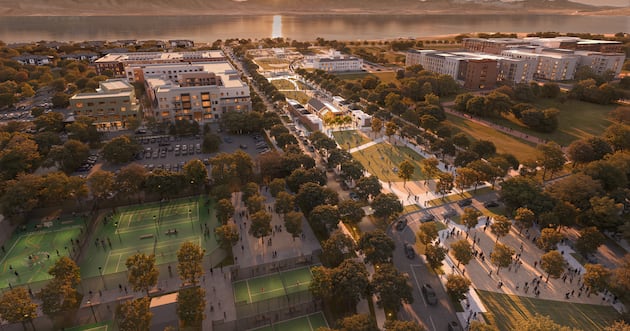
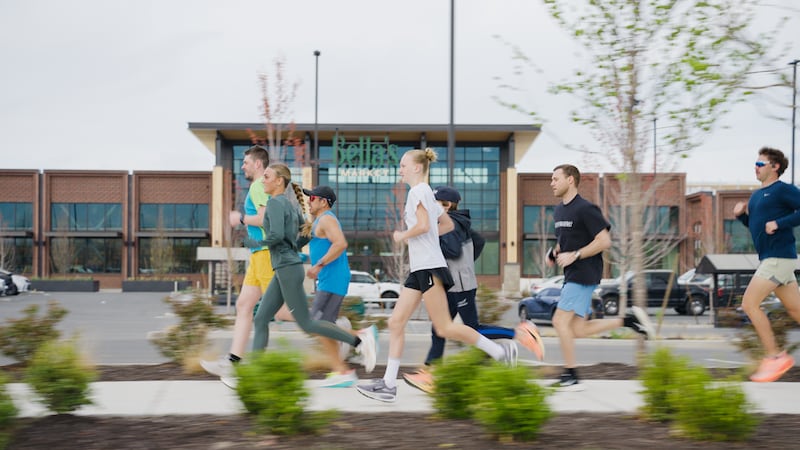
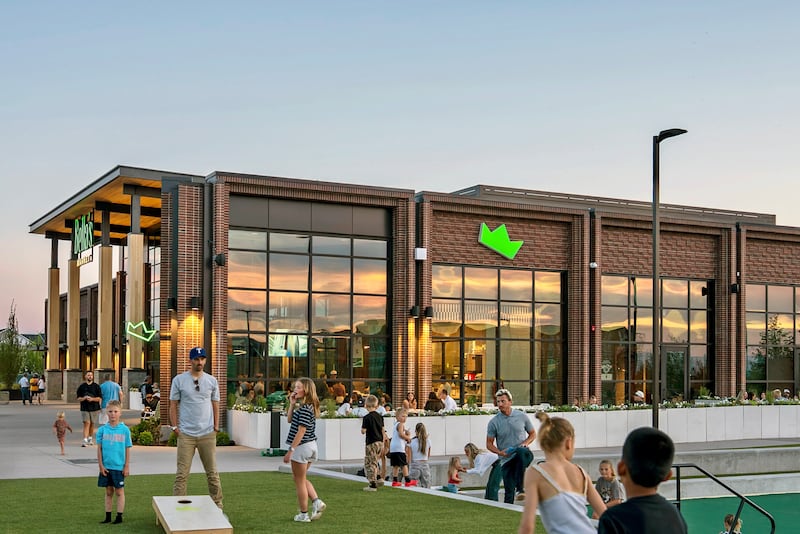
Utah City is a development within Vineyard that boasts a walkable, community-driven, sustainable design. In early May 2026, Feeney opened Fini Pizza with a crowded event in the heart of the new neighborhood. He watched the community come together and line up to try his food, mimicking the energy he experienced 10 years ago during his first restaurant opening in Brooklyn
Feeney’s team of 35 employees was hired in two weeks and left him impressed, even coming from a city known for culinary talent. “They are inherently hospitable,” he says, noting that six of his Utah team are in culinary school at Utah Valley University
Opening put them among the earliest businesses to set roots within the ambitious community project. Three years ago, the space looked very different
“It was 800 acres of dirt. And I stood there with … all the partners in Utah City with all these renderings of what it was going to be like and I really had no idea,” Feeney says, remembering a 2023 visit. “I saw these beautiful mountains, and I thought if we can create the same brand of hospitality and pizza that we have in Brooklyn while looking at the mountains, it would be amazing.”

Since 2019, developers with the construction company Flagship Homes have been partnering with the Vineyard municipality, talking to urban planning experts and breaking ground on an ambitious project that aims to refocus daily life around healthy living
The planned site will be home to housing projects, university spaces, sports clubs, hotels, food markets and a new space for the Huntsman Cancer Institute. With plans for light rail and strong public transit options, the idea is to design a city centered on daily interactions while reducing dependency on cars, making it unique in a country that has spent generations building roads and parking lots
In 2012, when Flagship built its first home in the Vineyard area that would become Utah City, there were 150 residents, according to the company’s co-managing partner Nate Hutchinson. Now, he says, there are 23,000. They came up with a 10-year master plan for developing the area that sold out in five years
“We loved the location and wanted to continue to build there and were out of product, essentially, so we acquired 90% of the developable land left in the city,” Hutchinson says. It took them years to get willing sellers, and by 2021, they had purchased the whole area
For Hutchinson, a positive was that the farmers in the area who ran the city council at the time had already been planning lower-density development near the golf course, and a higher-density development around the train station. They brought in Miami-based urban planner Andrés Duany and Boston-based walkability expert Jeff Speck to help
“Historically, communities were all designed around people,” Hutchinson says, “and over the last 70 years — especially in the United States — we’ve designed things around the automobile. … We used to work, live, worship, recreate, do everything within walking distance. And then what happened with the cars was, ‘Let’s put the factories away from the houses because of pollution.’”
Now, with Utah City, residents can experience that people-centered community once again.“What we’re trying to say is you don’t really need the housing to be separated,” Hutchinson says
“I think we’ve got to get back to thinking about the future and building communities that will last and be beneficial for the next generation.”
— Nate Hutchinson
Affordability as a selling point
Owning a home has become so out of reach for U.S. citizens that the issue has dominated national headlines for years. A December 2025 report by Bankrate showed more than 75% of U.S. homes were “unaffordable,” defined as costing more than 30% of income. This means owning a home has become a luxury instead of a practical step. Utah, in particular, routinely makes headlines as a state with poor affordability figures
For Hutchinson, whose construction business sells homes across multiple states, this is something he hopes Utah City can address
“It will be the first community designed around mixed use, walkability and a transit stop,” Hutchinson says. “This will be a place where … [up to] $4 million product is sold, and this will be a place where you can rent a studio apartment.”
Advocates of walkable cities like Utah City have argued that not owning a car and reduced travel costs save its residents money, improving affordability. This can push housing prices up, but most “walkable” areas in the U.S. have been in large cities like New York
Hutchinson, meanwhile, says he is keeping affordability in consideration by offering more options
“It at least provides an option for people that don’t necessarily want to take care of a half-acre lot, or can’t afford a half-acre lot,” Hutchinson says
Holistic ideals
In 2024, the Huntsman Cancer Institute began work on a new facility in Utah City. As a National Cancer Institute within the University of Utah system, the organization carries significant impact on any community. For the Huntsman team, the idea of a walkable and community-focused city fit perfectly with many of the design choices they wanted to make in a new location
“We have had the desire for many years to expand our comprehensive cancer campus,” says Brad Cairns, the institute’s CEO. “We want to be able to bring our high-quality care and our unique access to clinical trials to more patients in Utah.”
About 10% of the Huntsman Cancer Institute’s patients live in Utah County, and those at the institute want to be closer to those who normally travel long distances by car to reach the facilities
“When you’re being seen for cancer, every mile, every minute counts,” says Don Milligan, who recently retired as chief administrative officer at the Huntsman Cancer Institute and University of Utah Health
Milligan was instrumental in organizing the early designs and partnerships with Flagship and the Vineyard community. He says it provided a great opportunity to create something from scratch that serves a key need
“It has this opportunity of land in that area that is yet unshaped, and we could become part of creating a new cancer center in a new city,” Cairns says. “Our ultimate view of what we’d like to create is a care center, a research center, an entrepreneurial center, a convening center, a real hub that’s unique in the entire state of Utah in the way it brings together cancer care research and entrepreneurial opportunities that no other place can.”
Centering community
The Huntsman team embodies many of the same values Hutchinson advocates for in advancing community health. For example, the cancer institute’s new space will incorporate open, green areas and will have a community engagement office. The team is excited to have trains and hotels within walking distance to help their patients and their families, as well as housing for their staff
For Hutchinson, this type of interactive and multi-use thinking is what appeals to him
“Specifically in Utah, people are fearful,” he says. “People think, ‘You’re forcing this type of high-density development on us,’ and I think it’s really important to clarify that this is a choice. I think our state is in desperate need of it.”
The logic is built around the evolution and progression in the marketplace that has led to housing crises and disconnected communities in 2026. For Hutchinson, this is something he hopes to change by implementing the insights from walkability and sustainability experts. He notes that 100 years ago, planning wasn’t so sprawled, and it could be rethought to meet those goals
“It’s been more inward focused about, ‘What is this community doing for me?’” Hutchinson says. “I think we’ve got to get back to thinking about the future and building communities that will last and be beneficial for the next generation.”
