- Tesla reported weaker-than-expected earnings for the quarter, but beat on revenue.
- The company’s stock price is down 17% this year, while the Nasdaq is up.
- Earlier this month, Tesla reported a 25% increase in year-over-year auto deliveries for the second quarter, following consecutive annual declines.
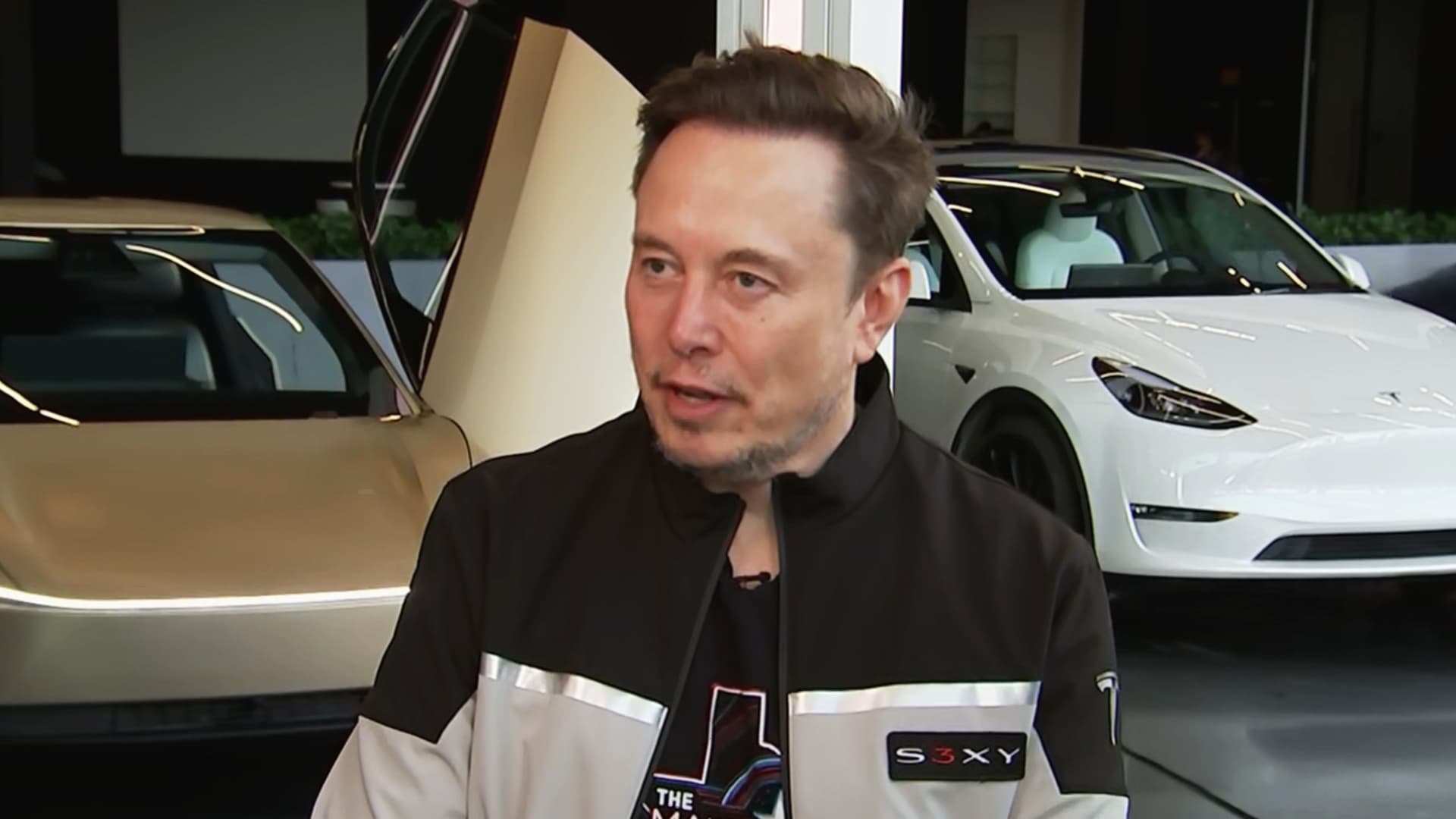
Elon Musk is interviewed on CNBC from the Tesla headquarters in Texas.
CNBC
Tesla reported weaker-than-expected earnings for the second quarter even as revenue topped estimates. The stock slid almost 3% in extended trading on Wednesday
Here’s how the company did compared to Wall Street expectations, according to estimates from analysts polled by LSEG
- Earnings per share: 33 cents adjusted vs. 51 cents expected
- Revenue: $28.24 billion vs. $25.71 billion expected
Tesla’s earnings report lands in the midst of a steep decline in its stock price, which is down about 11% this month and 17% for the year. That slide has coincided with a drop in SpaceX, Elon Musk’s other trillion-dollar company, which held a record market debut in June and has lost more than 40% of its value since its peak close
Revenue in the period jumped 26% from $22.5 billion a year earlier, the company said in a statement. Net income fell 5% to $1.11 billion, or 32 cents a share, from $1.17 billion, or 33 cents per share, a year earlier
Tesla’s core automotive segment generated $20.52 billion in revenue, up 23% from a year ago. Revenue in the energy business, which consists of solar and battery energy storage systems, increased 13% to $3.14 billion. In its services and other business, which includes fees for repairing vehicles out of warranty, revenue jumped 50% to $4.58 billion
Despite better-than-expected revenue in its auto business, the company’s gross margin dropped and missed estimates as average selling price per vehicle fell and regulatory credit revenue declined. Gross margin, or the profit left after accounting for the cost of goods sold, slid to 16.8% from 17.2% a year earlier. Analysts expected 19.4%
During the quarter, Tesla sold lower-cost version of its popular Model 3 and Y vehicles after retiring its more expensive, flagship Model S and X vehicles
Operating expenses climbed much faster than revenue, as the company poured money into artificial intelligence and other research and development projects. The 47% increase in operating expenses brought the total to $4.35 billion in the second quarter. Tesla’s operating margin plunged to 1.4% from 4.1% a year ago
Musk has shifted the focus of the company away from vehicle sales and toward its driverless Robotaxi service, ramping production of the company’s driverless Cybercab, and remaking older factory lines in Fremont, California, to start manufacturing Optimus humanoid robots. He’s promised shareholders and fans an AI-powered robot that will be able to step in as a babysitter, factory worker or world-class surgeon
Free cash flow Tesla turned negative in the quarter. The deficit of $1.1 billion comes after the company generated $146 million in free cash flow a year ago and $1.44 billion in the first quarter of 2026
Tesla said in its shareholder deck that it “will manage the business such that we ensure a strong balance sheet, maintaining sufficient liquidity to fund our product roadmap, long-term capacity expansion plans – including further vertical integration – and other expenses.”
Capital expenditures, meanwhile, soared 142% to $5.79 billion from $2.39 billion in the same quarter last year. CFO Vaibhav Taneja told shareholders during the company’s last earnings call in April that capex would top $25 billion this year.
“Capacity build out and ramp related to our multi-year infrastructure initiatives, including AI compute, solar, battery material and semiconductor manufacturing are underway,” the company said in the earnings deck
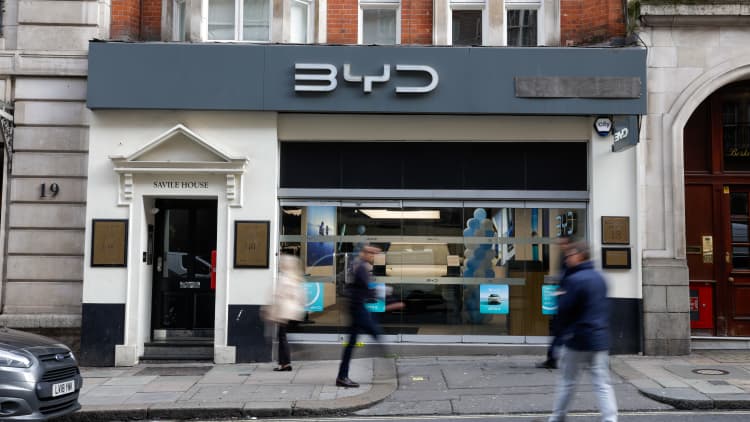
Tesla is trying to recover from consecutive years of declining deliveries, largely due to competition from Chinese automakers, including BYD, Nio and Xiaomi, that are offering affordable but high-tech EVs in markets beyond the U.S. Some car buyers have boycotted Tesla in response to Musk’s incendiary political rhetoric and work with the Trump administration
Soaring gas prices resulting from the U.S. war in Iran boosted Tesla sales in the first half of the year, with European car buyers purchasing more EVs
Tesla’s earnings call starts at 5:30 p.m. Eastern time
On the call, investors will be looking for updates on robotics and driverless technology, and how Musk expects Tesla and SpaceX to work together, including on Terafab, a massive chip factory the companies plan to jointly build and run with Intel in Texas
The company said in its earnings presentation that it’s “installing the first-generation lines for Optimus,” and will “start production soon.” Tesla also said its initial Optimus robots will be used for “training data collection and further functionality development,” not deployed to customers
Tesla said “active FSD subscriptions” rose 56% in the quarter, and the company now has 1.48 million subscribers to its premium, driver assistance system. The full name for FSD in the U.S. is Full Self-Driving (Supervised), which requires a human driver ready to steer or brake at all times