

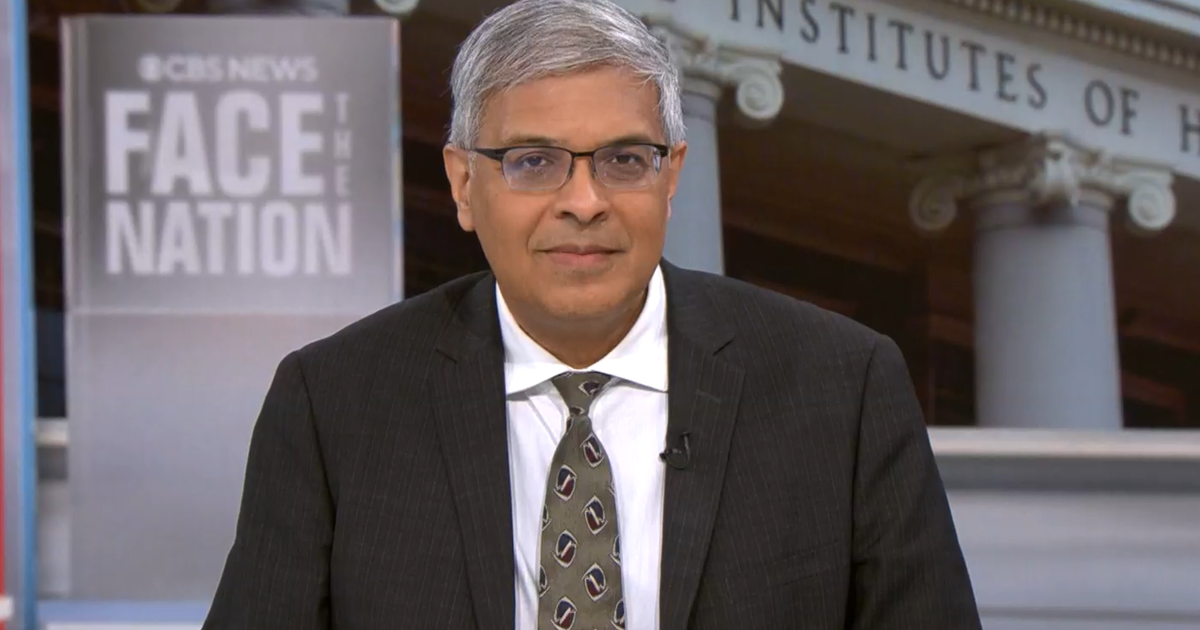
The following is the transcript of an interview with National Institutes of Health Director Dr. Jay Bhattacharya that aired on “Face the Nation with Margaret Brennan” on Aug. 9, 2026
MARGARET BRENNAN: We’re joined now by the Director of the National Institutes of Health, Dr. Jay Bhattacharya. Good morning to you, doctor
NIH DIRECTOR DR. JAY BHATTACHARYA: Good morning
MARGARET BRENNAN: And we should mention you are also helping to run the CDC until the new director is sworn in as well
DR. BHATTACHARYA: Until next Wednesday, yes
MARGARET BRENNAN: Until next Wednesday. So let me ask you about a number of things that I think people at home are worried about, particularly around the food supply. The cyclospora outbreak linked to iceberg lettuce from Mexico is now in 15 states. There were two deaths this week due to it. Yesterday, USDA issued an alert for a range of products that may have salmonella, including meat and poultry. 27 states are affected by salmonella, possibly linked to jalapeños, but cilantro, red onion, avocado, also listed in the CDC notice. Albertsons, a grocery store, just recalled some items. There’s risk of salmonella in eggs in Texas, according to the CDC, and then you have the screwworm outbreak affecting beef. This is overwhelming for someone going into a grocery store right now. Why do they seem out of control?
DR. BHATTACHARYA: Well, the- the cyclospora outbreak is larger than in normal years. I mean, in normal years there actually is a- cyclospora cases. The- the two deaths that you mentioned, they happened in late July- late- late June, early July, before we identified this source. And so, folks that are listening, can rest assured, the CDC and the FDA are working hard to trace back exactly where these outbreaks are occurring from, intervening with the- the sort of suppliers to make sure that they don’t- and doing recalls to make sure that the disease doesn’t- the, you know, condition doesn’t spread. I mean, it’s tough. You go to grocery store, you buy lettuce, and you say, “Okay, can I buy the lettuce?”
MARGARET BRENNAN: Yeah
DR. BHATTACHARYA: And what I say to folks listening, we’re working hard to make sure that the contaminated buy that- buy the lettuce, but make sure you wash it carefully. You don’t eat outer leaves. And if you’re really worried, just, you know, cook your vegetables
MARGARET BRENNAN: But we’re not hearing from the FDA. I mean, should there be a restriction on imports from central Mexico right now? It seems like a lot of things are tied back
DR. BHATTACHARYA: Yeah, I mean, I think the key thing is that when we find a contaminated source, we intervene. I can’t speak for the FDA, thank God. It’s just the NIH and the CDC. But, but, but I can say that- that the folks who I have worked with at the FDA are- they’re great team of folks that are- they’re tracking back and finding the source of these outbreaks. And for cyclospora specifically, it’s complicated because for technical reasons, it’s much- it’s more difficult than if it was just a bacteria to find the exact source. But they’ve done a great job finding it, and they’ve been cooperating with the CDC team that I’ve led the last few months to try to identify the source, and you know, it’s- what we know now is because–
MARGARET BRENNAN: Yeah
DR. BHATTACHARYA: –of that hard work that’s gone on
MARGARET BRENNAN: –But there are also a number of other health issues, including measles cases now at their highest level in 35 years. The CDC says only 10 U.S. states have measles vaccine coverage rates above the 95% threshold in the prior school year. That is so key because that is, as you know, a marker for basically a way to stop transmission, herd immunity. Do you believe that the federal government needs to make a really full-throated push to tell parents, ‘go get your kids vaccinated with the MMR vaccine?’
DR. BHATTACHARYA: You know, one of the first things I did as CDC director, I think it was back in February of this year, was that there was a big outbreak in South Carolina, and I went on to- went on- I don’t know if TV is the right word, but I went on camera and I recommended that the best way to end the measles outbreak there was to have their parents vaccinate their kids for measles
MARGARET BRENNAN: Yeah
DR. BHATTACHARYA: And the outbreak has now ended in South Carolina in part because of that. There’s been a lot of- a lot of outbreaks, not just the United States, but around the world
MARGARET BRENNAN: Yes
DR. BHATTACHARYA: And you know, a lot of that has to do with sort of a collapse in sort of public trust in a lot of science, you know, public health measures that occurred during the pandemic for reasons we can- we can discuss. For me the most important thing is to try to regain that trust
MARGARET BRENNAN: Right, but why not- you can have TV ads. You can have something that’s more of a national push. It was notable last week that Secretary Kennedy went on television and did say parents should get kids vaccinated for measles because it’s effective at preventing infection roughly 97% of the time. That was a change for him. He has not always been that clear, as you know. Why not blast that across the airwaves of America?
DR. BHATTACHARYA: I mean, I think that I’ve done my best to try to do that. Every time anyone’s asked me about vaccinating their kids for measles, I say exactly that. That the best way to protect your kids from measles is to get the vaccine for- for measles. You know–
MARGARET BRENNAN: This country is going to lose its measles elimination status–
DR. BHATTACHARYA: As did Canada, as did Mexico, as did the UK
MARGARET BRENNAN : But that’s not acceptable, right? The gold standard science–
DR. BHATTACHARYA: But you know, I think the thing is
MARGARET BRENNAN: –that MAHA wants to–
DR. BHATTACHARYA:–if you look at the actual- what’s happened, like the- the- there’s specific states where you’ve had these outbreaks. Big, big outbreak in Texas, which has now been addressed. Big outbreak in Arizona and Utah, that’s been addressed. South Carolina, that’s been addressed. Now, what we saw was an outbreak in Virginia, again coming down sharply, and now Pennsylvania- is specific communities of people that have- that are the highest risk that we have to focus on, as well as the broader sort of message that it’s important for children to be vaccinated for the measles if we want to address the measles outbreak.
MARGARET BRENNAN: Well, that’s why I brought up herd immunity because it puts everyone at risk, right?
DR. BHATTACHARYA: Yeah
MARGARET BRENNAN: Not just people. But on- on this issue, you were down in Atlanta this past week. This is one year since that horrific shooting at CDC headquarters. Officer David Rose was honored this past week. He was killed last year protecting CDC employees from a gunman. And we should note he was a combat veteran, a United States Marine who had just graduated five months prior from the police academy. Three kids left behind. The shooter was motivated by misinformation about the COVID vaccine. That is why he shot over 100 bullets into the windows of the CDC. Is enough being done to counter this kind of misinformation?
DR. BHATTACHARYA: I mean, I should start with- I got to talk with Officer Rose’s wife a few months back. The- one of the first things I did is I- you know, to honor him and his sacrifice in protecting the people that work at the CDC, the amazing people who work the CDC was we, you know, renamed the street that leads into the CDC after him, and it was a really nice event. I’ll tell you the- the thing is I want to focus on attention on Officer Rose because I don’t- I think the shooter did was horrific, and I think the- you know, you can talk about why shooters do things, but really fundamentally–
MARGARET BRENNAN: Well, his father said he was brainwashed about the COVID vaccine and thought it was making him suicidal. That’s what his–
DR. BHATTACHARYA: I mean the thing is, it’s like- to talk about the shooter puts the–
MARGARET BRENNAN: –motivation was when he said he was going to shoot up the CDC
DR. BHATTACHARYA: –emphasis on somebody who’s- I mean, I think we shouldn’t be putting our emphasis on–
MARGARET BRENNAN: No, I am on misinformation about vaccines
DR. BHATTACHARYA: I mean, I think the key- the key thing is there’s a loss of public trust in public health that happened in part because of a lot of- frankly, even- even- even on this network and on other networks, there was a particular single point of view put across during the COVID pandemic about how, you know, that led to things that really did cause harm to people. The school closures are probably the number one thing that- that- that–
MARGARET BRENNAN: This is not a productive line of claims. We covered COVID in depth on this program, like no other Sunday show did
DR. BHATTACHARYA: I’m not blaming you specifically. What I’m saying is, you want to talk about misinformation? The- the- the- the kinds of decisions and sort of the public sort of face of public health during the pandemic led to many people losing trust in public health
MARGARET BRENNAN: The Trump administration officials
DR. BHATTACHARYA: No, I mean- I mean, like Biden. So Biden, for instance, censored me–
MARGARET BRENNAN: The pandemic began under the Trump administration, and we put those officials on our air
DR. BHATTACHARYA: But- but during the- during the- just so we’re clear, the Biden administration censored me, right? They censored- they sent out direct attacks on people who disagreed on- on- on the COVID- on- on sort of whether the COVID vaccine stopped–
MARGARET BRENNAN: RFK Jr. called the COVID vaccine the deadliest vaccine ever made
MARGARET BRENNAN: That is misinformation, and we’re not being clear about that. And I think that is dangerous. Wouldn’t you agree?
DR. BHATTACHARYA: People lost their jobs, Margaret, because the- the Biden administration censored people and said, “Look, you can’t even talk about COVID vaccine harms.–
MARGARET BRENNAN: –We’re talking about a shooting
DR. BHATTACHARYA: Yeah, and I’m talking about why you have the the kind of distrust that’s led to the kind of sort of problems that you’re talking- we were talking about earlier in public health. That distrust was not caused by President Trump, it wasn’t caused by Bobby. It was caused by a lot of- sort of really fundamental–
MARGARET BRENNAN: Misinformation–
DR. BHATTACHARYA: Yeah, but often spread by the government itself regarding natural immunity, closures of schools, closures- of mask mandates, people lost their jobs because of these vaccine mandates that didn’t make any public health sense. So, if you want to talk about public trust, you have to embrace that fully, right? You can’t just talk about it in a narrow political way
MARGARET BRENNAN: I’m talking about a shooting at the CDC and an officer, you said you just went to honor. That’s what I was talking about. You’re talking about something else entirely
DR. BHATTACHARYA: No, no, you’re trying to- you’re trying to- just to be blunt–
MARGARET BRENNAN: I also asked you about the shoring up public [inaud]–
DR. BHATTACHARYA: –What you’re talking about is you’re trying to blame the shooting on Bobby
MARGARET BRENNAN: No, I’m not. I’m reading you what his father said
DR. BHATTACHARYA: No, what you’re reading, what you’re- what you’re saying- what you’re implying is that somehow the lack of public trust
MARGARET BRENNAN: I’m not talking about him. I’m talking about your visit
DR. BHATTACHARYA: Yeah
MARGARET BRENNAN: And is enough being done
DR. BHATTACHARYA: I think it’s really unfortunate–
MARGARET BRENNAN Since you want to restore public trust, tell me what you’re doing now, because the Washington Post and Bloomberg reported the White House is preparing an executive order on vaccines and autism. What is it going to prescribe? What is it going to do? Why are we seeing another announcement here when I know you are launching research into a plethora of issues that are contributing factors potentially to autism. Why would the White House be saying only look at this thing?
DR. BHATTACHARYA: Well, I don’t- I mean- I would have to ask the president about the specifics–
MARGARET BRENNAN: Because that is going to–
DR. BHATTACHARYA: –of the executive order. I tell you want we’re doing–
MARGARET BRENNAN: Do you think that’s restoring trust in vaccines?
DR. BHATTACHARYA: The- the purpose of the- whatever the- I mean I- you can ask the president about the executive order, but I’ll tell you what the- the focus of the president has been–
MARGARET BRENNAN: You don’t know about the executive order?
DR. BHATTACHARYA: I- I don’t- I won’t be able to tell you specifically what’s on it because I don’t think it’s done yet. But you can ask the president about it. What I can tell you is that the president cares deeply, as does Bobby, about the rise in autism. I know you do as well. There’s so many families around the country that- that have- that have had, you know, have faced the–
MARGARET BRENNAN: Yes
DR. BHATTACHARYA: –issues of this, right?
MARGARET BRENNAN: Yes, and they want real information
DR. BHATTACHARYA: And so I, as NIH director, have been focused on making sure that we have science that addresses that- that very complicated question about why we’ve seen a rise in autism. It’s not going to be a simple answer. And I- last year I authorized something called the Autism Data Science Initiative. We’re going to have a big, sort of, early, sort of- sort of, results from it in a couple of weeks from the- the dozen and more scientific teams that have been funded to look at this, with a mandate of thinking very broadly, not just genes, not- not just environmental exposures, but potential interactions. We don’t know- if you ask me as a scientist, do I know why we’ve seen this rise in autism? I’ll tell you, I don’t know the answer to that question.
MARGARET BRENNAN: Yeah
DR. BHATTACHARYA: And the fact that it gets so tied up with, okay, is it- is it vaccines? Not vaccines. It- what it does is it sends a signal to the scientists that if you work on this topic, you’re going to get destroyed if you get the- the wrong answer.
MARGARET BRENNAN: Yeah
DR. BHATTACHARYA: I- I tried my hardest. The way you build public trust is allow people to talk and think without that kind of sort of political overlay. I’ve tried my very hardest as the NIH director to make- to allow that to happen–
MARGARET BRENNAN: Which is so key for science. Which is why I’m asking why the president putting out an order specifically focused on one, what seems to be preconceived notion, how that would–
DR. BHATTACHARYA: You’re jumping ahead. I mean, I don’t know exactly what’s in this executive order and neither do you. So it’s- it’s not yet–
MARGARET BRENNAN: Well, it’s- it’s interesting that you don’t. My colleague Matt Gutman here at CBS asked you last week whether you think vaccines cause autism. You said you don’t know for certain. You said there isn’t evidence that any vaccine causes autism, but you also don’t have evidence that vaccines do not. Parents are preparing to send their kids back to school
[CROSSTALK]
DR. BHATTACHARYA: Okay, so just- I just want to be very clear what I actually said
MARGARET BRENNAN: Please be clear. Should parents trust that they can go vaccinate their kids when their doctor tells them to do so for them to go back to school?
DR. BHATTACHARYA: I think- I think that- that parents, for most kids, especially for the measles vaccines, the DTP, all the standard childhood vaccines, it’s very important that parents vaccinate their kids. As far as can they feel confident sending back to schools, you know, I just- just to push back some, it was a tremendous mistake to cause parents to fear that- about sending their kids to school during the COVID pandemic. The kids were better off in school. We shouldn’t be scaring public–
MARGARET BRENNAN: I’m talking about what people do now. It’s August, about to be September, kids are going back to school–
[CROSSTALK]
DR. BHATTACHARYA: Yeah, but Margaret you’re talking about the–
MARGARET BRENNAN: –not talking about 2020. I’m talking about 2026.
DR. BHATTACHARYA: –you’re talking about- we’re talking about the- why people have–
MARGARET BRENNAN: –clarity from the federal government–
DR. BHATTACHARYA: Okay just so we’re clear–
MARGARET BRENNAN: –and the top health official–
DR. BHATTACHARYA: If you want clarity, let me give you some clarity
MARGARET BRENNAN: Please
DR. BHATTACHARYA: The reason why you have this problem of public trust is because what happened in 2020 has not yet been addressed–
MARGARET BRENNAN: Can these parents trust you and the recommendation that they should–
DR. BHATTACHARYA: Yeah, I think- I mean- the–
MARGARET BRENNAN: –go get their kids vaccinated?
DR. BHATTACHARYA: –the parents should be trusting me. I mean, I’m giving my recommendation. I vaccinated my kids. I don’t think that it is a- I think if you want to protect your kids from these- these- these sort of preventable diseases, yes, you should vaccinate your kids. But it is even more important that these kids go to school. That in no way, shape, or form should this show or any other show like it perpetuate the idea that- that sending their kids to school is worse because there’s going to be some health risk there when it’s just not true, right? If you want to protect your kids from those- those preventable diseases, vaccinate your kids. I’ve been very, very clear about that. But it is- it is a mistake, and it contributes to the lack of public trust if you sort of fearmonger around, ‘oh, if you send your kids to school, well, you might be around unvaccinated kids.’ That’s- that’s a- that’s a tremendous mistake, right? If you vaccinate your kids, you can protect your kids from those- those- those risks, whatever they are. In- in any case, it’s better to send the kids to school because that’s how you keep kids healthy.
MARGARET BRENNAN: Yes, we want to send our kids to school
DR. BHATTACHARYA: So, but now addressing what happened in 2020 is part of that
MARGARET BRENNAN: Okay
DR. BHATTACHARYA: If you want to say why there’s this loss of public trust, you have to really wrap your arms around that
MARGARET BRENNAN: But you trust the science and the health workers and the vaccines now, is what I understood you were saying, and so that is the message that I think we can–
DR. BHATTACHARYA: I mean, I trust the science. I mean, I’ve looked at the scientific evidence–
MARGARET BRENNAN: –end on here
DR. BHATTACHARYA: –and there’s lots. I mean, I personally have made decisions for my family around those lines too, so–
MARGARET BRENNAN: That’s good to know. Thank you. We’re going to leave it there because I know we’re running out of time. We’ll be back in a moment
