

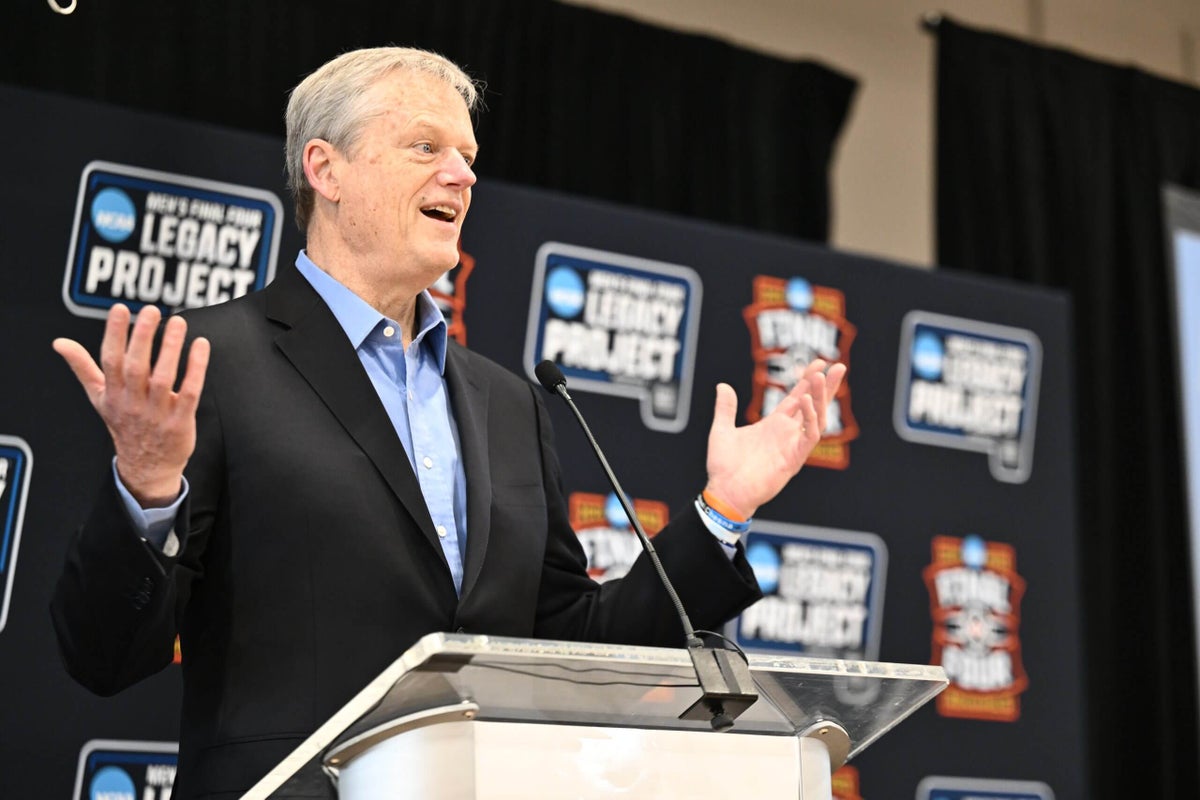
Congress has held more than a dozen hearings about college sports since 2020. The NCAA and the former Power 5 conferences have combined to spend more than $15 million on lobbyists. Big Ten commissioner Tony Petitti said last month he’s been to Washington, D.C., 21 times in his three-plus years on the job
They came oh-so-close to getting an actual bill out of the Senate this week: the Protect College Sports Act. Senate Majority Leader John Thune tried his darndest to get his colleagues to hurry up and vote on it before beginning their five-week summer recess, but a predictable round of grandstanding and pork-barreling was too much to overcome. The ill-fated SCORE Act stalled out in a similar fashion in the House earlier this year
More than six years since this never-ending legislative push began, Congress still hasn’t “saved” college sports. It’s time for university administrators, conference commissioners and NCAA president Charlie Baker to finally start formulating a Plan B
If there is such a thing
PCSA was the brainchild of Sens. Ted Cruz (R-Texas) and Maria Cantwell (D-Wash.) — a 171-page Frankensteinian whopper that aimed to cure everything from name, image and likeness and the transfer portal to eligibility limits and conference realignment (the latest version sought to limit conferences to 19 members). They even tried to ward off the next Lane Kiffin by declaring coaches couldn’t change jobs during the season. All of which was deemed essential to “save” an extremely popular multibillion-dollar enterprise from itself.
What You Should Read Next
Notre Dame to the Big Ten? Miami to the SEC? What 19-team CFB conferences might look like
The Senate may vote on a bill that caps Power 4 conferences at 19 teams. Who would interest the Big Ten, SEC, ACC and Big 12?
That’s because College Sports Inc. managed to convince politicians of all stripes that their schools will all go bankrupt if something isn’t done to rein in their escalating costs. As if some external party is forcing athletic directors to give football coaches guaranteed $90 million contracts, then give them blank checks to build a $50 million roster
“Without this Bill, millions of young Athletes will be hurt, programs will be canceled, Women’s and Olympic Sports will go away, the fans will be robbed, and Universities will go broke,” President Donald Trump said this week while urging the Senate to pass it
It all came to a head a few weeks ago when the Big Ten and SEC initially held out their support. The conferences finally signed off late last week when Cruz and Cantwell agreed to a revised “hard cap” that would allow schools to directly pay their athletes around $48 million, a considerable jump from the current $21.3 million “soft cap” no one follows
Once that issue was resolved, Cruz confidently predicted the bill would fly through from there, with co-sponsor Eric Schmitt (R-Mo.) telling reporters it could get as many as 80 votes
But nothing is ever that easy in politics. At the 11th hour, the AFL-CIO and the Congressional Black Caucus came out in opposition. Sen. Ashley Moody (R-Fla.) filed an amendment to make it easier for home-state schools Florida State and Miami to change conferences. And then the final blow: three conservative senators, most notably old friend Tommy Tuberville, claimed the bill would threaten “state laws that ban biological men in women’s sports.” (The sponsors tried to assure them it would not.)
Yes, a bill whose authors purported to be protecting women’s sports got derailed by a different set of people claiming to be protecting women’s sports
(Note to alarmists: The number of women’s college athletes has increased by 50,000 in the last five years, according to the NCAA’s 2024-25 participation data, and the NCAA is planning to add a women’s flag football championship in 2028.)
The PCSA is not dead yet. Cruz and Schmitt issued a statement Saturday claiming they’ve “locked in a guaranteed vote” for when they return in mid-September. But Cruz has been making these sorts of rosy proclamations for at least three years. Congressional experts say the odds of a vote decrease considerably the closer things get to the midterms. And even if it does pass, the House then gets its hands on it. Representatives will have their own pet causes that will muck up that process
What You Should Read Next
What does Big Ten commissioner Tony Petitti really want?
Petitti’s leverage and equity to push a pro-Big Ten agenda have never been higher. But his long-term endgame remains a bit of a mystery.
In the meantime, the NCAA keeps getting sued into oblivion. Last winter, it kept losing injunction requests from geezer pro basketball players seeking waivers to return to college. It responded to that crisis by expediting a completely new eligibility process that eliminates waivers and redshirts entirely, instead giving a uniform five seasons of competition beginning no later than age 19. It passed in June to take effect in August
So, of course, athletes who just completed their fourth seasons and had moved on with their lives began seeking injunctions to get their own fifth season of eligibility, and so far they’re all winning. Despite the NCAA’s pending appeal in a Colorado federal case, programs like Indiana, Texas and Virginia are already suiting up former players in training camps
While each court case has its own unique circumstances, the judges’ decisions contain a recurring theme: They frown on any policy that restricts athletes’ ability to earn NIL compensation. And yet, College Sports Inc. presses on in its quest to get Congress to let them restrict the market for NIL compensation
It’s time for Plan B. College Sports Inc. currently has no idea what that looks like, but it’s got to start with leaders finally acknowledging that we’re never going back to the old days. These are professional sports now that need to be governed accordingly. Schools need to give their athletes legitimate service contracts rather than continue pretending they’re for “NIL.” And if they truly want things like salary caps and portal restrictions, they need to stop negotiating them with legislative aides and start negotiating with — brace yourself — the athletes themselves.
That, or keep acting like Charlie Brown with the football and spend another six years wooing politicians who claim they want to “save” college sports but mostly just want to see their names in a news release
Lobbyists and lawyers will appreciate six more years of paychecks
