

MOST POPULAR
- Premium
PremiumFrance wildfire update July 22: major new blaze in Var
- Premium
PremiumWhat are new ‘dragon teeth’ road symbols that people driving into Spain may see?
- Premium
PremiumFrance water restrictions: Five questions answered
- Premium
PremiumFrance drought update: all but two departments facing restrictions or warnings on tap water use
- Premium
PremiumWestern France leads new ranking of nicest places to live in France
Reader Question: I am sick of mosquitoes ! I feel like they are always inside my house this summer but I cannot find a way to get rid of them. Do you have any advice?
Mosquitoes are a major issue in France, and now present a health threat with the proliferation of tiger mosquitoes, present in all French regions
More than a nuisance, these non-native mosquitoes can carry diseases such as Zika Virus, Dengue Fever, and Chikungunya, with France recording hundreds of native cases of the latter viruses in recent years
A ‘native’ case sees a person who has not travelled abroad contract the virus, meaning it was passed on by a mosquito in France.
Last week, the first native case of West Nile virus was recorded in France in 2026, transmitted by a Culex mosquito (native to France) shows however that even the more familiar species present risks
As a result, the desire to avoid mosquitoes in homes and gardens is higher than ever, especially as in some cases the insects can survive throughout the winter when indoors
Reader tips for inside homes
The Connexion recently asked readers for recommendations on the best anti-mosquito products to use, based on creams, sprays, etc.
You can read the article here, as well as our original 2025 article covering a consumer study on France’s most popular repellants.
In 2026, Cinq sur Cinq was again declared the best repellant
On top of these, the main way to prevent mosquitoes entering inside your home is to put up insect screens on windows and doors (useful to keep air flowing through a home, impossible when all windows are closed)
Inside, you can keep a fan at high speeds or your air conditioning on to reduce the risk of mosquitoes in a certain room or area.
Mosquitoes prefer calm, warm air and are weak fliers, so a powerful ventilation system can reduce their chances of remaining indoors if they do get in.
Prevent them in gardens
If you find mosquitoes indoors, the chances are they are breeding in your garden or nearby.
The insects rarely travel more than 150 metres from where they hatch (unless accidentally transported in a vehicle, etc) meaning there is more than likely a breeding ground near your home.
Around 80% of all mosquitoes in France hatch on private property, according to the Agence régionale de santé.
Mosquitoes proliferate in stagnant water and only need a few millimetres of water to lay eggs, so the most important thing to do is ensure you minimise the risk of such water in your garden and home (under taps, in the bathroom, damp basements, etc).
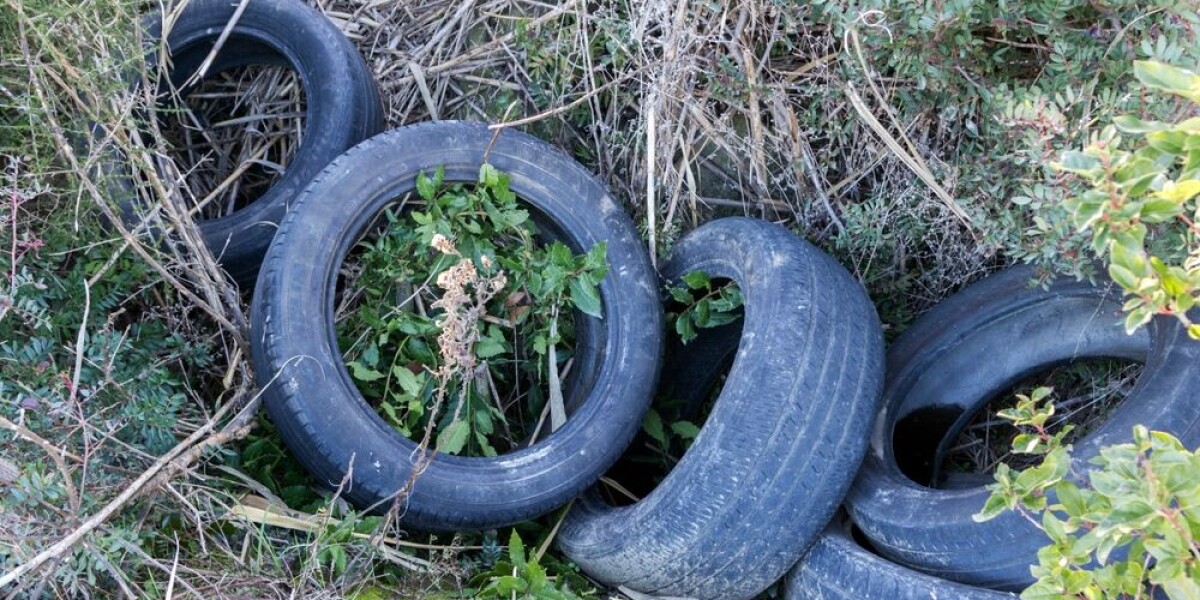
Outside, check for pools of water in tyres, empty plant pots, loose stonework, children’s toys, jerrycans, etc.
Remove the water where possible, either by manually draining it with a shovel, moving objects to drain the water etc, or directing it away with pipes for larger pools
Larger water features such as fountains, pools, etc, should be covered if not in use, and ponds should be regularly maintained.
Another place to check is rainwater collectors – in 2022, half of mosquitoes breeding in Gironde were found in rainwater collectors.
Even if lids are shut, mosquitoes can climb up drainage pipes to infiltrate the collectors. Keep lids closed as much as possible, and install a mosquito net around the gutter to stop the insects crawling up pipes.
Several trap types
Generally, electric bug zappers are not effective at killing mosquitoes as they are more attracted to humans ( mosquitoes respond to CO², human sweat, etc) than the UV light these traps emit.
However, specific tiger mosquito and native mosquito traps exist.
In some cases, these are handed out by mairies (or can be purchased directly through them) in an attempt to reduce the spread of the insect in an area.
In other cases, there may be grants for buying your own traps – it is always worth contacting your local mairie to see what helps is available.
While dozens of mosquito traps are available to buy, either online or from most electronic or hardware stores, they are not perfect, particularly if you have not attempted to clear stagnant water off your property
“[Trap] effectiveness depends on the context. No single trap can provide long-term control over a heavy infestation if the environment remains favourable for mosquito breeding,” said Head of Research and Development at Altopictus Antoine Mignotte to media outlet Reporterre.
Two main types of trap exist, both aimed at females as these are the only mosquitoes who actively bite humans.
‘Gravid’ traps (sometimes called passive traps) look to imitate a breeding ground for female mosquitoes, preventing them from laying eggs, and pièges à femelles en recherche d’hôte (active traps) mimic bodies, allowing them to kill females looking for blood.
A 2021 report from France’s health body Anses (Agence nationale de sécurité sanitaire de l’alimentation, de l’environnement et du travail) says that gravid traps are only effective if they are installed for at least three weeks, at least 60% to 80% of properties in an area were using the traps, and multiple traps are put up in each home
This requires wider coordination between several groups, and can be expensive due to the number of traps required
In turn, active traps are seen as potentially more effective – and can kill all types of mosquitoes, reducing the risk of males mating with females – but can cost more, often between €400 – €800 but sometimes even higher.
Some more basic models are available for around €150, but are generally less effective as they only focus on olfactory attraction of mosquitoes.
In its 2021 report, Anses recommended active traps but said that experiments on Réunion Island did not provide conclusive proof they were more effective.
Homemade mixtures – using CO² to trap mosquitoes – can be effective, but only for a period of 24 to 48 hours, said Mr Mignotte.
Effectiveness is highly unpredictable; it varies depending on the dosage, temperature, humidity, and so on.
Ultimately, traps based on emitting LED light should be avoided
Tiger mosquitoes are primarily present in the day meaning they are mostly unaffected by the light, and even common Culex mosquitoes that are nocturnal are mostly unaffected
In addition, these traps can have an adverse effect on other wildlife such as moths
