

From coffee grounds to guinea pig bedding – the composters keeping it local
7 minutes ago

Heledd Wyn
When you put food leftovers outside the house for collection, what do you think you are doing? Getting rid of waste or giving away a valuable re
For the founders of an award-winning community compost business, it’s a no-brainer that the second answer is the correct one
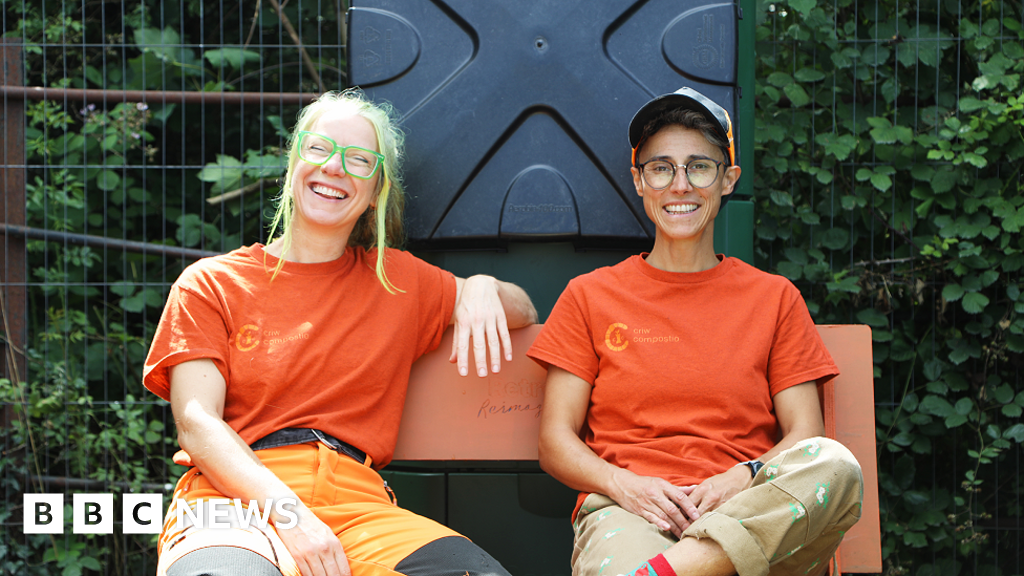
Steph Robinson and ffin Jordao of Criw Compostio collect food waste from cafes and businesses who pay them and convert it into peat-free compost, which is then used by the community
“Local growers then take that compost, grow food that goes back to the cafes, cafes serve it, waste comes back to us and we turn it back into compost,” said Steph
Once ready, it is available on a “pay what you feel, pay what you can afford” basis and all stays within the community
HeleddWyn
Steph and ffin met at the Centre for Alternative Technology (CAT) just outside Machynlleth, Powys
It was established more than 50 years ago by volunteers who wanted to find ways to live without relying on fossil fuels and grew into a leading environmental charity
Biologist ffin, 43, originally from Portugal, moved to Wales to work in CAT’s biology department while Steph, 49, moved from England to run the centre’s short courses programme
Her background was in diversity and inclusion but also systems analysis, project management and “all kinds of business skills really”
CAT attracted ffin because it “struck me as a place where you could do very hands-on biology and work on off-grid systems, and also have an education component and a visitor centre”
Criw Compostio grew out of a project ffin initially set up with a grant from the Shared Prosperity Fund in 2022
Further funding has allowed them to focus on research and development and set up a composting school to help other projects in other communities get going
Heledd Wyn
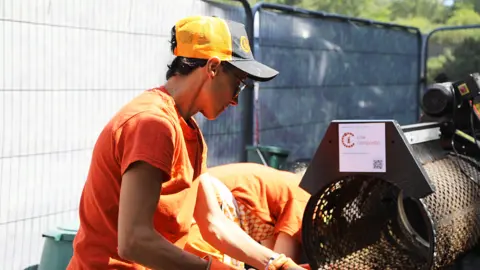
Criw Compostio picks up waste, as well as wood shavings from a carpentry business and used rabbit and guinea pig bedding from pet owners, twice a week
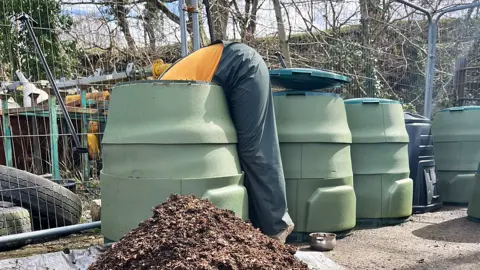
It is then taken to a processing site in Machynlleth “so we’re travelling a very short distance” where they have specialised composters
“They’re like hot, rat-proof hyper composters that turn it into something that’s very unattractive to pests and such very quickly,” said Steph
It take about a year to turn it into compost, which Steph said had just won an award for its quality
“Local growers then take that compost, grow food that goes back to the cafes, cafes serve it, waste comes back to us and we turn it back into compost
“The frame that we work within means it has to stay local, so we don’t sell it on eBay or Amazon or whatever. It stays within that re
As in every other Welsh county, food waste collections from households, rather than businesses, are mandatory and carried out by Powys council
However, Criw Compostio run sessions for households who want to improve the composting they do at home or to improve composting at allotments
The majority of their compost users are people growing food to sell “in the Machynlleth markets, to sell in the local whole food shop, to sell directly to local restaurants”
Steph said the cost of living crisis had raised interest for individuals looking to grow their own food and allotments were “hot property here”
ffin said it was “interesting how much productivity can come from a small garden”
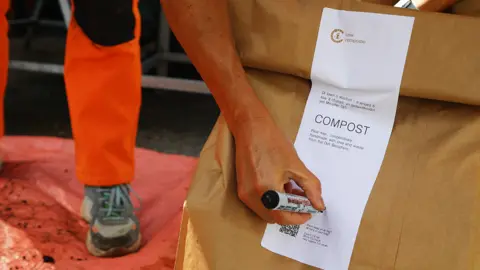
Heledd Wyn
Local is key to their ethos – they don’t operate outside of a 20-mile radius and their only ambition for growth is helping others start similar projects
They have worked with groups in neighbouring Gwynedd to help establish similar schemes and have hosted people at their composting schools from as far afield as Birmingham
It’s not just about the practical or environmental aspects of making compost for use locally, Steph also talks about the social impact it can have, particularly for people with money worries
“There are really vibrant growing communities that have been going quite a long time because people have been struggling economically, so they need to grow food,” she said
“They’re enjoying being able to be together without having to spend any money. There’s access into dealing with loneliness, and disconnection and all the social problems that we’re dealing with.”
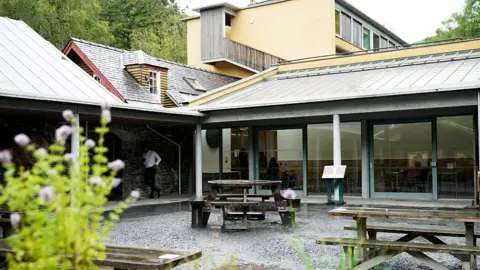
Getty Images
As well as the two of them, there are six directors on the company’s board, a “compost caretaker” and about 15 volunteers on a rolling basis who learn about compost creation and get paid in compost
To complement ffin’s biology background, they also have an expert advisory panel of academics working in soil ecology at various universities to consult with on technical and scientific developments
The most fundamental principle for them is that the term food waste is wrong
Steph explains: “If we turn this on its head, this is a valuable re community, which actually could remain and could be very, very useful
“How useful is it when we as a community say ‘OK, we’re going to hold on to these things because we know they’re really valuable’. We’re going to turn them into something that adds jobs, creates nutritious soil.”
ffin sums it up: “Turning it into the most valuable thing it can be turned into: Nutritious food.”
Bonnie Tyler funeral plans announced as fans invited to line the streets
Catfished student gets £10k after photos used for fake dating profiles
Cardiff museum surviving each week is a miracle due to repairs needed, boss says
Environment
Recycling
Machynlleth
Wales
Food waste
