

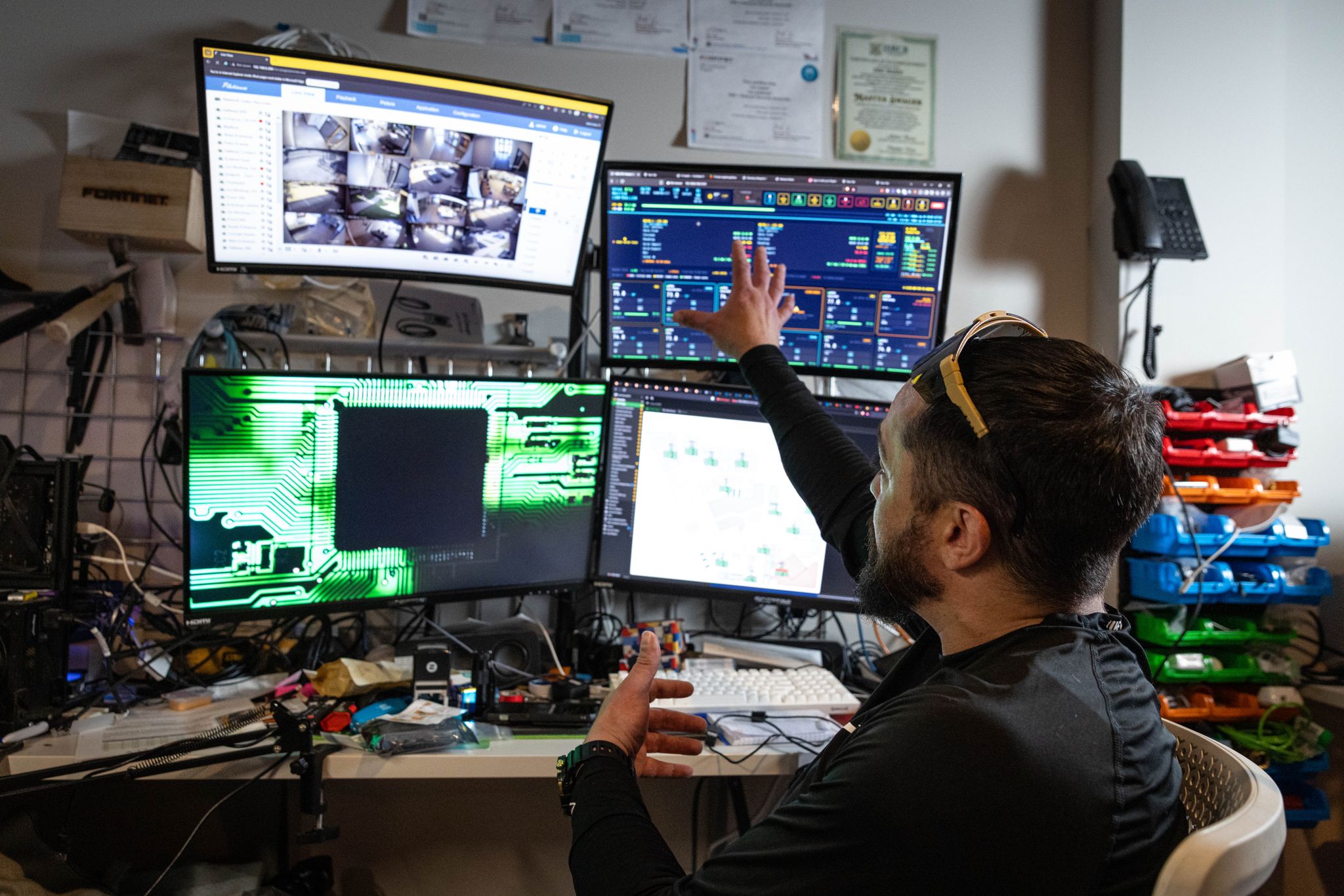
Dallas-area employers say breaking into cybersecurity takes more than learning to write code or earning a certification.
Across interviews with employers, educators, workforce organizations, trainees and Texas Cyber Command, one message surfaced repeatedly: technical skills alone are no longer enough.
As artificial intelligence reshapes the profession and cyber threats become more sophisticated, employers increasingly want workers who can communicate, solve problems and keep learning throughout their careers.
Article continues below this ad
Here are six skills they say matter most.
1. Problem-solving
Jonathan King, assistant director of Texas Cyber Command’s Texas Information Sharing and Analysis Organization, said cybersecurity professionals constantly face new threats that require fresh thinking.
“The cybersecurity defense playbook is being written and rewritten,” King said.
Article continues below this ad
Knowing technical concepts is important, he said, but so is the ability to apply that knowledge to unfamiliar situations.
2. Communication
When the University of North Texas at Dallas designed its new Bachelor of Arts in Cybersecurity, university leaders asked employers what they wanted graduates to bring to the workplace.
Related: 3 ways North Texans can train for cybersecurity careers
The answer was not simply technical cybersecurity skills. Employers repeatedly emphasized teamwork, leadership, project management and the ability to explain technical issues to nontechnical audiences, Dean Jason Garrett said.
Article continues below this ad
Joe Stewart, a 29-year-old technology technician for Lancaster ISD who completed UpskillU’s year-long cybersecurity apprenticeship, said writing reports was one of the most valuable parts of the program because cybersecurity workers must document findings clearly after completing the technical work.
Tiffany Gillespie, a 42-year-old Irving insurance agent currently training through UpskillU said her coursework also includes presentations and feedback from industry professionals.
“It is not just something that you have to understand,” she said. “You have to make others understand.”
Related: What Texas state workers should know about efforts to reduce degree requirements
3. Curiosity
Paul Johnson, CEO of Richardson-based HEXA Innovation, believes curiosity separates good technology professionals from great ones.
Article continues below this ad
“You want employees that are curious,” Johnson said. “You want employees that want to grow.”
Johnson said the best employees continually look for better ways to solve problems instead of waiting to be told what to do. He added that employers also have a responsibility to create workplaces that encourage that curiosity and growth.
Jerry Sinayuk, a nuKudo graduate now working as a solutions engineer, offered similar advice: “Be curious.”
4. Adaptability
Cybersecurity changes constantly. Professionals must be willing to learn new tools, respond to new threats and adjust when job descriptions or business needs change.
Article continues below this ad
“It is not going to be perfect,” Johnson said of adopting AI. “You just have to jump in.”
King said tomorrow’s cybersecurity workforce will need adaptability alongside technical knowledge and continuing education.
5. AI literacy and sound judgment
Artificial intelligence has become part of both the problem and the solution.
Texas Cyber Command says AI is helping attackers create larger and more convincing phishing campaigns while also helping defenders identify vulnerabilities and strengthen networks.
Article continues below this ad
Related: In the age of AI, being human might be your best job skill. Find out how
Johnson compared AI to giving a skilled carpenter access to modern power tools. The craft remains the same, but the worker can accomplish more. Employers still need people who can judge whether the output is accurate and useful.
Gillespie said she initially used AI to help teach herself material for an insurance exam. Her cybersecurity mentor later showed her how to use it more effectively to locate reliable re
6. A commitment to lifelong learning
No one interviewed suggested cybersecurity is a field where learning never stops.
Stewart said he enrolled in UpskillU’s year-long cybersecurity apprenticeship because he wanted to continue growing beyond his current role. He said workers must show that they want to learn rather than becoming comfortable with what they already know.
Maturon Miner, who left a 15-year career in the craft beer industry to begin cybersecurity training with nuKudo, said every day presents another challenge, whether that means learning Python or solving technical exercises.
Gillespie said continuous learning also means understanding that cybersecurity is broader than the image of someone typing code into a black screen. Researching threats, finding vulnerabilities, collaborating with technical teams and explaining risks are all part of the work.
For employers, that willingness to keep learning may be the most valuable skill of all.
This reporting is part of the Future of North Texas, a community-funded journalism initiative supported by the Commit Partnership, Communities Foundation of Texas, The Dallas Foundation, the Dallas Mavericks, the Dallas Regional Chamber, Deedie Rose, Lisa and Charles Siegel, the McCune-Losinger Family Fund, The Meadows Foundation, the Perot Foundation, the United Way of Metropolitan Dallas and the University of Texas at Dallas. The News retains full editorial control of this coverage
