

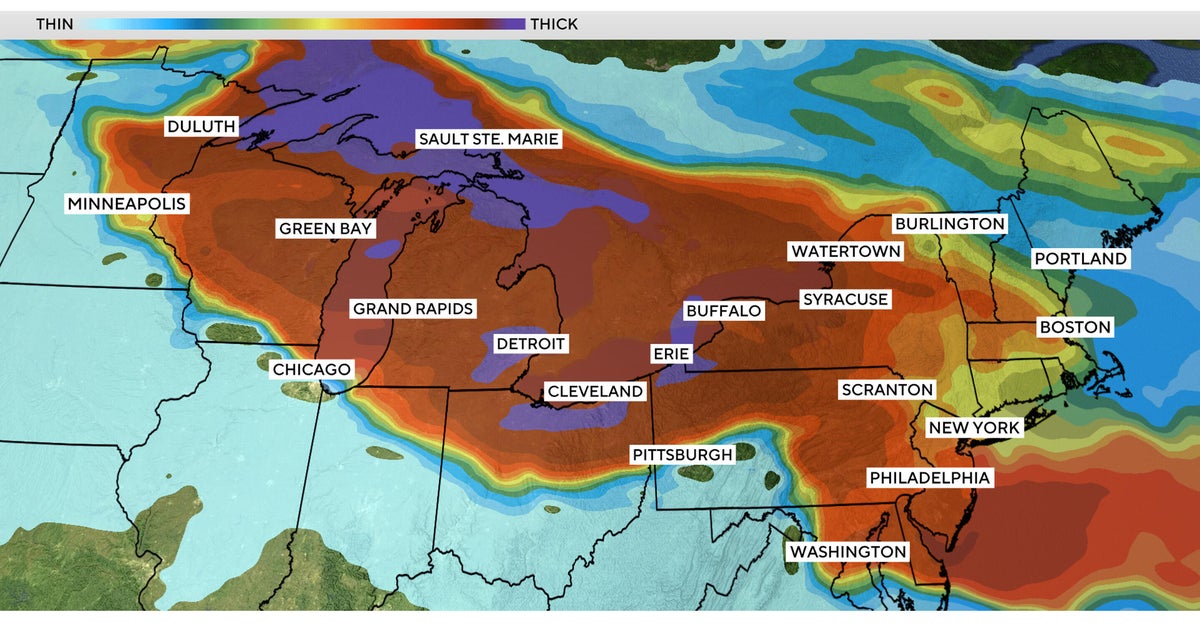
Heavy smoke from several large wildfires blazing in Canada and Minnesota is engulfing large swaths of the Midwest and Northeast U.S. this week, exposing millions of people to dangerous air pollution
The air quality continued to decrease across the Northeast Wednesday and is expected to worsen over the next couple of days as the air pushes eastward.
High levels of fine particulate matter in the air from smoke can be unhealthy, especially for sensitive groups such as children and people with heart or lung conditions
Air quality today
Air quality alerts stretch from Minnesota and areas around the Great Lakes to parts of the Mid-Atlantic and Northeast
Minnesota officials issued an air quality alert through Friday for areas including the Twin Cities metro area, with very heavy smoke expected across the state’s northeastern corner as large wildfires spread. Air quality levels in northeast Minnesota reached hazardous levels, making it unsafe for everyone.
Officials in Michigan and Wisconsin also warned residents about air quality issues that could last for days. The entire state of Michigan was under an air quality alert Wednesday and Thursday, which could be extended if needed
Multiple counties in western and central New York were under an air quality advisory Wednesday until midnight, while New York City, which was ranked among the most polluted cities in the world on Wednesday, is under an air quality alert until Thursday
Pennsylvania declared a code red air quality alert for Thursday, with smoke from the wildfires creating unhealthy levels of pollution for everyone, the state’s Department of Environmental Protection said.
Air quality alerts have been issued by the Massachusetts Department of Environmental Protection for the entire state
Wildfire smoke maps
As a large plume of smoke from the fires poured into the Boston area, the skies morphed from a milky white to an ominous brown/yellow, CBS News Boston reported. In parts of Maine, residents were reporting a yellowish and brownish color in the sky
“There is plenty of smoke upstream, so expect periods of hazy skies over the next day before the cold front pushes through,” the National Weather Service in Gray, Maine, said on social media Tuesday
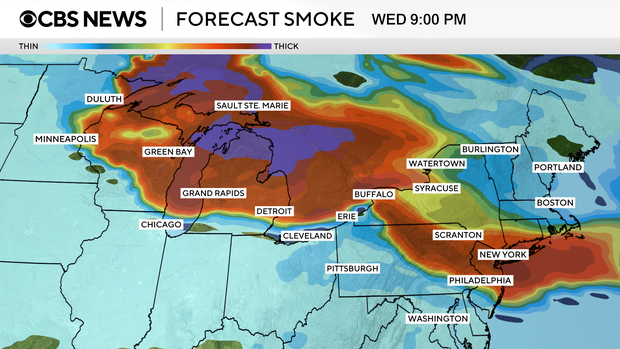
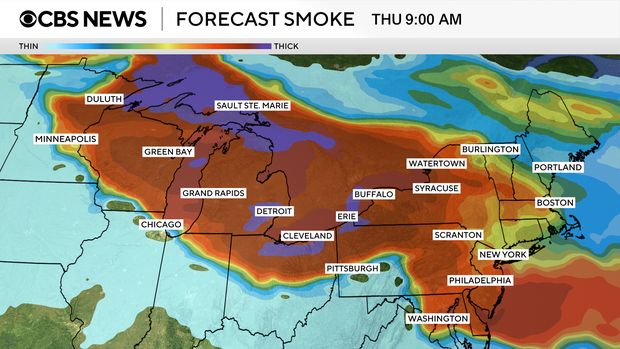
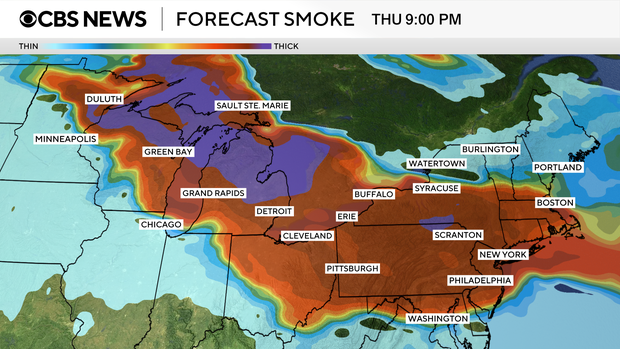
The most intense smoke could spread as far south as Washington, D.C., by midday Thursday, said Tyler Hasenstein, a meteorologist with the National Weather Service in Chanhassen, Minnesota
The following maps show the wildfire smoke forecast for Wednesday night and Thursday:
“Not good from a health perspective”
Dan Westervelt, associate professor at Columbia University’s Climate School, said severe drought conditions combined with heat in Canada and the U.S. have created “a perfect storm for really dry conditions to provide a lot of fuel for these wildfires to burn.” Research shows warming temperatures from burning coal, oil and gas are making fires more frequent and intense
People should stay indoors as much as possible to avoid the extreme heat, especially as smoke moves in, said Hasenstein
“Those two things coinciding with each other is not good from a health perspective,” he said
Fine particle pollution from wildfire smoke can cause shortness of breath, coughing, dizziness or fatigue and aggravate heart and lung diseases and other chronic health issues. Experts suggest reducing or eliminating outdoor activities, wearing an N95 mask if you have to be outside and keeping your indoor air cleaner by closing windows and running an air purifier or air conditioner. Long term, exposure to fine particulate matter from wildfire smoke is one of the leading causes of premature death.
A study released earlier this year found that chronic exposure to pollution from wildfires has been linked to tens of thousands of deaths annually in the United States
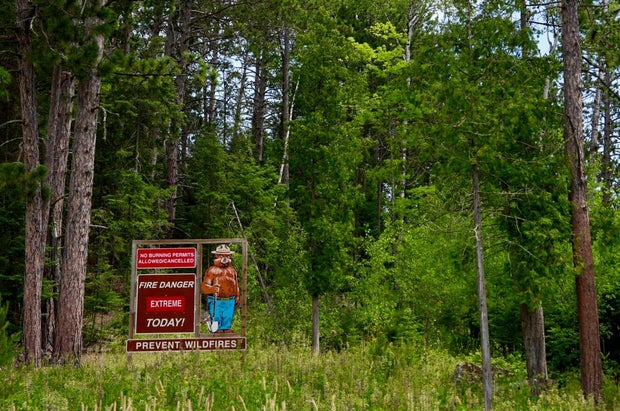
Anthony Soufflé/Minnesota Star Tribune via AP
