

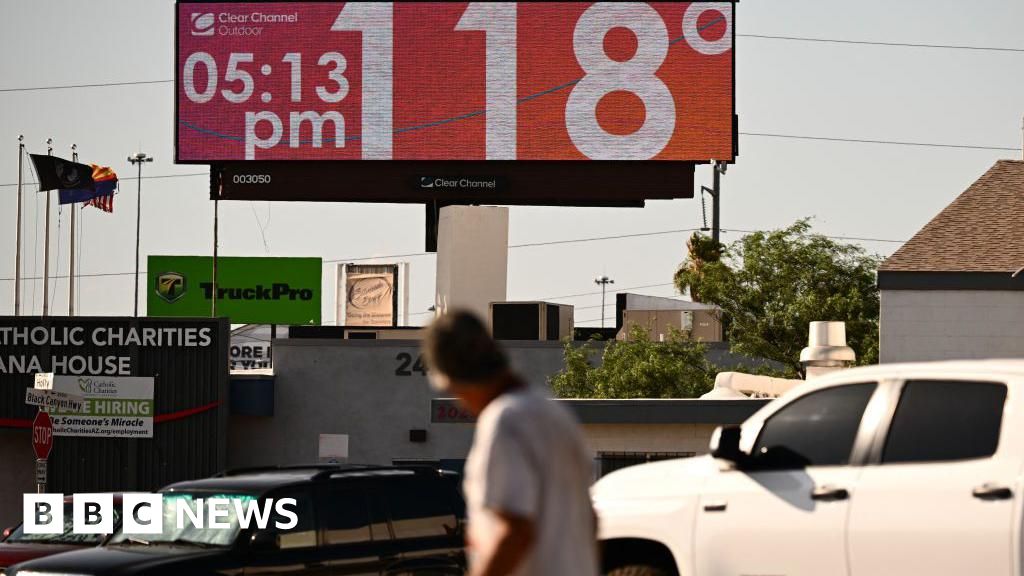
What this desert city can teach the world about tackling heat deaths
13 hours ago

Getty Images
It has been a blisteringly hot summer for much of the US and Europe
Scientists have warned that these extreme temperatures are the new normal for these communities
France reported an increase of more than 2,000 deaths during the record-breaking heatwave in late June. In England and Wales, scientists estimated that more than 2,700 people may have died from heat-related causes from a series of heatwaves since May
And in the US, at least 44 heat-related deaths were reported over the 4 July holiday weekend from the extreme weather
For many, the rising temperatures have been a shock to the system, a new reality people have had to adjust to as extreme weather events become more frequent and intense with climate change
“People don’t realise this is not the same heat that we were experiencing 10 years ago, it is actually worse, because in many cases nighttime temperatures are not cooling off,” Jennifer Marlon, a Yale University researcher who looks at the impacts of extreme heat, told the BBC
Our bodies rely on cooler nighttime temperatures to recover from the heat of the day
But for one city in the US, hot temperatures are not new. Officials in Phoenix, Arizona, have spent years working on solutions to reduce heat deaths, an effort that seems to be working, and could provide a blueprint for the world
Maricopa County where Phoenix is located, has some of the hottest temperatures in the US so it finds itself at the forefront of the battle over heat safety – working on programmes that offer residents access to cooling centres and free air conditioning
More than 2,700 people may have died in exceptional May and June heatwaves in England and Wales
France records 2,025 excess deaths at peak of heatwave as Europe braces for more extreme weather
Free air con? US cities look at new ways to prevent heat deaths
Phoenix was the first city worldwide to hire a heat officer in 2021
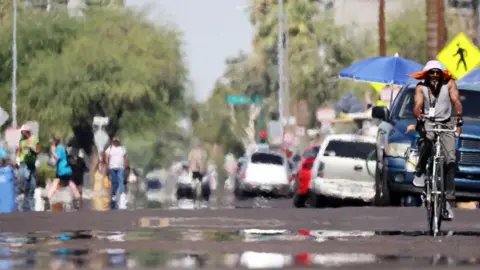
“We’ve had the the relative benefit of knowing that this is going to be a problem every year, but it appears to be more and more of a problem or more of a predictable event in communities across the globe,” Maricopa County’s chief medical officer Nicholas Staab told the BBC
Getty Images
The county’s efforts to reduce the number of heat-related deaths have proved successful in recent years
After heat-related deaths reached a peak of 645 in 2023, they declined to 405 in 2025 – with many experts attributing part of the decline to the policy changes
Much of the county’s focus has been on increasing access to air conditioning, as many heat deaths were among people with low incomes or experiencing homelessness
The county offers consistent, open access to cool spaces. They have expanded the hours those spaces are open – in some cases they are open 24 hours – getting people off the streets and out of the heat
Another programme offers eligible residents repairs or replacements to their air conditioning systems
“The world has a lot to learn from Maricopa County,” Marlon says
But the downward trend is not guaranteed
Already this year, as of 11 July, Maricopa County has recorded 23 heat-related deaths, with another 282 more under investigation. Should those hold, the numbers would outpace the previous year
Can Arizona’s success be replicated elesewhere?
Ladd Keith, director of the Heat Resilience Initiative at the University of Arizona, told the BBC that other places could, like Phoenix, appoint a heat officer – someone to oversee initiatives and run communications among government offices
“It’s incredibly important to make someone responsible for heat because the problem is, if it’s no one’s responsibility, then no one will address it,” he says
With coordination and communication, facilities like cooling centres can be fashioned in other parts of the US not accustomed to the scorching heat, Marlon says
But that takes widespread acknowledgement and understanding of how serious heat can be and that it is not temporary, experts say
Heatwaves have become more frequent, more intense and longer-lasting because of human-induced climate change. The world has already warmed by more than 1.1C since the industrial era began and temperatures will keep rising for some time even if governments around the world make steep cuts to emissions
It is also essential that cities and jurisdictions understand that heat is not only a health issue but an infrastructure and economic issue as well, according to experts
Roads will continue to buckle and flights will continue to be delayed from extreme heat, Marlon warns
But most of all, Keith says, it’s imperative people understand this oppressive heat will continue
“We have to shift away from planning for the historic heat we’ve experienced and start to plan for the heat we’re going to experience in the next five to 10 years,” he says
“If people think it’s bad now, it’s going to be hotter, and it’s going to be hotter longer. The records are going to be broken, you can almost guarantee, year after year across the world.”
Free air con? US cities look at new ways to prevent heat deaths
Climate
United States
Phoenix
Health
