

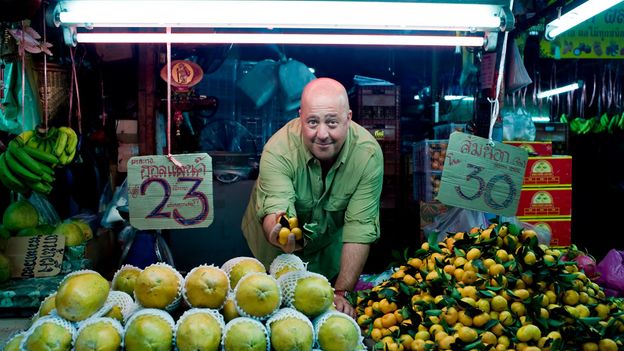
The five meals Andrew Zimmern will never forget
4 hours ago

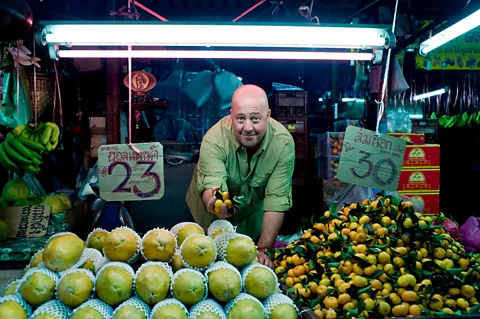
Courtesy of The Travel Channel
The celebrity chef and lifelong traveller has eaten it all, but these are the five meals that he’ll remember for the rest of his life
Just by looking at a plate of food, Andrew Zimmern believes you can see a place’s history
“Food is the way to understand another culture,” says the chef, TV personality, author and lifelong traveller. “If someone from outer space came down and said, ‘Show me your hometown’, I wouldn’t take Mr Spaceman to the museum. If you want to understand a human being, sit down and have a meal with them.”
Andrew Zimmern is a television host and food system advocate who has won four James Beard awards and an Emmy. The creator of the Bizarre Foods franchise, he now hosts Curated Journeys, intimate travel experiences focusing on hyper-local food cultures and rare culinary traditions
We asked Zimmern to choose the five meals that have shaped him – no small feat for a man who has been everywhere and eaten literally everything; no organ ever unturned. The result is less a list than an autobiography, tracing a life savoured through food
From the savoury French bite that cemented his destiny, to meeting a culinary hero, here are the five meals Andrew Zimmern will remember for the rest of his life.
Andrew Zimmern
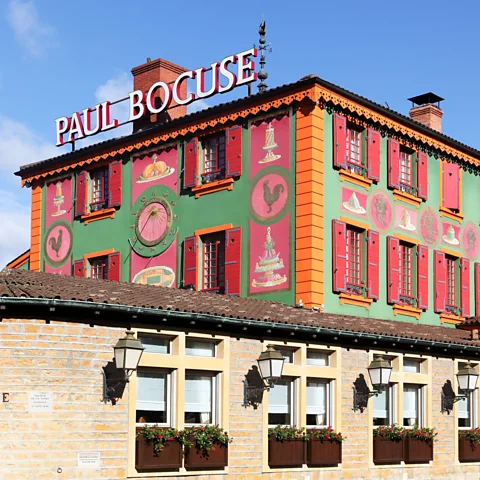
1. Liver pâté at Restaurant Paul Bocuse, Lyon, France
It was 1976. I was 14 years old, [skiing in Val-d’Isère] with my father’s best friend and his family. It snowed for six days straight and we were stuck in the hotel for seven days. The last meal we had before we could leave town was stale bread and sardines. So the seven of us drove to Lyon and I had my first meal at Restaurant Paul Bocuse
I ordered the largest tasting menu: 15 courses. There was chicken cooked inside a pig’s bladder, truffle soup with a beautiful puff pastry dome. The fourth or fifth course was a tiny timbale (mould) of liver pâté; warm, with a sauce of wine and liver. To this day it’s one of the 10 best things I’ve ever put in my mouth
The staff was intrigued that a young person would order this. I was asked if I liked it: “Yes, very much. Can I have another?” About two minutes later, Paul Bocuse himself came to the table. “You want another one?” “Yes, please. That’s the best thing I’ve ever eaten in my life.”
Within seconds, another was at the table. My family just stared at me. [But] I’d never seen a restaurant run that way. It had a garden; you could see women picking vegetables throughout the dinner. They were baking bread during the meal service. The restaurant made its own butter. It convinced me that food had no limits… that there was a sense of craft bigger than I had even imagined. I walked into that meal, knowing that I was going to be in the food business, but I left that meal convinced
Andrew Zimmern
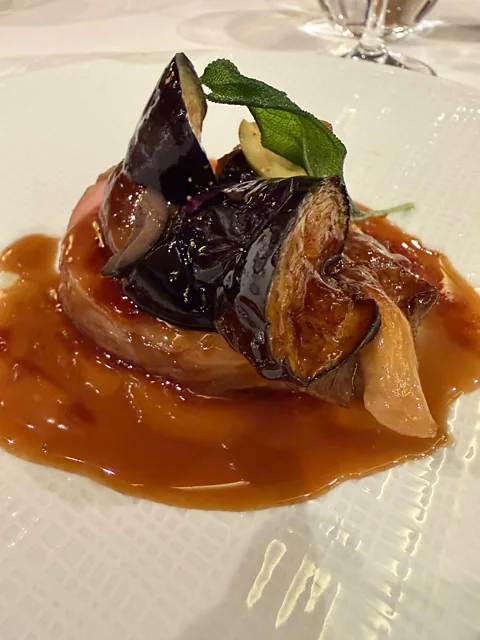
2. Grilled aubergine and corn soup at Hokusai Fine Dining on the Mitsui Fuji Princess, Japan
I have been obsessed with chef Kiyomi Mikuni since the early 80s. He started the French-Japanese food mashup. His first cookbook was called the Food Fantasy of Hotel Mikuni. I was a young cook, had spent seven months cooking in Paris, and the book blew my mind. The idea that these two cuisines could be married so perfectly, and that there was a guy only a few years older than me talented enough to pull that off… I fell in love with him, professionally
Every time I went to Japan, I never met him. But I just got back from Japan yesterday, and on this trip, I told the folks who were handling me, “I need to eat [at his restaurant].” He has, like, 12 restaurants, [including one] on the boat that we were taking to South Korea. One seating cost a ridiculous amount of money but there was no way I wasn’t eating there
[The menu] was almost straight up French. He spent the whole night talking to us, giving us food. You know how they say never meet your hero? This guy was just so kind, he was so funny. He served grilled aubergine with greens, dressed with olive oil and shallots, then put a piece of grilled eel with a dehydrated and fried eel bone on top. We had corn soup layered on a gelée of beef consommé. Very French, but he used Japanese corn
On top of it, he put a tempura sweet fish, which is very bitter. He told everybody, “You eat it in two bites, head first, and then the rest.” Then you wash it down with the soup, and finish with the consommé at the bottom, which was clarified and very beefy, very intense. It’s just a beautiful mix of French and Japanese, and it was quite extraordinary. Best food on any cruise line I’ve ever experienced
Andrew Zimmern
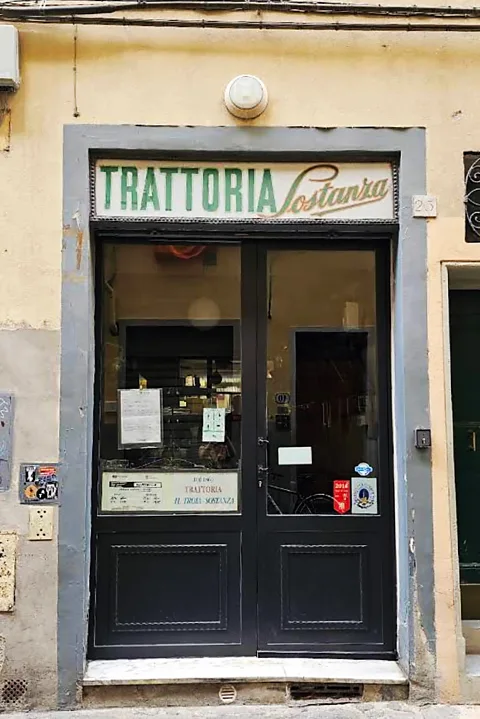
3. Liver crostini at Trattoria Sostanza, Florence, Italy
My father, when he was on honeymoon with my mother, went to Trattoria Sostanza in Florence. In the ’50s, it was two communal tables, an open kitchen and a hand-written menu. [When] he took me there in the late ’60s, one of the waiters who had served him in the ’50s was now the maitre d’. [We] went back in ’74 or ’75, then I went in 1979 with a friend. The waiter-turned-maitre d’ was now the manager. He was old. [But] the restaurant hadn’t changed. When I went back in the 1980s, it had started to change because the staff [only] left when they couldn’t work anymore. The magic of the place, to me, was the old version.
They still servecrostini di fegato (liver crostini). The first few times I was there, there was a pot and a basket of sliced stale bread from the night before. The cook would take the bread, scatter it on a platter, take a spoon and spread this hot liver mush on top. It was insane. If you said, “name one food you’re going to have as your last bite,” I might pick that
Over the course of the night, they just kept dumping vegetable scraps and chopped livers and organs [in the pot], and when there was [just a little] wine left in a bottle, they would dump it in. I don’t think the pot ever came off the stove in 40 or 50 years
Every single time I went there I would have the crostini, their pasta al sugo (pasta with meat sauce) and grilled squab. Over time, I would experiment with different things. But going there with my father and having that same food and understanding that staff can stay forever, a restaurant can stay forever – it can change but still be the same – was a great piece of learning for me
Andrew Zimmern
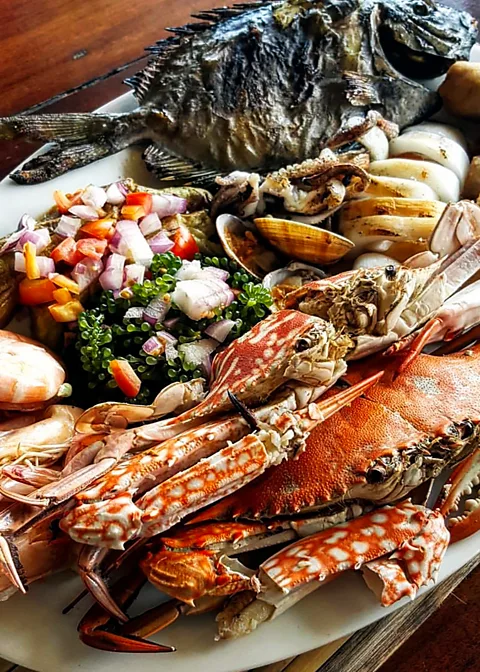
4. Tuna cheek and jawbone at Badjao Seafood House, Palawan Island, Philippines
I’m obsessed with seafood, so to be on an island that traditionally has earned its living from the water, I wanted an interesting seafood meal there. You park your car at the edge of the dock, [and] at the end of this dock is a wooden house on stilts. That’s the restaurant. There’s a hole in the middle with a ladder that goes down into the water
Five or six times during the two hours that I was eating there, fish, vegetables, various things, arrived by canoe. They’ll go out, they’ll throw a net, they’ll catch a pound of shrimp. Kids will dive off these little boats and go down to the bottom and pull up crabs and lobster and other shellfish. They’ll sell it to the chef, so the menu is constantly changing throughout the night based on what’s coming through the hole
I had tuna cheek and jawbone, grilled over coconut husks, and served to me [in] distinctly Palawan style, with little leaves and lettuces to wrap with pieces of tuna that you would pull off the jawed cheek. It was remarkably delicious. I had a spicy shrimp and chilies dish tossed in a wok, and a fish soup. They had an entire banana stalk in the corner of the restaurant; it probably had 200 bananas on it. They mashed it for dessert and put date syrup on top and rice. It was like their version of mango rice. Still one of the greatest meals of my life.
Andrew Zimmern
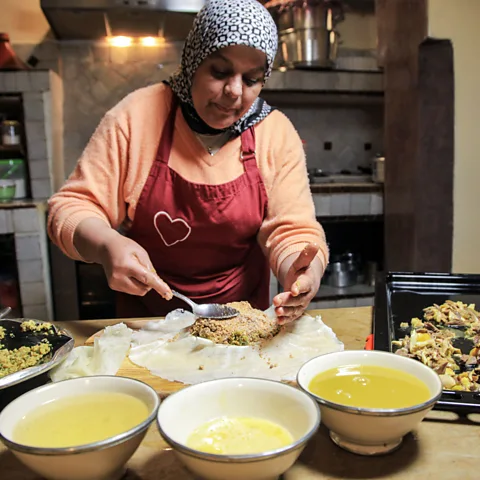
Riad Laaroussa [is] generally considered to be one of the best riads in Fez, but no man is ever allowed in the kitchen. The women who work therelet me in to cook with them: “You’re the first man. Our husbands don’t even come in here.” I asked them why and they said, “This is our place. We can all just talk to each other, without men around, about what life is really about.”
They gave me chores, like, chopping parsley and cutting tomatoes. I finally said, “I’m a professional. This is what I do, too.” I told them I wanted to make b’stillawith them, pigeon pie made with a very thin crepe called warqa. Two or three of the women lined up, and we worked on it for two, three hours
When it came out of the oven, [the head chef] smiled because she was so happy that I had made a b’stilla that was just like theirs. I went to give her a big hug. She bent back like Keanu Reeves in The Matrix, and I realised, “Oh, my God, I can’t touch her.” She had to leave the room. I felt terrible
After cooking everything with them, I sat down to this meal and we had all the typical Moroccan starters and tagine but the highlight was knowing that everyone in the room was eating b’stillathat I had made
I learned everything I needed to learn about Moroccan culture in that room. That the Muslim women took sanctuary in that kitchen… it changed the way I looked at womanhood
This interview has been condensed for length and clarity
BBC Travel’sThe SpeciaListis a series of guides to popular and emerging destinations around the world, as seen through the eyes of local experts and tastemakers.
—
If you liked this story,– a handpicked selection of features, videos and can’t-miss news, delivered to your inbox twice a week.
For more Travel stories from the BBC, follow us onFacebookandInstagram
The SpeciaList
Food & Drink
Features
