

Taliban leaders mark 5 years in power in Afghanistan as UN official warns of crisis
Taliban rulers have celebrated the fifth anniversary of their return to power in Afghanistan
ByABDUL QAHAR AFGHAN Associated PressandSUZAN FRASER Associated Press
August 15, 2026, 5:38 AM
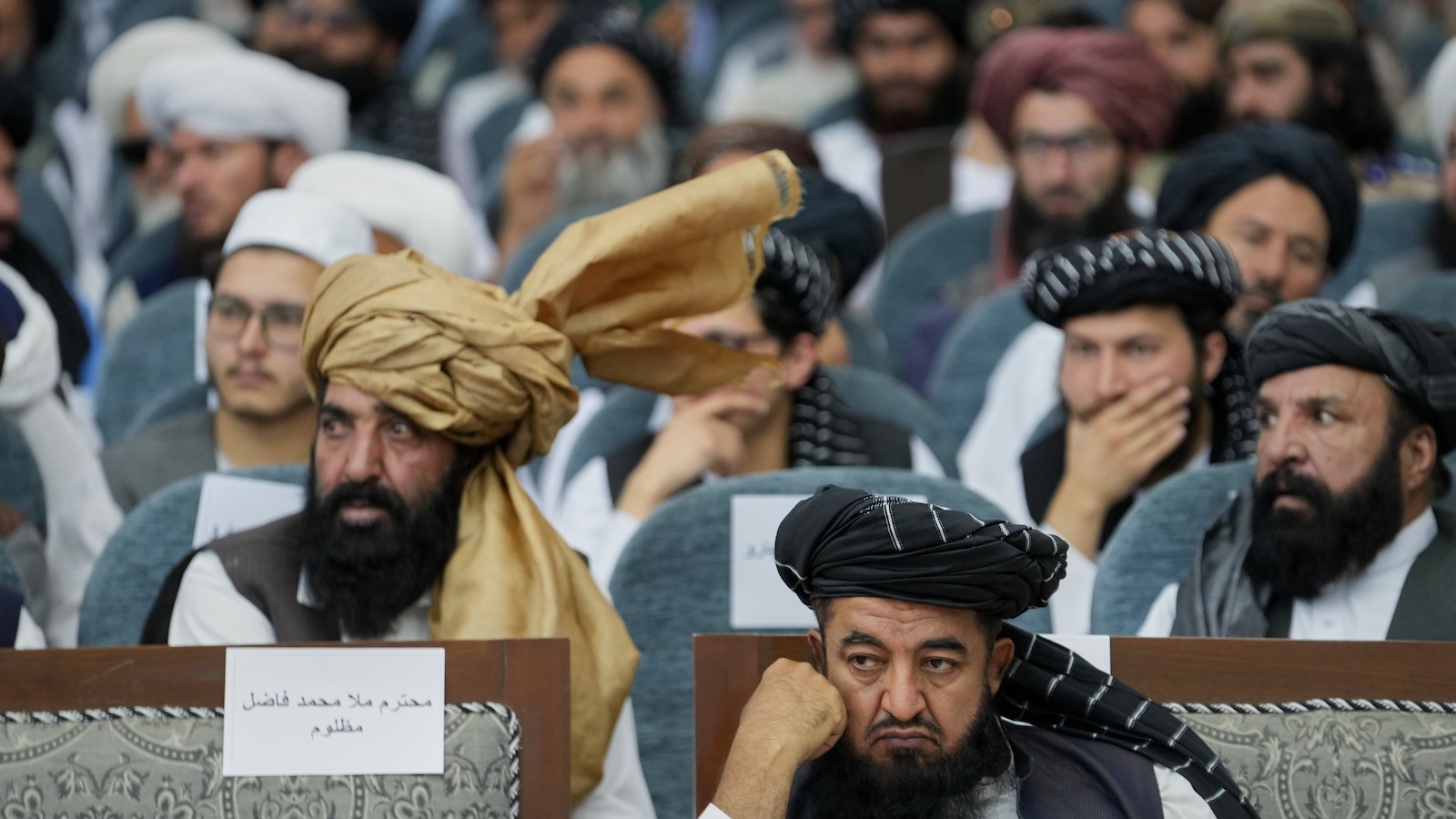
KABUL, Afghanistan –Taliban rulers and other officials gathered at Afghanistan’s traditional Loya Jirga assembly hall on Saturday to celebrate the fifth anniversary of their return to power, touting what they described as restored stability and an end to decades of conflict
A top United Nations official, however, warned of a grave human rights crisis in Afghanistan, where girls over age 12 are barred from attending school
The Taliban seized power on Aug. 15, 2021, as the U.S. and other NATO troops withdrew following a costly two-decade war. The U.S. withdrawal led to chaos at Kabul airport as crowds of people tried to flee the country in desperation
Soon after taking power, the Taliban administration imposed a ban on girls’ education beyond the sixth grade and later banned higher education for women, despite having pledged before the takeover that women would be allowed access to education, employment and public participation
Women have also been banned from public spaces such as gyms and parks, from taking part in sports and traveling to distant locations without a male guardian
At the Loya Jirga, high-ranking officials were joined by some foreign representatives and thousands of ordinary citizens for speeches marking what they said was Afghanistan’s liberation from American forces
“We pray to Almighty God to forever protect our homeland from occupation, aggression, wars, and insecurity, and to enable our people to enjoy peace, tranquility, and prosperity under the auspices of the Sharia-based government,” the Taliban government’s deputy spokesman, Hamdullah Fitrat, said during the ceremony
Abdul Salam Hanafi, the deputy prime minister in charge of administrative affairs, said the Taliban rule ended an era of external interventions and internal strife in Afghanistan “over the past half-century,” restoring security
“At least 300 Afghan youth were martyred or killed every day,” Hanafi said. “Three hundred sisters would become widows, several children would become orphans and 300 mothers would be grieving. Praise be to God, with the rule of the Islamic Emirate of Afghanistan, this tragedy was removed from the Afghan nation.”
There were no women present at the ceremony
Five years on, the Taliban government remains isolated internationally, with Russia being the only country to have recognized it formally
Foreign Minister Amir Khan Muttaqi said countries that have engaged with the administration have gained from doing so and called on others that have not established contacts to reconsider their approach
“They should move towards a policy of engagement and mutual interaction,” he said
In Kabul, Afghans took to the squares carrying Taliban flags and chanting slogans in support of the government. Convoys of vehicles wound their way through the city, causing traffic jams

US, Iran passing messages through intermediaries, Tehran says
- Aug 9, 2:40 PM

Iran live updates: Trump says he’ll declare Strait of Hormuz a US territory
- 4 hours ago

Trump imposes new drone tariffs, orders Navy to allow shipbuilding abroad
- Aug 13, 10:45 PM
Security was tight, with a heavy Taliban security force presence and several checkpoints on a main road leading to the Loya Jirga
Celebrations were also held in provinces across Afghanistan, where Taliban flags and posters emblazoned with slogans in praise of the Taliban’s return to power were displayed along major roads and marketplaces
In a video message, Richard Bennett, the U.N. special rapporteur on the human rights situation in Afghanistan, said the country was undergoing a deep human rights crisis
“While the era of war has ended, it’s questionable whether there’s real peace, and the human rights situation has steadily deteriorated, most dramatically for women and girls,” Bennett said. “My mandate has concluded that this system amounts to the crime against humanity of gender persecution.”
“The crisis extends well beyond gender discrimination, even beyond gender apartheid,” he continued, noting that the U.N. continues to document arbitrary arrests, torture, extrajudicial killings and persecution of minorities in Afghanistan
Bennett warned the international community against “normalizing” the Taliban’s policies, saying it would legitimize the discrimination and tell “victims their suffering is negotiable.”
In an interview with The Associated Press earlier this week, Molvi Hayatullah Mahajar Farahi, deputy minister in the Taliban government for broadcasting at the Ministry of Information and Culture, said despite “challenges and difficulties” the administration has in the past five years delivered security and infrastructure and created jobs
Farahi, when asked, did not address the issue of the education of girls and women but said “the level of investment made in universities surpasses anything seen in the past.”
The U.N. agency on education and culture, UNESCO, estimates that some 2.4 million girls have been excluded from secondary education. The U.N. World Food Program said child malnutrition has reached critical levels in a third of Afghanistan’s provinces and is expected to worsen due to funding shortfalls
U.N. Women said this week that women and girls are facing the harshest restrictions in the world and that the bans are damaging Afghanistan’s future, with the lack of teachers, doctors, nurses and midwives threatening the country’s social and economic foundations
Fraser reported from Ankara, Turkey
Related Topics
- Taliban
- Afghanistan
