

Ukraine’s new drones are letting its soldiers “free hunt” in areas far behind the front lines that Russia long considered safe
The mid-range strike drones are making Russian logistics deep behind the front increasingly vulnerable, giving Ukrainian operators access to target-rich areas with limited defenses. One soldier described attacking Russian targets in those areas as “quite easy.”
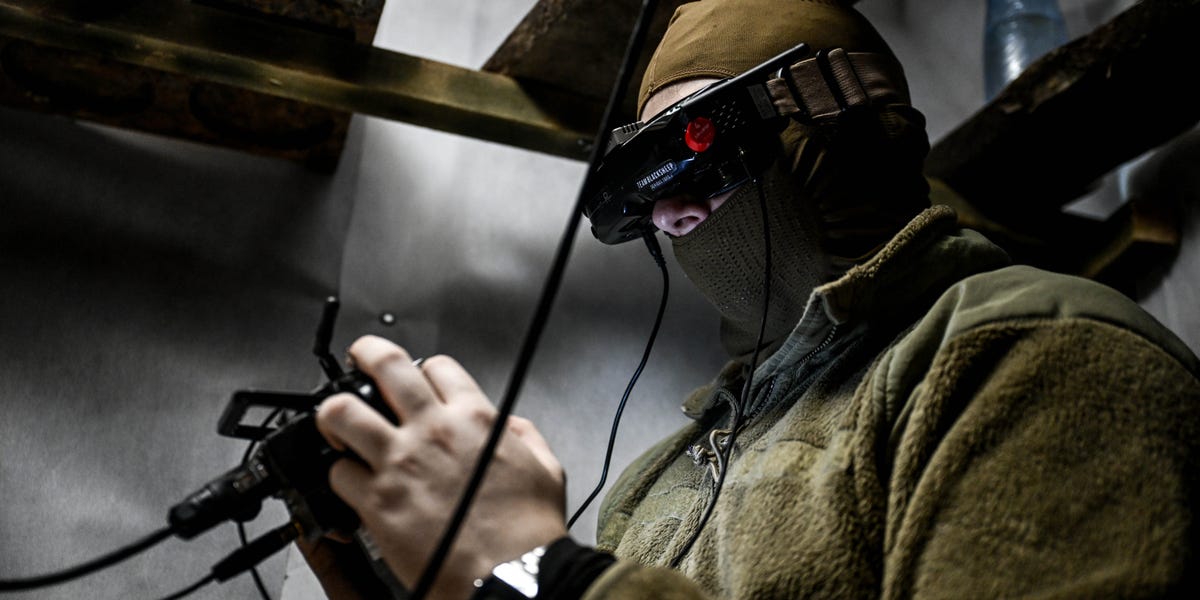
Ukrainian operators can put a Starlink terminal on a drone to give it an internet connection, fly the aircraft out “onto the critical highways,” and then it’s just a “free hunt” after that, Dmytro “Liber” Zhluktenko, a former drone operator who now serves as a lessons-learned analyst with Ukraine’s 413th Unmanned Systems Regiment “RAID,” told Business Insider
Operators are sowing “chaos” 100 kilometers into the rear, he said, adding that “those highways are so loaded with military logistics that it would be very hard not to find targets.”
He said it’s “not a 100% kill zone, but you are definitely in danger” if you are in that region
Ukraine’s drones have been key to its survival against Russia. Its short-range first-person-view drones hit Russian troops, supplies, and weaponry near the front lines, while long-range drones strike oil facilities, airfields, and military targets deep inside Russia
New mid-range strike drones are filling the gap between those two highly effective campaigns,targeting areas roughly 20 to 300 kilometers from the front
Explore BI Games
Take a smarter break in your day – and see how far you get
Play now
There, Ukraine can attack Russian warehouses, vehicles, transportation hubs, and command posts, disrupting the flow of supplies to front-line forces. Ukraine says its use of the drones is expanding rapidly and remains a major priority
Russia lacks strong defenses in this middle zone, Zhluktenko said, at least in part because it can’t afford to relocate many from elsewhere, where Ukraine is already keeping them under pressure
Western military analysts have said that Ukraine’s varied drone attack campaigns have already stretched Russia’s air defenses thin, forcing it to make decisions about which areas to protect. Opening new areas to attack only worsens that problem
Zhluktenko said that even if Russia deployed large numbers of interceptor drones, which are designed to destroy other drones, defending such a vast area would require “a lot of re
“So it’s a win-win anyway,” he said. “So we are just widening the danger zone for them.”
Ukrainian officials say the new mid-range strike drones are opening previously safe areas of Russia’s rear to attack, creating new opportunities for Ukraine while putting fresh pressure on the Russian army
Taras Berezovets, head of the military cooperation department of Ukraine’s Territorial Defense Forces, a branch of the armed forces, said in May that the mid-strikes mean that for Russia, “the area which they considered to be safe now is a new kill zone.”
This causes huge problems for Russia both psychologically and practically, he said
For Russia, it now “takes much more time to deliver armaments to the front lines,” Berezovets said. He said using this mid-range technology in large quantities “will change the front lines.”
Ukraine’s then-defense minister, Mykhailo Fedorov, said in May that “the enemy’s rear is no longer a safe haven. We are seizing the initiative — using technology and the cold math of war to paralyze their operations.” He said that Ukraine is “launching a ‘logistics lockdown’ for the Russian army.”
And Ukraine’s defense ministry said at that time that “destruction of enemy logistics, depots, and other targets has increased fourfold” over recent months
Ukrainian President Volodymyr Zelenskyy said last month that Ukraine has “achieved important results through its mid-range and deep strike capabilities,” including “serious disruptions” to Russian logistics
