

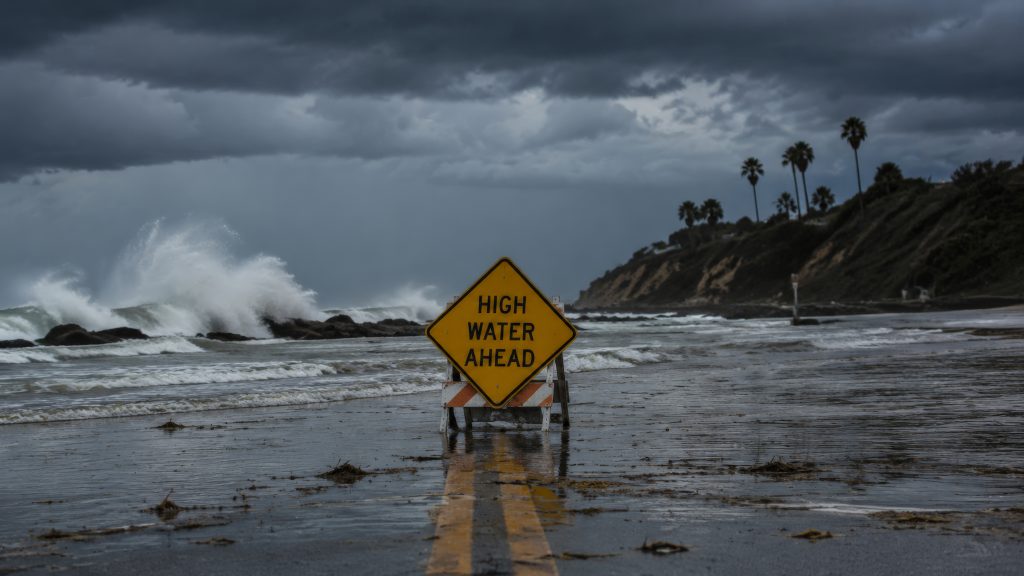
When a hurricane roars toward land, forecasters try to predict how high sea levels will rise to help coastal communities prepare for the worst impacts
But storm surge peak isn’t always the biggest problem. How fast water rises, how long it remains elevated, and how quickly it recedes all influence coastal erosion, infrastructure damage, emergency response, and recovery — and these factors can vary dramatically from storm to storm
A team of Virginia Tech researchers recently published a study in Coastal Engineering demonstrating that storm surge behavior follows a set of distinct, repeatable patterns that depend on both storm characteristics and coastal geography. The findings could help improve forecasting, engineering design, and coastal planning as communities prepare for stronger storms and rising seas
Looking beyond peak flooding
For decades, storm surge research and engineering guidance have focused primarily on the highest water level a storm produces
“But that doesn’t tell the whole story,” said Atefeh Alipour, a doctoral student in civil and environmental engineering. “We wanted to look at the bigger picture of how a storm surge evolves over time.”
Alipour led the research with Jennifer Irish, professor of civil and environmental engineering; Robert Weiss, professor of geosciences; and David Muñoz, assistant professor of civil and environmental engineering
“The timing and duration of storm surge are just as critical as its height when it comes to coastal destruction,” said Irish. “A surge that lingers for days causes severe, prolonged erosion on barrier islands and keeps critical evacuation routes submerged long after a storm passes.”
Using two decades of high-resolution hurricane simulations representing 62 named storms that affected the United States coastline between 2003-22, the researchers analyzed more than 1,000 storm surge events to better understand how flooding evolves from beginning to end
Eight patterns hidden in thousands of storms
Rather than examining each storm individually, the team used a machine learning approach known as k-means clustering to group storm surge events based on how they evolve over time
“This allowed us to uncover recurring patterns that aren’t obvious when looking at individual storms,” said Munoz. “These recurring patterns provide a clearer picture of how storm surge evolves across different coastlines and storm conditions.”
The analysis revealed eight characteristic surge patterns. Some surged rapidly before gradually receding, while others built more slowly or remained elevated for much longer. Together, these patterns capture the wide range of ways coastal flooding can unfold during tropical cyclones
The findings also showed clear regional differences. The Gulf Coast exhibited the highest diversity of surge patterns, driven by its shallow continental shelf and frequent hurricane landfalls. The Atlantic Coast showed fewer overall patterns but greater variation in how those patterns were distributed along the shoreline
Perhaps most importantly, the researchers found that no single characteristic, not even hurricane category, determines how storm surge will behave.
Instead, surge evolution depends on several interacting factors, including storm size, speed, direction of travel, wind field, and the shape of the coastline beneath the water.
“As a result, two storms with similar wind speeds can produce very different flooding timelines,” said Alipour.
Building better tools for coastal resilience
Understanding how a storm sturge evolves could help engineers and planners to design infrastructure like roads that can withstand the unique timeline of each flood event.
The findings around common storm surge patterns could also strengthen flood forecasting and give emergency managers more detailed information to support evacuation planning and community preparedness
“As climate change contributes to rising sea levels and more intense tropical cyclones, understanding how storm surge evolves is more important than ever,” said Weiss. “This framework could improve flood prediction and support better planning and decision making to make coastal communities more resilient.”
Contact:
Chelsea Seeber
540-231-2108
