

The reason fans care so much about the ESPN layoffs is the same reason they love their favorite teams and players. There is a lifelong emotional connection to the network
ESPN remains the most ubiquitous and talked-about brand in sports media. Its live-rights portfolio — including Super Bowls, NBA Finals, Stanley Cups and College Football Playoffs — is arguably the most impressive in TV history. Ratings are strong
When familiar faces such as Karl Ravech, Ryan Clark and NFL Network’s Tom Pelissero are let go, as they were this week, it prompts all kinds of visceral reactions from fans
I love that guy!I can’t stand him!
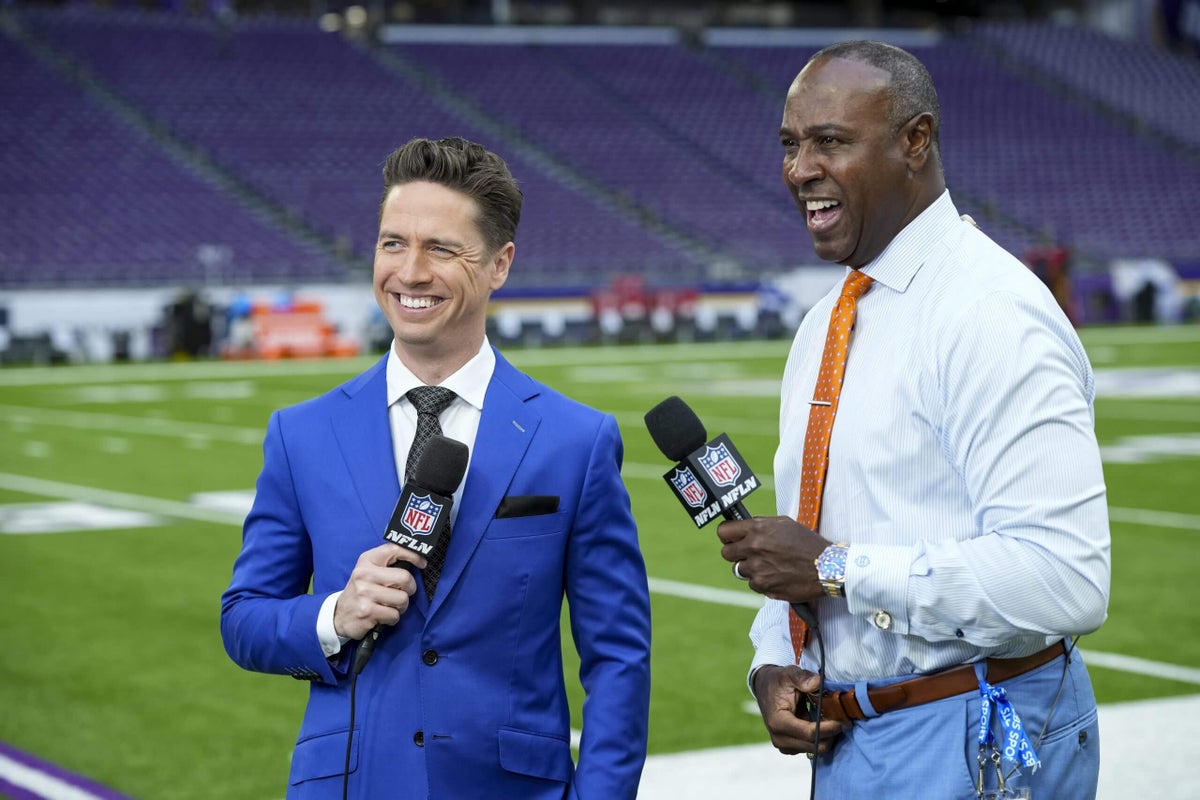
Though that trio received the headlines during ESPN’s latest round of layoffs, it is the loss of David Lloyd, Stephania Bell, NFL Network’s Charles Davis and a slew of NFL Network behind-the-scenes people that continues to strip the invincibility from the network once known as the “Worldwide Leader in Sports.”
Lloyd, Bell and Davis are the antithesis of ESPN’s biggest stars, Stephen A. Smith and Pat McAfee, who might be popular but are also loud, self-promoting and divisive. What Smith and McAfee are not is personally responsible for the layoffs
Smith’s $21 million a year salary, McAfee’s potential $60 million-$65 million per year deal, the incorporating of NFL Network and how to reach ESPN’s financial targets are ultimately the decisions of ESPN chairman Jimmy Pitaro
ESPN is valued at $25 billion to $30 billion, so while Smith and McAfee are easy targets, it is too simplistic to put the firings at their feet. They are going for theirs, and the bosses have decided they are swing-for-the-fences hitters who are essential to the success of the business
But the disparity between what ESPN values in Smith and McAfee and in the traits of Lloyd, Bell and Davis says something about who ESPN is today
There are still a lot of employees remaining who share Lloyd’s, Bell’s and Davis’ old-time traits. However, increasingly, the Bob Ley types are fewer and constantly left on unstable ground, muttering to themselves about how the place used to be
Since its birth in 1979, there have been two ESPN eras. First came the pre-2013 era, when the place was Shangri-la, one of the greatest media businesses in history with its dual revenue streams of around 100 million subscribers and advertising that created a multibillion-dollar moat shielding it from the emerging digital realities that were attacking the rest of the media
Now, there is the post-2013 era, when layoffs finally found their way to the once-impregnable Bristol, Conn., as cable subscribers have sunk into the 60 million range and with dreams that a new “Unlimited” direct-to-consumer app can reverse fortunes
Since 2013, this has resulted in earth-shaking layoffs in Bristol every couple of years, derailing careers for those who are cut and shattering nerves for those who survive
Pitaro — who became the leader of ESPN in 2018 when the business was tougher — is a huge New York Yankees fan and has channeled George Steinbrenner at times, willing to spend big to get what he wants. His No. 1 goal when he got the job was repairing the relationship with the NFL that had deteriorated under Pitaro’s predecessor, John Skipper, despite the network paying the league billions
Pitaro picked up a couple of Super Bowls, brought in the Mannings, Joe Buck and Troy Aikman and acquired NFL Network. Mission accomplished on that front. But who a company decides to keep and who must go always says something about who it is
This brings us to why Lloyd’s departure is particularly of note. Lloyd joined ESPN in the golden years, before the turn of the century. At that time, in the footsteps of Chris Berman, Dan Patrick and Keith Olbermann, “SportsCenter” anchor was one of the most competitive jobs in media. Lloyd got one of those coveted spots
Internally, ESPN has preached over the years to work hard, not make it about oneself and to represent the company well. Lloyd was on “SportsCenter,” but even after nearly three decades, you might not know his name. He didn’t have a signature show or catchphrase, but his attitude represents how pre-2013 ESPN — before the new realities of the business hit — won. His style was akin to moving over a runner, boxing out or throwing a crucial block
Bell is an innovative symbol of what has made ESPN successful over the years, turning nothing into something. Like Mel Kiper Jr. on the NFL Draft or Joe Lunardi with NCAA Tournament Bracketology, Bell pioneered making the role of injury expert a thing on TV over her nearly 20 years at ESPN. This ingenuity is what has helped ESPN stand out
Now, ESPN owns NFL Media. In February, the NFL received a 10 percent stake valued at $3 billion in a series of deals, allowing Roger Goodell and the owners to cash out. That left former NFL Network employees to deal with the elimination of jobs for corporate America’s favorite pastime, finding synergies
So Davis — a draft analyst and consummate professional adored by everyone who works with him — was shown the door. He went, as part of what turned out to be a behind-the-scenes NFL Network bloodbath, impacting scores of people you never heard of but who kept the lights and cameras going. The post-2013 ESPN era steamrolls ahead
What You Should Read Next

Why ESPN chairman Jimmy Pitaro is making his big bet on streaming
The Aug. 21 launch of ESPN’s updated app, including new access to all of ESPN’s live games without cable, is a huge moment for the network.
What gets rewarded is the individual over the company, with the reasoning in 2026 being it is the only way to break through in the crowded media environment. Maybe that is true; maybe it’s not. The result is Lloyd, Bell, Davis and the nameless production staffers are gone
Post-2013, if you work for ESPN, you know earthquakes happen in Bristol. It is still a destination spot in sports media, but it has not been utopia for a long time
It might just be the reality of the digital media world’s impact catching up to ESPN. But when there is no room for Lloyd, Bell, Davis and the rest, it says something about what type of team you are building
ESPN is no longer the 1998 Yankees. There is less room for those who play the game the right way
