

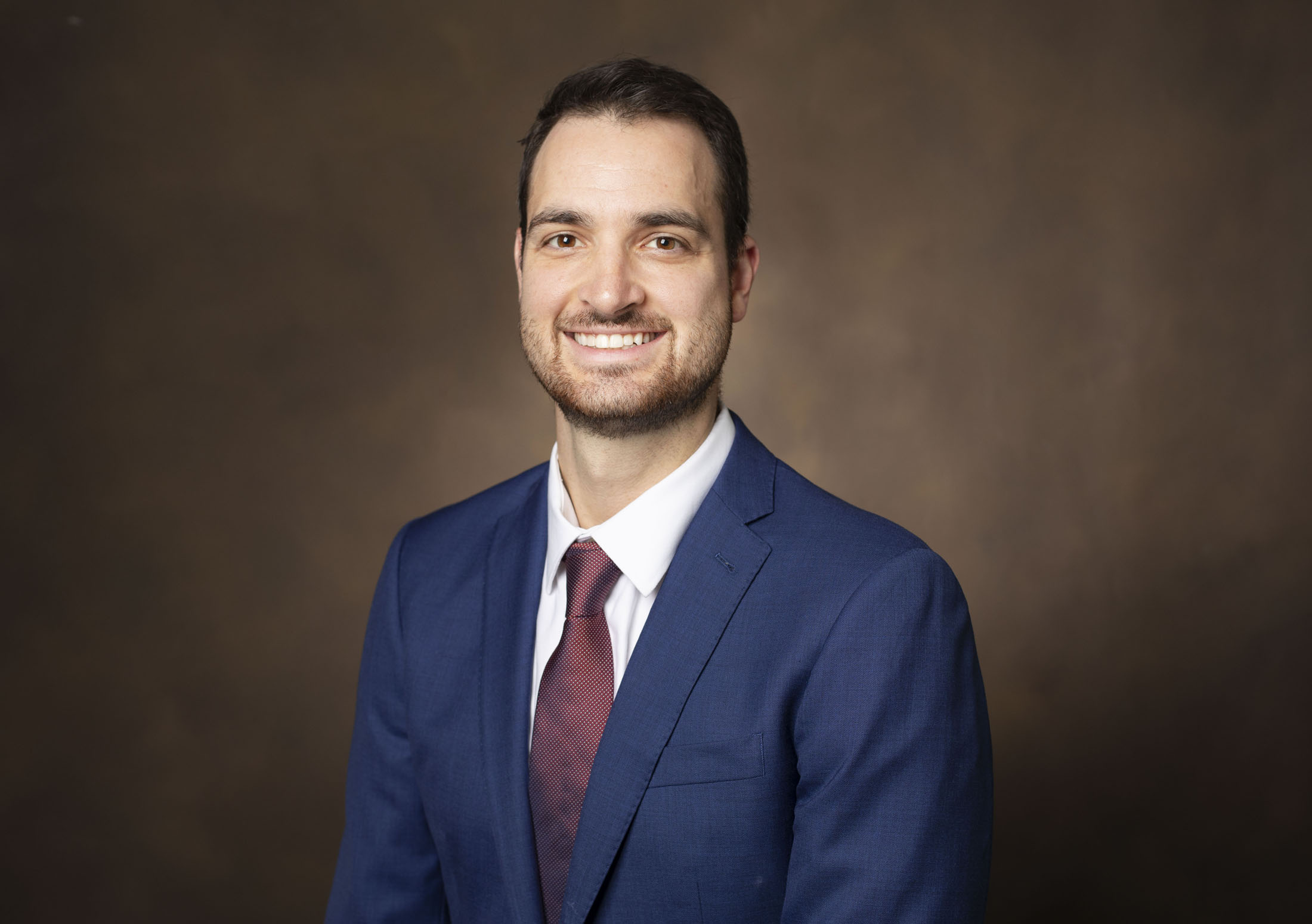
Nicholas Sellke, MD. (photo by Susan Urmy)
By: Craig Boerner
Nicholas Sellke, MD, Assistant Professor of Urology and Director of Men’s Health, is new to Vanderbilt Health with a focus on male fertility
He is currently seeing patients at The Vanderbilt Clinic on Mondays and at Vanderbilt Urology Cool Springs on Thursdays. His first clinic day was Aug. 17
Sellke grew up in Boston and attended medical school at Brown University. He completed six years of urology training as a resident at Case Western Reserve University Hospitals in Cleveland and then a one-year fellowship at Stanford University Medical Center focused on male fertility and sexual medicine
“There is a misconception that fertility is primarily a women’s issue, but male factors contribute to about half of all infertility cases,” said Sellke, also a surgeon who performs vasectomies and vasectomy reversals
“Couples facing fertility challenges are often on an emotional and exhausting journey,” he said. “One of the most rewarding parts of my job is listening to these couples and working with them to find out the best route forward for them to build their family.”
Although male fertility is a major focus of his practice, Sellke also treats a wide range of men’s health concerns, including erectile dysfunction, hormonal disorders and sexual health issues. The definition of men’s health is very different depending on where you go, he said, especially with places that will prescribe testosterone without examining the full picture
“Many men hear that testosterone will help them feel better, but they may not be aware of the impact it can have on fertility. That is why it is important to look at the whole picture and have thorough counseling before starting treatment,” he said
“There’s some debate about whether cardiac health is affected and whether it is a risk factor for prostate cancer. I think recent studies have shown that risk is not really as high as we traditionally thought, but the evidence is still evolving. However, we do know that testosterone therapy can significantly reduce sperm production and effectively shut down fertility.”
Sellke would like to dispel some misinformation for his patients, especially since the subject can be a sensitive issue for men. He collects a thorough history and physical examination, including blood tests, to guide whether a patient needs lifestyle changes, medications to optimize hormonal health, or surgeries to fix an anatomic abnormality or a blockage, or to reverse a vasectomy
“I enjoy seeing patients across the lifespan,” Sellke said. “We have younger men who come in for fertility, and it’s often the first time they’ve seen a doctor since their pediatrician. At the other end of the spectrum, we have men come in for concerns related to sexual dysfunction or recovery after cancer treatment who are frequently older.”
Medications including sildenafil and tadalafil (brand names Viagra and Cialis) can be prescribed for erectile dysfunction, but there are also some more advanced medications and surgeries that are less familiar to many men but are very effective and have satisfaction rates over 90%, he said.“I am really excited that Dr. Sellke is joining the faculty,” said David Penson, MD, MPH, MMHC, Professor and Chair of Urology, and holder of the Paul V. Hamilton, MD, and Virginia E. Howd Chair in Urologic Oncology.
“As Vanderbilt Health opens its IVF center next summer, it is critical that we have an expert in treating male infertility. Dr. Sellke will lead this effort in urology. Importantly, Nick brings multiple skill sets to the table. He is an expert in men’s health and also practices general urology. We’re lucky to have him joining the team,” Penson said
