

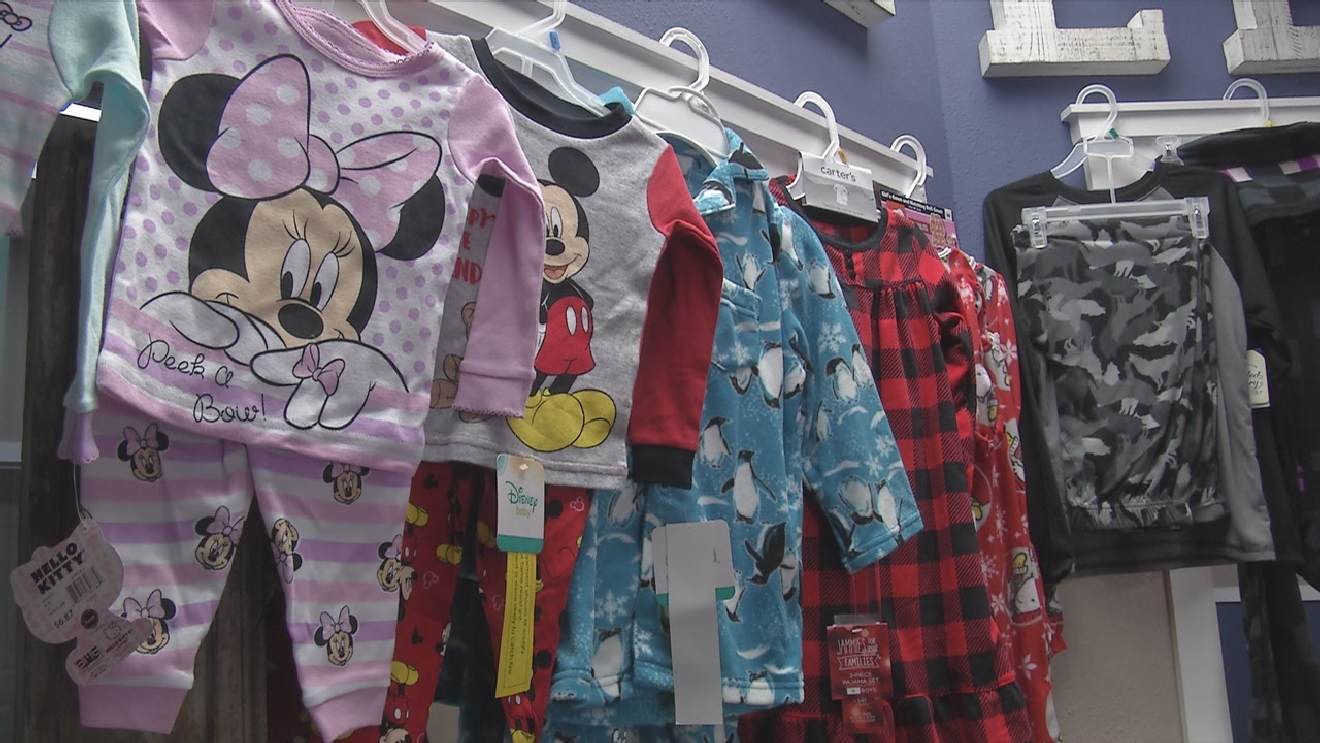
Is this article of clothing affecting your kids’ education?
Fri, August 21, 2026 at 3:30 AM
 3VIEW ALL PHOTOS

pajamas (SBG FILE)
WASHINGTON, D.C. (7News) —Back-to-school fashion used to mean dressing to impress — But these days, some students appear to be taking a much more comfortable approach: rolling out of bed and heading to class in flannel pajamas
For some parents, they feel it is a harmless trend. For others, they view pajamas in the classroomas crossing the line between casual and inappropriate
VOTE |What do you think about students wearing pajamas to school?
But a McLean psychologist, parenting expert and author, the debate is about much more than clothing
“We parents think about it as just being about the clothing,” Tedesco said. “And the truth is that it’s about so much more to our kids.”
More than just pajamas
Tedesco said something as simple as choosing to wear pajamas to school can touch on several important parts of a child’s development, including independence, identity, social development and autonomy
“First of all, independence. We all want our kids to be independent. That’s the universal parenting goal,” she said. “But it’s moments like these that prove why it’s harder to do than it seems.”
SEE ALSO | What’s allowed? Loudoun County schools roll out updated student dress code
Allowing children to make their own choices, she said, sometimes means letting them do things that make their parentsuncomfortable
“Allowing our kids to be independent means that we sometimes have to let go and let them do things that we’re not super comfortable with, like wearing pajamas to school.”
The decision can also be part of a young person’s effort to figure out who they are as they grow older
“Their job is to figure themselves out and hopefully keep a lot of our influence, but also kind of figure out what’s them versus what’s us,” Tedesco said
In other words, a child insisting on wearing pajamas may be making a statement that has less to do with fashion— or a lack of it — and more to do with having some control over their own identity
When should parents step in?
Some school districts have decided pajamas should not be part of the school-day wardrobe. Schools in Amherst County, Virginia, and Somerset County, Maryland, have policies prohibiting students from wearing pajamas to school. Fairfax County Public Schools also considered restrictions several years ago, but a districtwide ban never materialized
For parents, however, Tedesco said one important question is whose “domain” the child is entering
If a child is attending a professional event with a parent, for example, the parent may have more reason to set expectations about how the child dresses.
“If your child is going with you into a professional function, that’s your domain,” Tedesco said. “If your child is going into their school with all their peers and with the teachers and administrators who you are entrusting to kind of guide them, then that’s really their domain.”
Trying to exert too much control over decisions that belong in a child’s world can come at a cost, she said
“If we try to get too deep into their domain, again, it comes at a cost. We are doing it at the expense of some of their independence and identity formation.”
That does not mean parents should never draw a line
“If we have a kid who we think pushes the envelope too far, and it veers into sort of cheeky disrespect or something, that’s a conversation to have,” Tedesco said
Start with curiosity
Before issuing an order to change clothes, Tedesco encourages parents to find out why their child wants to wear pajamas in the first place
“A parenting best practice that applies here is to start with curiosity,” she said. “We need to understand before we render our judgment and our opinion.”
That means asking why — and genuinely being open to the answer
“Asking why with genuine openness is hugely important to our connection, to our kids’ introspection, to our relationship,” Tedesco said
Parents should not necessarily expect a carefully reasoned explanation. The answer could simply be that pajamas are comfortable or that everyone else is wearing them
But, she says, the conversation itself can still be valuable
“It’s the asking and the openness that matters.”
If pajamas do not violate school rules, parents may want to consider whether their own discomfort is enough reason to prohibit them
“What’s the worst that could happen?” Tedesco said. “If they’re not breaking any school rules, if we’re a little uncomfortable, maybe that’s okay.”
At the same time, parents can still explain their concerns, listen to their child’s point of view and try to reach a resolution — whether that means a compromise or simply agreeing to disagree
Tedesco says parents have the authority to pull out a “because I said so” when necessary, but she cautions against overusing it
“As parents, we do have a couple of ‘because-I-said-sos’ that we can spend, but we do not have as many as we want,” she said. “So we really want to be thoughtful in our prioritizing of how much does this matter.”
What about preparing kids for the real world?
One concern some parents may have is whether allowing children to wear pajamas to school sends the wrong message about how they will be perceived later in life
Could a teenager who gets used to wearing pajamas everywhere have a harder time understanding when it is time to dress more professionally?
Tedesco says that concern is legitimate, but parents do not necessarily need to dictate every choice to help children prepare for the future
Instead, she suggests parents act as guides
“It’s our job to hold a mirror up to our kids and help them see themselves,” she said.
As children get older and become more independent, parenting shifts away from simply telling them what to do
“It’s no longer us telling them what to do, but we’re still guiding,” Tedesco said
Parents can explain how clothing choices might be perceived by other people — particularly in more formal or professional settings
“You can say, ‘Here’s my concern. I get that this is what everyone else is doing and that it’s what you prefer, but here’s how other people might perceive you, especially adults, and that worries me a little bit,’” Tedesco said
The key, she says, is to share those concerns honestly while remembering that children are usually focused on the world directly in front of them
“Kids are in the now. They are not in the 10 years from now,” she said
Pick your battles
Ultimately, Tedesco says there is no one-size-fits-all answer to whether childrenshould be allowed to wear pajamas to school. Every family and every child is different
But she encourages parents to think carefully about which battles are truly worth fighting
If the pajamas do not break school rules, cause harm or represent a larger behavioral issue, giving a child the freedom to make that choice could be an opportunity to build independence
And if a parent is worried about the message those pajamas send, the answer may not be an immediate command to change clothes
It may be a conversation
