Actions
- Tweet
Inflation, economy cited as shoplifting rises, survey says
A LendingTree survey found people in higher-income households were more likely to admit to shoplifting, even as many respondents cited inflation and economic struggles.
PrevNextTed Shaffrey/AP
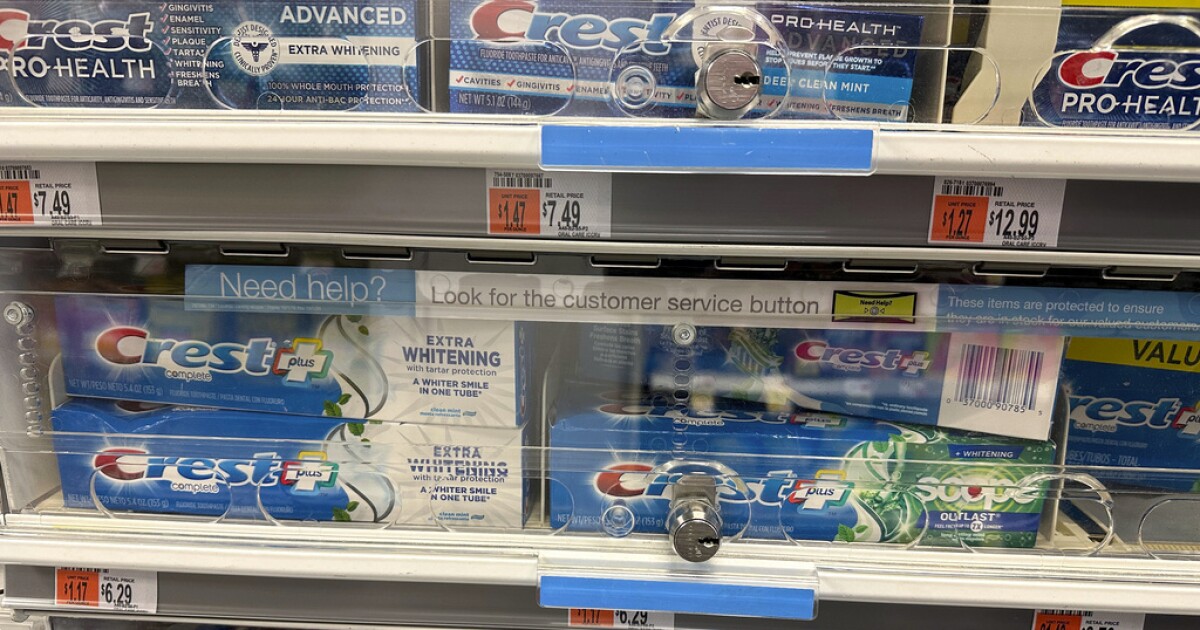
FILE – Tubes of toothpaste are displayed behind a locked, plastic barrier to prevent shoplifters from stealing the products at a store in the Manhattan borough of New York on January 31, 2024.

By:Justin Boggs
Posted
More Americans admitted to shoplifting in the past year, with most saying they were not caught
According to a new survey by LendingTree,30% of respondents said they have shoplifted at least once, up from 23% a year ago. The survey found that more respondents who admitted to shoplifting in the past year cited inflation and the struggling economy as reasons
The survey also found that 52% of those who shoplifted said they were not caught. Among those who said they were caught, 38% said they only received a warning, while 27% said they were arrested. Just 7% of those caught said they faced no penalty
“Shoplifting may feel like a way to solve an immediate cash-flow problem, but getting caught can create a much bigger one,” said Matt Schulz, LendingTree’s chief consumer finance analyst. “It can lead to short-term financial costs, including fines and legal fees, as well as longer-term consequences, such as making it harder to get a job or rent an apartment.”
RELATED STORY |Beyond shoplifting: How consumers and retailers pay for retail crimes
Although many respondents cited economic insecurity as a reason for shoplifting, people in households earning more than $100,000 annually were more likely to say they had shoplifted. Those in households earning less than $30,000 were the least likely to say they had shoplifted
Food and nonalcoholic drinks were the most commonly shoplifted items, followed by clothing. Respondents said they were more likely to steal from national chains than from local stores
“There’s also a practical explanation,” Schulz said. “Chain stores are where many people already shop for groceries, clothing, hygiene products and household essentials. If the items being stolen are everyday necessities, it’s not surprising that retailers selling the most of those products are frequent targets.”
In late 2025, the National Retail Federation said shoplifting incidents increased 18% in 2024 compared with 2023. Statistics for 2025 are not yet available
RELATED STORY |Retailers report sharp rise in theft and violence
“Retailers are contending with rising levels of theft, fraud and violence while continuing to refine security measures, utilize technologies and partner with law enforcement in efforts to curtail loss across the retail landscape,” said David Johnston, the NRF’s vice president for asset protection and retail operations. “While some progress is apparent, organized theft groups have expanded their scope, taking advantage of retailers’ strained resources and lagging prosecutorial support nationwide.”
The LendingTree survey found that 25% of respondents said anti-theft measures are not enough to deter them from shoplifting
Most Recent

Physician assistant groups push Congress for permanent student loan protections
Scripps News Group

France trims Tour de France finale while battling historic wildfires
AP via Scripps News Group
Troy Jackson wins Democratic nomination in critical Maine Senate race
AP via Scripps News Group



Politics

Trump caps correspondents’ dinner with ‘Trump 2028’ joke
Trump caps correspondents’ dinner with ‘Trump 2028’ joke
AP via Scripps News Group
Energy Department pulled grant money from states that didn’t vote for Trump
Evan Thomas