

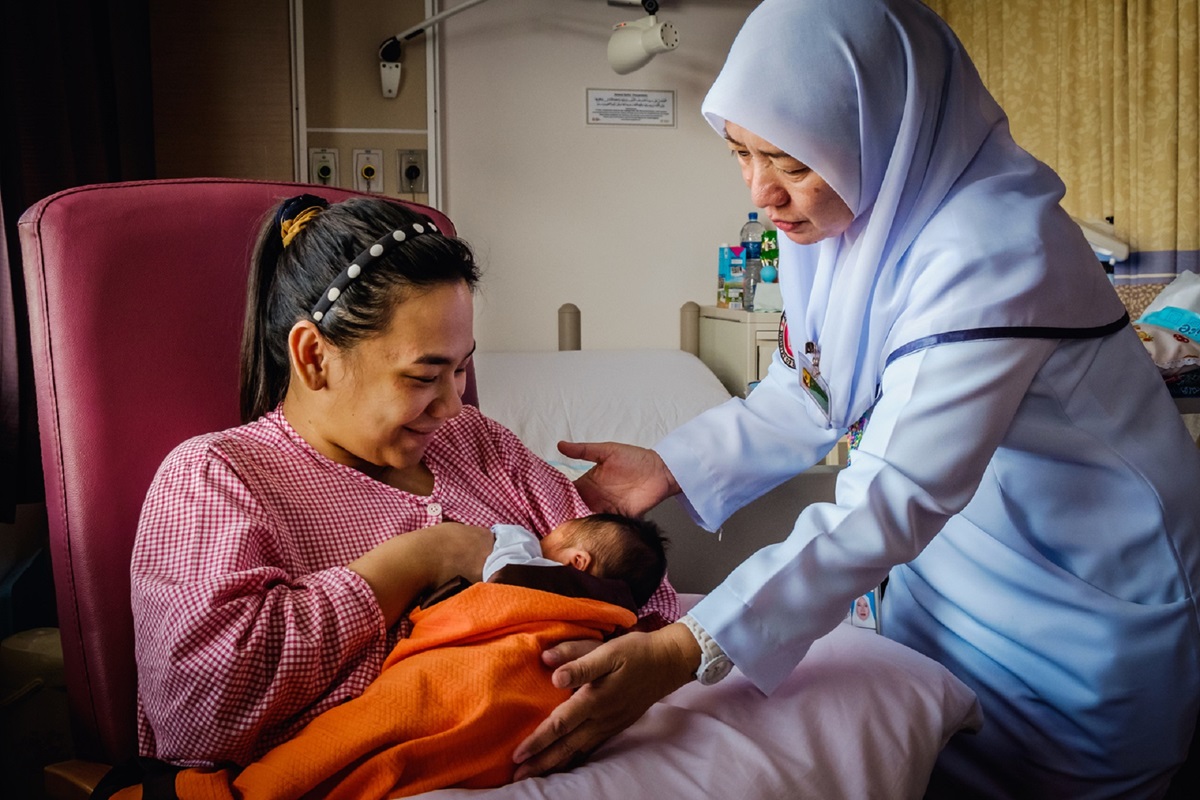
Key facts
- Every infant and child has the right to good nutrition according to the Convention on the Rights of the Child.
- An estimated 150 million children under 5 years of age were stunted (too short for age), 43 million were wasted (too thin for height), and 36 million were living with overweight in 2024.
- Half of all child deaths are associated with malnutrition (1).
- WHO and UNICEF recommend all infants initiate breastfeeding within 1 hour of birth, breastfeed exclusively (are fed only breast milk) for the first 6 months of life and then continue breastfeeding up to 2 years of age or beyond while nutritionally adequate, safe complementary (solid) foods are introduced from six months.
- Nearly 400 000 deaths amongst children under 5 years of age could be prevented every year if all infants were exclusively breastfed for the first six months and continued breastfeeding up to two years or beyond (3).
- WHO recommends governments scale up evidence-based support for breastfeeding, including by incorporating the Ten Steps to Successful Breastfeeding as the standard of care in all maternity services and providing breastfeeding counselling to all families with children under 2 years.
- Globally, fewer than one-third (30.8%) of children aged 6 to 23 months were provided with a diet that met their nutritional needs (minimum dietary diversity) between 2018 and 2024, and only half of them were given as many meals as they need each day (minimum meal frequency) (6, 7).
Overview
In 2021, maternal and child malnutrition was estimated to be associated with 2.4 million child deaths annually or more than 50% of all child deaths (1). Early, exclusive and continued breastfeeding can prevent pneumonia and diarrhoea, which are amongst the leading causes of child death. Infant and young child feeding is a key area to improve child survival and promote healthy growth and development. The first two years of a child’s life are particularly important, as optimal nutrition during this period lowers morbidity and mortality, reduces the risk of chronic disease, and fosters better development overall.
However, many infants and children do not receive optimal feeding. For example, only about 47% of infants aged 0–6 months worldwide were exclusively breastfed over the period of 2018–2025 (2)
Infants born to mothers receiving lifelong antiretroviral therapy (ART) can safely initiate breastfeeding in the first hour after birth, breastfeed exclusively for six months and continue breastfeeding until at least 12 months of age with very little risk of acquiring HIV (8). Mothers living with HIV should breastfeed for at least 12 months and may continue breastfeeding for up to 24 months or longer (similar to the general population) while being fully supported for ART adherence.In settings where national health authorities recommend breastfeeding for HIV-infected mothers, visit thee-library of evidence for nutrition actions (eLENA) for guidelines and interventions to optimize adherence.
Breastfeeding
Early, exclusive and continued breastfeeding protect infants and children from infectious diseases. Infants who are mixed fed (partially breastfed) or not breastfed are much more likely to die from diarrhoea, pneumonia and other infectious diseases. While the effect is greater in low- and middle- income countries, infants in high-income countries who are not breastfed are also more likely to die in childhood (9)
Breast milk is also an importantn provide half or more of a child’s energy needs between the ages of 6 and 12 months, and one third of energy needs between 12 and 24 months. Breast milk is also a criticallity among children who are malnourished
Children and adolescents who were breastfed as babies are less likely to be overweight or obese. Additionally, they perform better on intelligence tests and have higher school attendance. Breastfeeding is associated with higher income in adult life
Failure to invest in breastfeeding comes at a high cost. The cost of underfunding breastfeeding programmes is estimated to result in global economic losses of US$ 339 billion each year, equivalent to 0.32% of global gross national income. Scaling up evidence-based health system support for breastfeeding, including facility- and community-based IYCF counselling and implementation of the Ten Steps to Successful Breastfeeding would generate returns of $59 for every $1 invested, with impacts driven largely by improvements in cognitive development, education outcomes and lifetime productivity (3).
Longer durations of breastfeeding also contribute to the health and well-being of mothers. It reduces the risk of ovarian and breast cancer, increases the duration between pregnancies (breastfeeding an infant under six months exclusively causes hormonal changes that can delay the return of fertility) and reduces all-cause mortality
Mothers and families need to be supported to breastfeed. Actions that help protect, promote and support breastfeeding include:
- adopting of policies such as the International Labour Organization’s Maternity Protection Convention 183 and Recommendation No. 191, which complements Convention No. 183 by suggesting a longer duration of leave and higher benefits;
- introducing or strengthening legislation to restrict the marketing of formula milk and feeding bottles aligned with the International Code of Marketing of Breast-milk Substitutes and subsequent relevant World Health Assembly resolutions;
- integrating the Ten Steps to Successful Breastfeeding specified in the Baby-Friendly Hospital Initiative as the standard of care in all maternity services, including by:
- ensuring all infants receive skin-to-skin contact between mother and baby immediately after birth and are supported to initiate breastfeeding within the first hour of life;
- supporting mothers to breastfeed responsively (that is, as often as the child wants, day and night);
- practising rooming-in (allowing mothers and infants to remain together 24 hours a day); and
- avoiding giving babies additional food or drink, even water, unless medically necessary;
- providing supportive health services with infant and young child feeding counselling during all contacts with caregivers and young children, such as during antenatal and postnatal care, well child and sick child visits, and immunization; and
- providing community support, including mother support groups and community-based health promotion and education activities.
Breastfeeding practices are highly responsive to supportive interventions, and the prevalence of exclusive and continued breastfeeding can be improved over the course of a few years
Complementary feeding
Around the age of 6 months, an infant’s need for energy and nutrients starts to exceed what is provided by breast milk, and additional (complementary) foods are necessary to meet those needs. If complementary foods are not introduced around the age of 6 months, or if they are given before this age, growth may falter. Guiding principles for appropriate complementary feeding are:
- continue frequent breastfeeding up to 2 years of age or beyond;
- practise responsive feeding: recognizing and responding to signs of hunger and fullness;
- practise good hygiene and proper food handling;
- start at 6 months with small amounts of food and increase gradually as the child gets older;
- gradually increase food consistency and variety;
- increase the number of times that the child is fed: 2–3 meals per day for infants 6–8 months of age and 3–4 meals per day for infants 9–23 months of age, with 1–2 additional snacks as required;
- during illness, increase fluid intake including more frequent breastfeeding, and offering soft, favourite foods.
Feeding in exceptionally difficult circumstances
Families and children in difficult circumstances require special attention and practical support. Wherever possible, mothers and babies should remain together and get the support they need to exercise the most appropriate feeding option available. Breastfeeding remains the preferred mode of infant feeding in almost all difficult situations, for instance:
- low-birth-weight or premature infants;
- mothers living with HIV in settings where mortality due to diarrhoea, pneumonia and malnutrition remain prevalent;
- adolescent mothers;
- infants and young children who are malnourished; and
- families suffering the consequences of complex emergencies.
WHO response
WHO is committed to supporting countries with implementation and monitoring of the Comprehensive implementation plan on maternal, infant and young child nutrition, endorsed by Member States 2012 and reaffirmed in 2025. The plan includes 6 targets, one of which is to increase the rate of exclusive breastfeeding for the first 6 months of life to at least 60% by 2030. Activities that will help to achieve this include the multisectoral actions outlined in the Topical briefs on maternal, infant, young child nutrition.
WHO provides guidance and technical assistance to countries on the implementation of the International Code of Marketing of Breast-milk Substitutes, the Baby-Friendly Hospital Initiative, breastfeeding counselling and support services, and breastfeeding monitoring
UNICEF and WHO created the Global Breastfeeding Collective to rally political, legal, financial and public support for breastfeeding. The Collective brings together implementers and donors from governments, philanthropies, international organizations, and civil society. The Collective’s vision is a world in which all mothers have the technical, financial, emotional, and public support they need to breastfeed
UNICEF and WHO created the Global Complementary Feeding Collective to accelerate efforts and systems-level change to improve complementary feeding. The Collective brings together global agencies dedicated to improving nutrition for children aged 6 to 23 months through improved programmes, policies and advocacy
In addition, WHO and UNICEFInfant and young child feeding counselling: an integrated course: trainer’s guide, 2nd ed have developed courses for training health workers to provide skilled support to breastfeeding mothers, counsel on complementary feeding, help them overcome problems, and monitor the growth of children, so they can identify early the risk of undernutrition or overweight/obesity
WHO provides simple, coherent and feasible guidance to countries for promoting and supporting improved infant feeding by HIV-infected mothers to prevent mother-to-child transmission, good nutrition of the baby, and protect the health of the mother.
References
- Ritchie H. Half of all child death are linked to malnutrition [website]. Our World in Data; 2024 (https://ourworldindata.org/half-child-deaths-linked-malnutrition?#article-citation).
- Global Breastfeeding Scorecard, 2025: breastfeeding rates are increasing but improved support is needed. World Health Organization and United Nations Children’s Fund; 2025 (https://doi.org/10.2471/B09718). License: CC BY-NC-SA 3.0 IGO
- Nutrition International, United Nations Children’s Fund, and World Health Organization. Global Investment Case for Improved Breastfeeding. Nutrition International; 2026 (https://www.globalbreastfeedingcollective.org/reports/global-investment-case-improved-breastfeeding).
- Victora C, Horta B, de Mola C et al. Association between breastfeeding and intelligence, educational attainment, and income at 30 years of age: a prospective birth cohort study from Brazil. The Lancet Global Health, 2015; 3, e199-e205 (https://doi.org/10.1016/S2214-109X(15)70002-1).
- Wang Y, Arvizu M, Rich-Edwards J et al. Breastfeeding duration and subsequent risk of mortality among US women: A prospective cohort study, eClinicalMedicine, 2022; 54 (https://doi.org/10.1016/j.eclinm.2022.101693).
- FAO, IFAD, UNICEF, WFP and WHO. 2026. The State of Food Security and Nutrition in the World 2026 – Understanding and addressing the high cost of a healthy diet. Rome (https://doi.org/10.4060/cd8306en).
- Diets [website]. United Nations Children’s Fund (https://data.unicef.org/topic/nutrition/diets/).
- Guideline: updates on HIV and infant feeding: the duration of breastfeeding, and support from health services to improve feeding practices among mothers living with HIV. World Health Organization; 2016 (https://iris.who.int/handle/10665/246260).
- Li R, Ware J, Chen A, Nelson JM, Kmet JM, Parks SE, Morrow AL, Chen J, Perrine CG. Breastfeeding and post-perinatal infant deaths in the United States, A national prospective cohort analysis. Lancet Reg Health Am. 2022 Jan;5:100094. (https://doi.org/10.1016/j.lana.2021.100094).
