Published On 21 Jul 2026
The number of hungry people around the world is falling
According to the latest United Nations State of Food Security and Nutrition in the World report, an estimated 645 million people faced hunger in 2025, 14 million fewer than in 2024 and 43 million fewer than 2022
Yet hundreds of millions continue to face acute food shortages driven by conflict, economic shocks and climate extremes
Gradual improvement
According to the report published on Tuesday, an estimated 7.8 percent of the world’s population experienced hunger in 2025, down from 8.1 percent in 2024 and 8.6 percent in 2022
The decline marks a third consecutive year of improvement after hunger surged during the COVID-19 pandemic. But hunger levels still remain higher than they were in 2019 before the pandemic struck
Where do the most hungry people live?
Africa remains the world’s hunger hotspot
In 2025, an estimated 309 million people in Africa were undernourished – equivalent to one in five people on the continent and representing almost half of the world’s hungry people
By comparison, 292 million people in Asia (6 percent of the population) and 32 million in Latin America and the Caribbean (4.8 percent) experienced undernourishment.
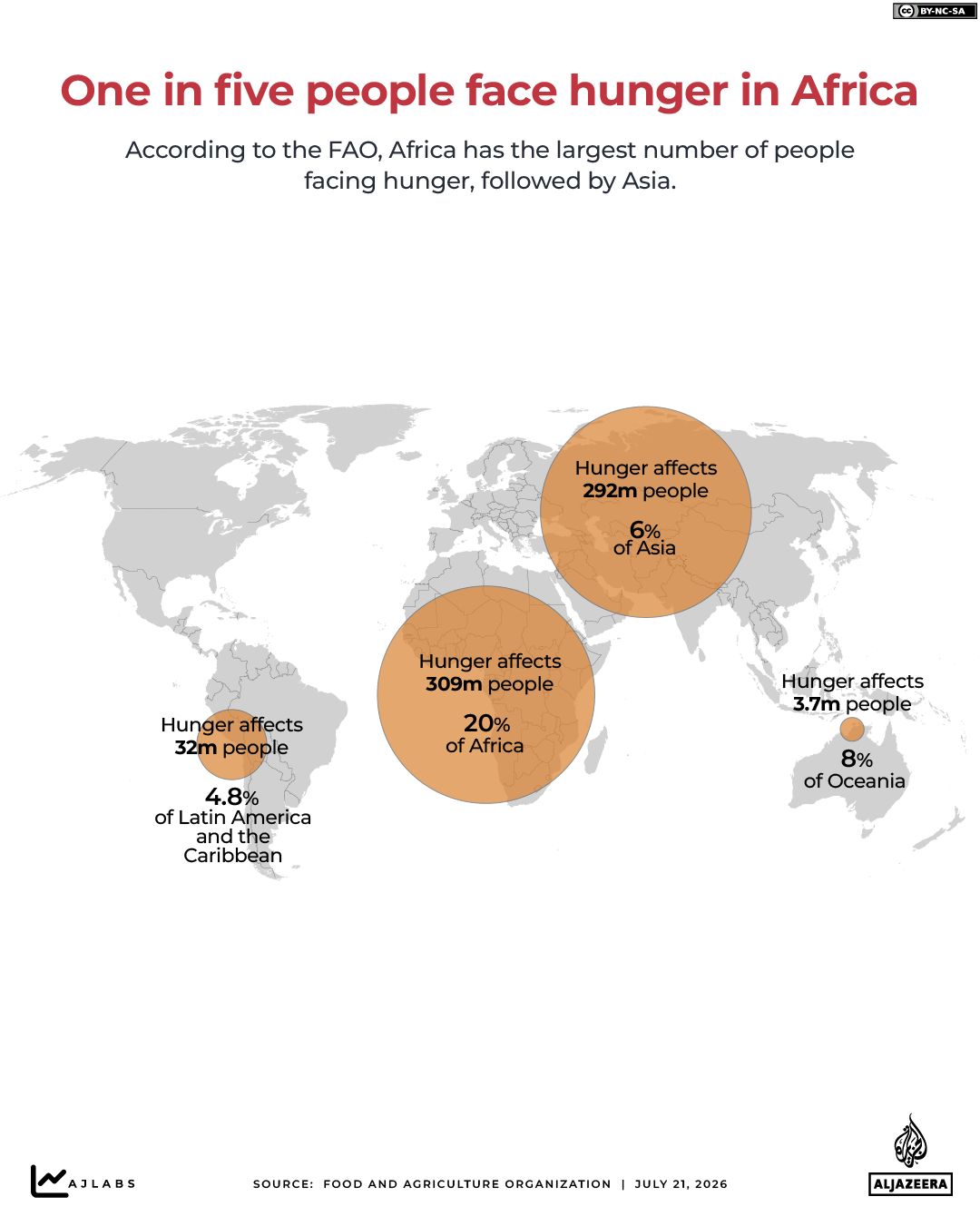
According to the report, Asia and Latin America and the Caribbean have made steady progress in reducing both the share and the number of people facing hunger in recent years
In Africa, the long-running rise in hunger appears to have stalled. The prevalence of hunger fell slightly from 20.3 percent in 2024 to 20 percent in 2025 although population growth meant the total number of hungry people continued to increase
Advertisement
Looking ahead, the UN projects that the global number of undernourished people will fall by about 20 percent by 2030 compared with current estimates
Even so, 510 million to 520 million people are still expected to face hunger by the end of the decade with 56 percent of them living in Africa
The report also warned that recent crises, including the 2026 US-Israel war on Iran, could undermine progress, particularly in Africa and Asia
Who is unable to afford a healthy diet?
According to the report, the number of people unable to afford a healthy diet fell from 2.97 billion in 2021 (37.4 percent of the global population) to 2.69 billion in 2025 (32.7 percent)
The decline suggested that, on average, people’s available income for food increased faster than the cost of a healthy diet
However, the cost of eating healthily continues to rise. The global cost of a healthy diet reached $4.28 per day, using purchasing power parity, in 2025, up from $3.44 in 2021 and $2.94 in 2017
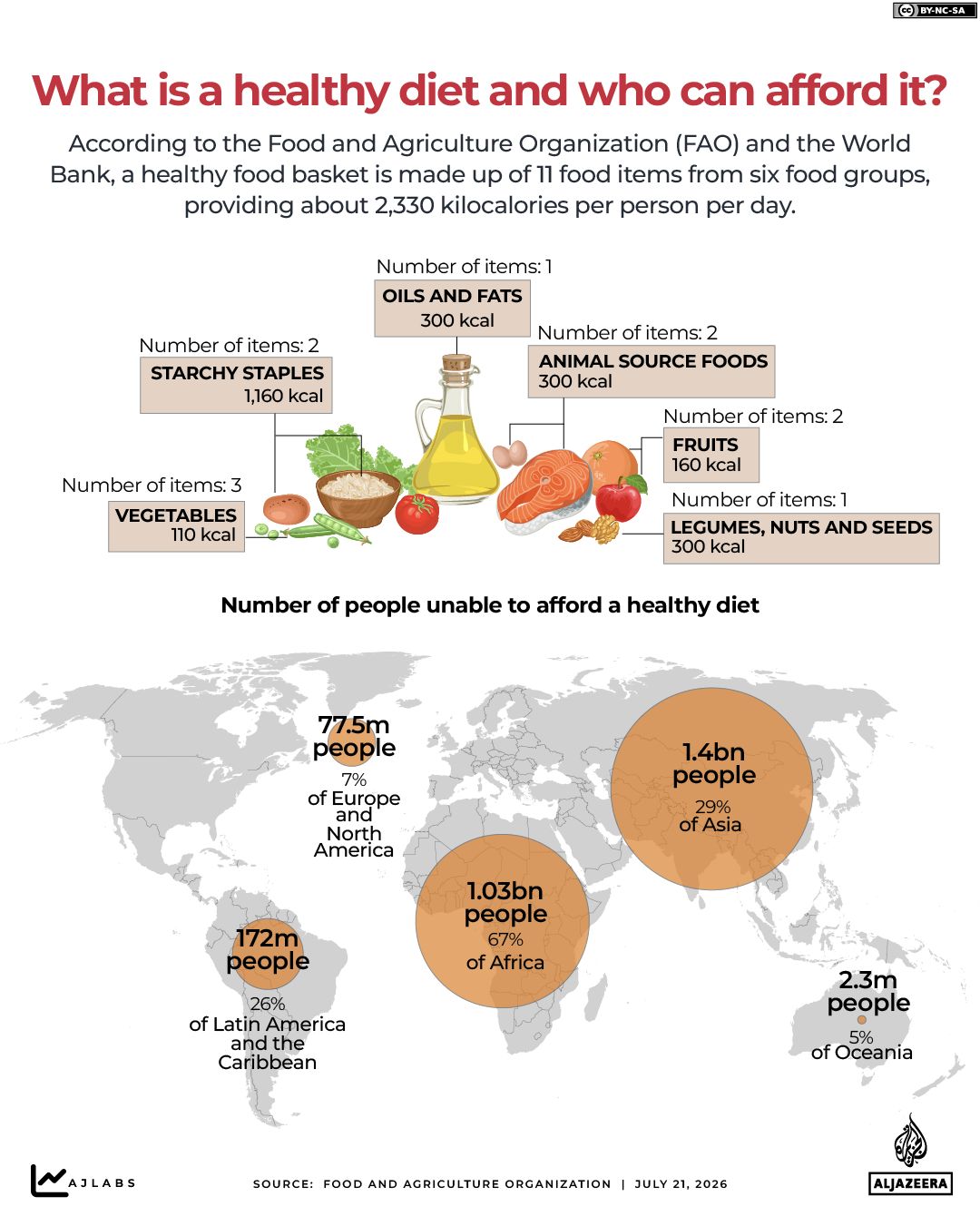
Despite global improvements, affordability remains a major challenge in Africa and Asia. While Asia has the largest number of people unable to afford a healthy diet at 1.4 billion, or 29 percent of its population, Africa faces the highest rate with 1.03 billion people, or nearly two-thirds of the population, unable to afford nutritious food
In Latin America and the Caribbean, about 172 million people are affected (26 percent of the population), compared with 77.5 million in Europe and North America (7 percent of the population) and 2.3 million in Oceania (5 percent of the population). The figures underscored persistent inequalities in access to nutritious food across regions
Compared with 2021, the share of people unable to afford a healthy diet increased in Africa while it declined in Asia, Latin America and the Caribbean, and Northern America and Europe
What is a healthy diet basket?
According to the UN’s Food and Agriculture Organization (FAO) and the World Bank, a healthy diet basket is the lowest-cost combination of locally available foods that meets a person’s daily energy needs and provides most essential nutrients required for a healthy diet
It is made up of 11 food items from six food groups, providing about 2,330 kilocalories per person per day while maintaining the recommended balance of foods needed for adequate nutrition
Advertisement
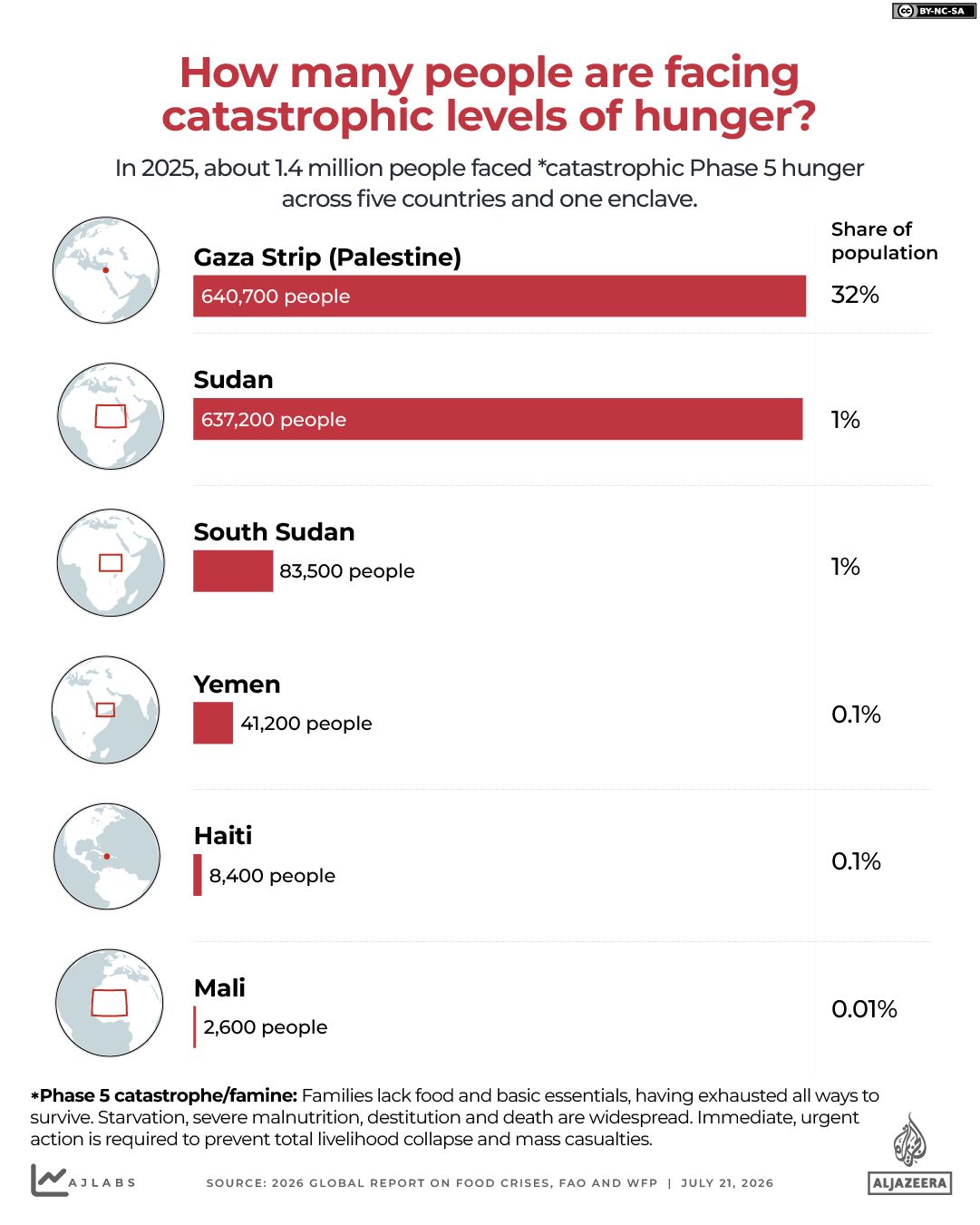
How many people are facing catastrophic levels of hunger?
While global hunger levels have declined in recent years, millions of people in the Global South continue to face acute food shortages, driven by conflict, economic shocks and climate-related extremes
A separate report published by the FAO and World Food Programme, the Global Report on Food Crises 2026, estimated about 1.4 million people worldwide are facing catastrophic hunger, the most severe phase of the five-phase IPC/CH food security classification scale
IPC/CH is the Integrated Food Security Phase Classification/Cadre Harmonise, a global system that classifies the severity of food insecurity from Phase 1 (minimal) to Phase 5 (catastrophe/famine)
Catastrophic hunger occurs when households have exhausted all means to survive and face an extreme lack of food and basic needs. At this stage, starvation, acute malnutrition, destitution and death become widespread, requiring immediate action to prevent further loss of life
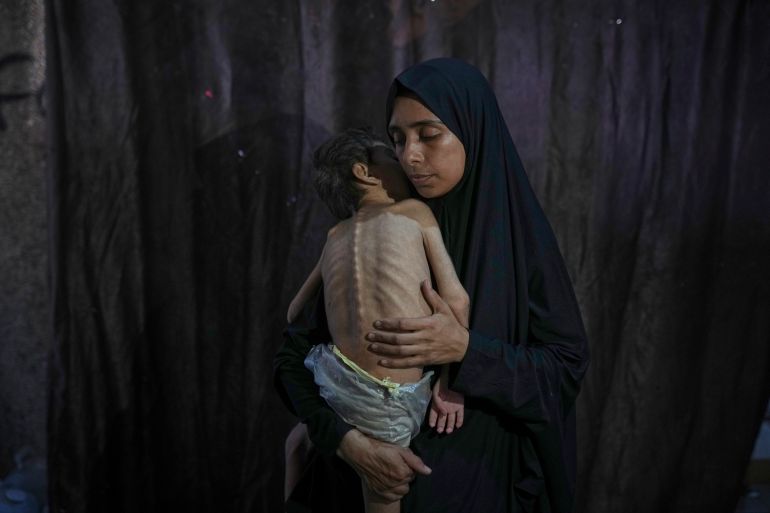
Gaza has the largest number of people facing catastrophic hunger with about 640,700 people, representing 32 percent of its population. The crisis has been intensified by the impact of Israel’s genocidal war on the enclave and restrictions on the entry and distribution of humanitarian aid by the Israeli military
“While markets are more stocked compared with this time last year, many families cannot afford to buy enough food due to the loss of income and the extremely difficult economic situation,’ says Maram Humaid, an Al Jazeera reporter who reports from Gaza
“The closure of many community kitchens has further exacerbated the situation, removing an important meals.”
Sudan follows closely behind Gaza with 637,200 people experiencing catastrophic hunger although they account for about 1 percent of the country’s population. Other countries reporting people in this extreme category include South Sudan (83,500 people), Yemen (41,200), Haiti (8,400) and Mali (2,600)