

Creator Playbook
How a fitness creator built her own global wellness platform
By Alyssa Mercante • July 31, 2026 •
This article is part of an ongoing series examining successful creator business strategies. More from the series →
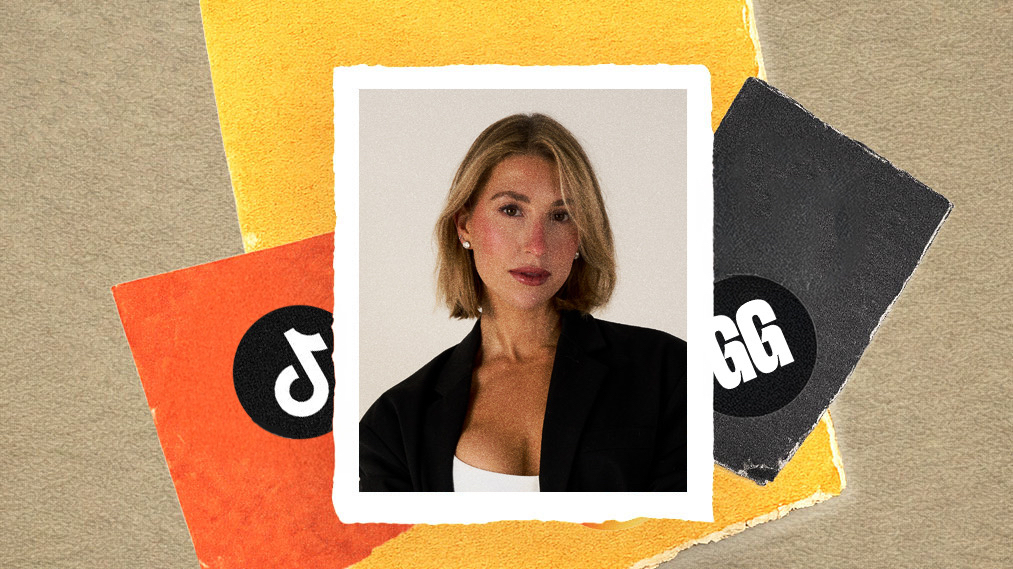
For years, Gabby George was creating fitness content in her at-home studio, pulling together her knowledge (a master’s in public health, a background in marketing) to try and see what would stick
Though she was steadily growing her following on TikTok (987,000) and YouTube (107,000), a viral video series skyrocketed her to internet fame, and she took that leverage and created her own online fitness platform, GGStudio, which now counts more than 30,000 members across 93 countries after launching in August 2025.
George’s journey highlights the fork in the road for fitness creators: follow the subscription route and consider paywalling your content, or focus on brand deals and partnerships.
George’s viral video series kicked off in 2024, as she was getting ready for her own wedding (and working on the backend of what would become GGStudio). She decided to post a “Bridal Arms” tutorial video, showing brides how to tone their shoulders and biceps and improve their posture through Pilates ahead of their big day. The video series (and the subsequent videos of fans trying it out for themselves) racked up tens of millions of views on TikTok.
“You could call it luck, or the fact that I was working my butt off putting out all these free videos … that Bridal Arms kind of blew me up,” George told Digiday. “No one knew I was six months deep into building GGStudio. So when it came out people thought it was a seamless transition. Little did they know I was going to do it regardless of my social media success.”
But that social media success acted as a jumping off point, funnelling engaged viewers to George’s brand-new wellness platform. Signups were strong out of the gate.
George holds high standards for her content quality, even refusing to shoot workout content outside of her at-home studio. Her dedication to a strong visual language and consistency carries over to GGStudio, which has its own separate branding and social accounts — a purposeful siloing.
“When people ask me to bring on those old series [from her personal account], it’s just not a part of GGStudio. It helped me build my platform, but it’s not part of this brand,” George said. “I’m also trying to branch out from being ‘Bridal Arms Girl,’ [and] not being pigeonholed.”
GGStudio offers members a choice between two plans: an annual one that breaks down to $9 a month and a $12 a month plan. Both provide over 300 on-demand workouts with new classes every week and access to the community group chat. George has leaned heavily into community building, crediting them for her success.
“You can chat with me as if you were texting me in a group chat. I’m always answering,” she said. “People feel heard, and fitness is so personal. Even though it’s a digital space, I want them to feel truly connected to what we’re building here.”
Fitness creators translating virality or online followings into platform-based memberships is an increasingly common tactic that helps diversify their revenue streams and decrease their reliance on social media. Others include Kayla Itsines’ Sweat app, which was acquired by iFIT in 2021, Simeon Panda’s Just Lift, and digital personal training platforms that have tapped fitness creators to build their own custom programs, like Ladder and creator Kelly Matthews, who has 1.7 million followers on Instagram.
George said she tried to join other platforms, but when she wasn’t accepted into any of them, she chose to work on her own
“I’m grateful none of them stuck … It was a happy accident,” she said. “I was building a brand, and a lot of these platforms I would have a different identity under them — it would have caused some friction later.”
A frictionless fitness platform has led to surprising success. George’s projections for GGStudio were, in her words, all wrong.
“I undersold it … I was expecting around 2,000 to 3,000 members within a year,” she said. Even before she launched the original app, George was building out a second one with far more features and interaction. After migrating GGStudio over to the new app, signups skyrocketed to their current 30,000 plus.
George told Digiday another fitness creator had warned against the subscription route (“then you’re tethered to always showing up,” she was told) and suggested she instead focus on content and brand deals. But for George, brand deals were never a big
“I’ve done a brand deal that could maybe pay for half a month’s rent — I don’t do them,” she said, taking a subtle dig at a prospective ad category she’s loathe to lean into. “I don’t produce enough of that kind of content, and I’m gonna say no more than yes because of my masters, I’m not into the supplement game.”
Instead, she’s focused intently on giving medically sound fitness advice and avoiding gimmicks, which translates very well to a subscription-focused revenue model
“I see all of my revenue from GGStudio. It’s completely changed my life,” George said. “The money that we’ve made has gone straight back into the business … Our numbers are growing month-to-month exponentially, we doubled since April … I’m always creating new stuff, so hopefully retention sticks.”
Thanks to that new revenue, George just moved across the country and finished building out a brand-new studio. She even has plans to hire some help — aside from PR representation, she’s been doing this entirely alone.
Among her dream potential employees: “I would love to hire trainers.”
More in Media
View More

AI Revenue Generation
Time has started serving ads to AI agents
July 30, 2026
Time is selling ads targeting AI bots, betting that markdown pages will make its content (and advertisers) more visible in AI search
Member Exclusive
Media Briefing: Threatening to quit Google’s crawlers is just publishers’ new hope
July 30, 2026
Bold Call: Google’s AI era is fueling fresh calls for publishers to cut off access to their content, but dependence on search still holds most back

The Creator Economy
Kai Cenat’s Streamer U was a ‘masterclass’ for brands looking to tap content creators
July 27, 2026
The creator bootcamp brought in big brand partnerships and big engagement metrics, which could bring more brands to the streaming sponsorship table
