


Emory researchers build a more accurate way to track what you eat
August 11, 2026
By 2024, diet and nutrition apps had reached a global market value of $2.1 billion, with an anticipated value of $4.5 billion by 2030. Most of these apps now include AI-powered photo recognition as a standard feature.
But can they accurately understand what people eat under real-world conditions? And can they provide the detailed nutritional information needed by people with certain medical conditions?Emory University researchers have developedNutriCamp, a dietary assessment app available on iOS and Android. Users can record what they eat through photos, text or voice. NutriCamp identifies foods, estimates portions and calculates 65 nutrients and food components, including macronutrients such as protein, fat and carbohydrates, and micronutrients such as vitamin D, iron and folate.
Going beyond weight loss, this app supports individual nutritional needs, including those with medical conditions.
“NutriCamp is clinically relevant because most existing apps focus on lifestyle, appearance and calorie counting, while NutriCamp provides more comprehensive dietary information that can support disease prevention and management,” saysRunze Yan, co-principal investigator of the study and an assistant professor at Emory University’sNell Hodgson Woodruff School of Nursing
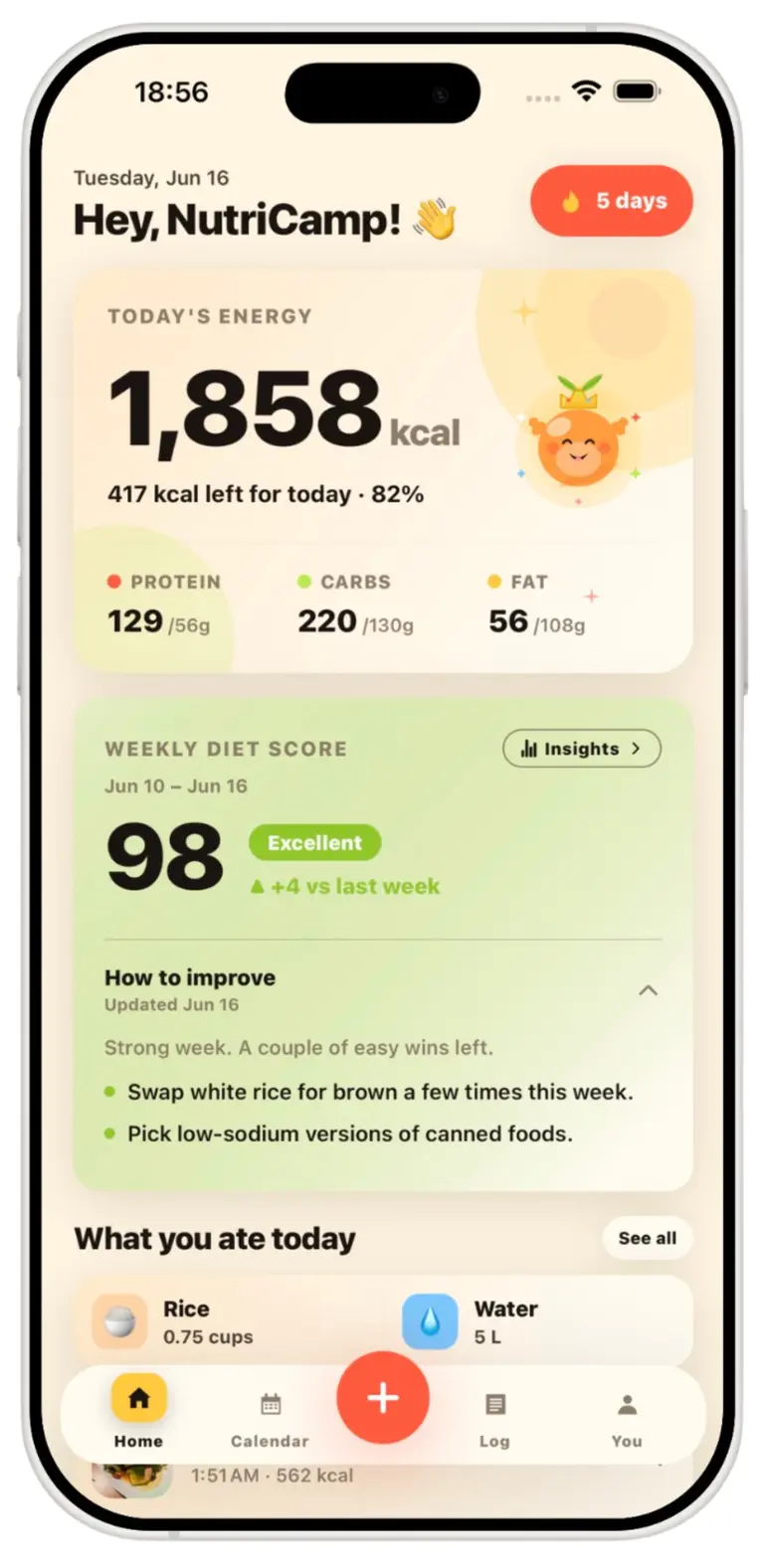
The app’s food reference covers 5,624 unique foods and beverages, including 4,982 foods and 642 beverages, along with more than 23,000 common portion descriptions such as slices, rolls, pieces and cups
Accurately assessing food intake in daily life is far more challenging than identifying a single food in a clear photograph. Everyday meals may contain multiple foods, sauces, toppings, hidden ingredients and different preparation methods. Portion sizes vary widely, while lighting, camera angles and food presentation differ from one image to another. Foods that look similar may also contain different ingredients and have very different nutritional values. These complexities make it difficult for current apps to identify everything that was eaten, determine how much was consumed and calculate a complete and accurate nutrient profile. To address these challenges, the Emory research team developed advanced AI models for NutriCamp that analyze foods, ingredients, portions and nutritional content. In a studyrecently published in Communications Medicine, NutriCamp reduced average estimation error by 63%for food weight and four key nutritional measures when tested on photographs of everyday meals containing multiple foods and ingredients. It outperformed three popular AI-based dietary assessment apps, existing computer vision models designed for food-image analysis, and GPT Vision, the advanced image-capable AI model used in ChatGPT. Dietitians also reviewed NutriCamp’s estimates using real-world food examples.
The ability to estimate both macronutrients and micronutrients is important because health-related dietary needs often extend far beyond calories. People living with cancer, for example, may pay close attention to protein intake and certain micronutrients, including folate, depending on their diagnosis, treatment and nutritional status. For some stroke survivors, sodium and vitamin K intake may also require closer attention, particularly when medications such as warfarin are involved. More complete dietary information can help researchers and clinicians better understand these needs and develop more individualized dietary guidance. “NutriCamp will also impact public health by supporting epidemiologic studies and enabling clinicians to use a more exacting nutrition app to create customized dietary guidance, based on their patients’ unique needs. It also relieves the burden of memory on the user, regarding which foods were consumed,” adds Yan.
“NutriCamp shows what AI can do when it is built around nutrition, not just recognition,” saysHanqi Luo, co-principal investigator of the study and an assistant professor at Emory University’sRollins School of Public Health. “One of the oldest challenges in nutrition is knowing what people actually eat. By learning from photos, text and voice input, NutriCamp can turn everyday meals into low-cost, practical information about nutrients, diet quality and health needs.”
The research team plans to continue evaluating NutriCamp across different populations and health conditions to determine how it can support nutrition research, public health and clinical care
This study was funded by the Woodruff Health Sciences Food, Nutrition and Health Research Award “Building AI – Powered Dietary Assessment Infrastructure for Precision Nutrition Research,” as well as the American Heart Association’s “Enhancing Dietary Care in Post-Stroke Survivors with an Innovative AI-Powered Management System” award.Additional co-authors include: Jiaying Lu, Darren Liu, Hannah Posluszny, Mehak Preet Dhaliwal, Janice MacLeod, Yao Qin, Carl Yang, Terry J. Hartman and Xiao Hu.
Media Contact
- Lara Moore
- Associate Director, Media Relations & Health Sciences Communications
- lara.w.moore@emory.edu
Resources
Top Stories
Science & Technology
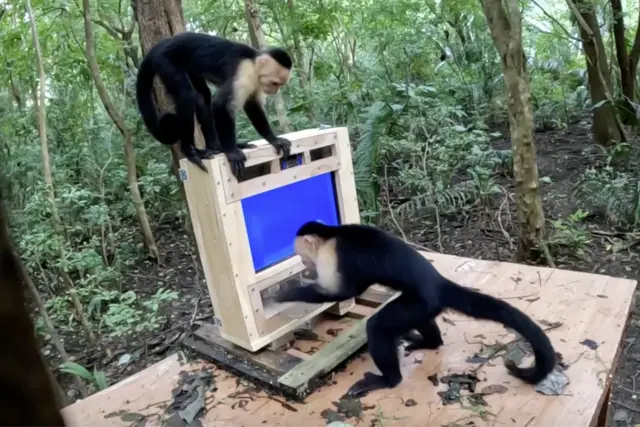
AI opens new era in cognitive studies of wild primates
Emory anthropologists created an AI system to automate behavioral studies of capuchins monkeys in the wild. The novel method provides a roadmap for the first scalable, systematic way to evaluate and monitor the cognitive abilities of wild primates
Arts & Culture
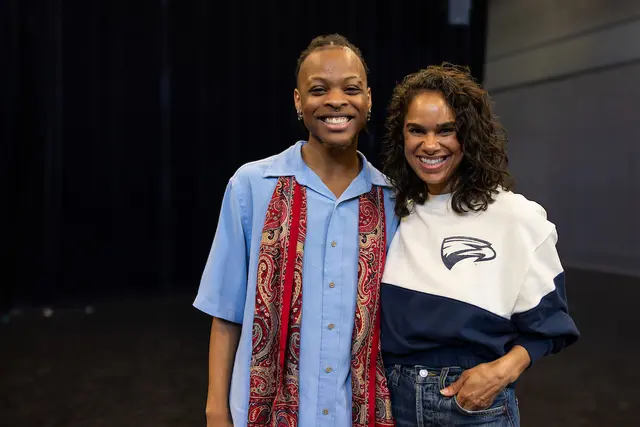
Emory alum’s choreography set for festival curated by ballet icon Misty Copeland
The Joyce Ballet Festival, which celebrates the best and brightest in dance, will include a piece choreographed and performed by a 2025 Emory College graduate. The festival will be held in New York in August.

Science & Technology
How an Emory economist turned a parenting problem into a global AI playbook
Emory University economist Pedro Sant’Anna built an AI workflow to save his family time. Now thousands of people worldwide use his playbook to streamline their days
