


JULY 29, 2026 08:00
In recent years, seemingly strange recommendations pop up from time to time, but they are usually not born out of nowhere. One of them is the recommendation to put a teaspoon of olive oil inside your morning coffee, sometimes accompanied by promises that it “balances hormones,” “helps with menopause,” “burns fat,” “activates metabolism” or “calms cortisol.” As with many nutritional trends, there is a grain of truth here as well: Olive oil is truly a high-quality and healthy food, and coffee is a beverage that has been studied quite a bit. The problem begins when you connect them and attribute properties to this combination that it does not possess.
The idea of coffee with fat did not start with olive oil. A few years ago, a trend called “Bulletproof coffee” became very famous, coffee with butter or MCT oil, mainly among people on low-carb, keto or intermittent fasting diets
The marketing logic was simple: Coffee with fat gives a feeling of satiety, contains no carbohydrates, is suitable for those who do not want to “break a fast” with regular food, and is supposed to provide available energy. In practice, it is simply coffee with a lot of calories from fat. For some people, it suppressed hunger for a certain period of time, but that did not turn it into a miracle drink
The next step was natural: If we have already gotten used to the idea of putting fat in coffee, why not choose a fat that is considered healthier? This is where olive oil comes in. In 2023, Starbucks launched coffee beverages with olive oil under the name “Oleato.” This was presented primarily as a culinary experience, coffee with a smoother and more velvety texture, inspired by a Mediterranean habit of consuming olive oil in the morning. But on social media networks, such things almost never remain purely culinary. Very quickly they turn into a “health tip,” and from there the road is short to promises about hormones, dieting, metabolism and menopause.
Olive oil is truly healthy, but that does not mean it needs to be in coffee: Extra virgin olive oil is one of the most important ingredients in the Mediterranean diet. It is rich in monounsaturated fatty acids and polyphenols, and is linked in studies to a higher quality diet, heart health, inflammation markers and blood vessel health. But these benefits were tested mainly as part of an entire dietary pattern: Vegetables, legumes, fish or other protein sources, whole grains, nuts, fruits and olive oil within the food itself. There is no proven advantage to olive oil entering a cup of coffee specifically, instead of a salad, vegetables, a cooked dish or legumes.
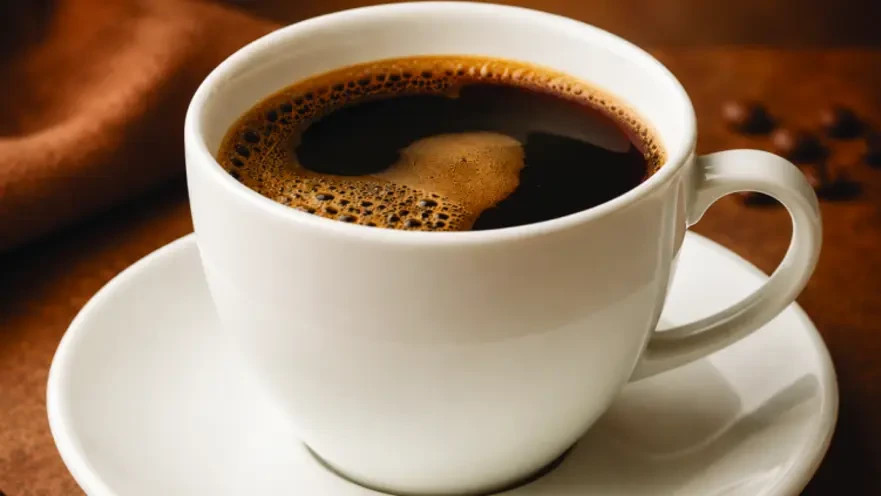
This is where it is important to stop the enthusiasm. A teaspoon of olive oil in morning coffee is not known as a treatment for hot flashes, fragmented sleep, mood swings, a drop in estrogen or the hormonal changes of menopause. Olive oil can be part of a healthy diet for menopausal women, and is certainly preferable to inferior fats or a menu based on ultra-processed food. But there is no serious mechanism that explains why olive oil specifically inside morning coffee “balances hormones.” This is a marketing leap, not a scientific conclusion.
Here too, there is no magic. A teaspoon of olive oil contains roughly 45 calories, and a tablespoon of olive oil contains roughly 120 calories. These are good calories in terms of fat quality, but they are still calories. If you add them to coffee without removing something else from the menu, they are added to the daily caloric total. There are people who will say that it satisfies them and therefore they eat less later. Perhaps. But by the same token, there are people who will drink coffee with oil and eat as usual, and then it is another energy addition that does not necessarily contribute to a diet. Olive oil does not “burn fat.” It is a high-quality fat, not a weight-loss substance.
People who practice intermittent fasting sometimes ask if coffee with olive oil “breaks a fast.” In terms of calories, certainly yes. Oil is energy, even if it has no carbohydrates and even if it does not raise sugar like a slice of cake. For anyone who defines fasting as a state in which no calories enter the body, coffee with oil is not fasting. Anyone who follows a low-carb diet alone might see this as something that suits her, but it is no longer a clean fast. It is important to call things by their name and not turn every trick into a special biological method.
The coffee itself: Coffee by itself can be integrated into a healthy diet. It contains caffeine and antioxidants, and there are studies linking moderate coffee consumption to a lower risk of certain diseases. But here too, there is great variance between people. In some people, coffee improves alertness and concentration. In others, it worsens anxiety, heart rate, heartburn or sleep. If you add oil to it, you do not get a new proven advantage, but simply change its texture, taste and caloric value.
No. For most people, a teaspoon of olive oil in coffee is not dangerous, but it is also not necessary. In some people, it may cause nausea, a feeling of heaviness, diarrhea or digestive system discomfort, especially if you drink it on an empty stomach. There are also people who simply do not like the sensation of an oil layer inside a hot drink. Additionally, if the coffee with oil comes instead of a breakfast that contains protein, fiber and nutritious ingredients, that is already a nutritional problem. Fat alone does not replace a good meal.
If you are already using olive oil, it is preferable in most cases to put it in a place where it truly upgrades the diet: On a vegetable salad, on cooked vegetables, in a legume dish, on fish, in tahini, in an omelet, or even on a good slice of bread with a tomato. There it improves flavor, helps with the absorption of fat-soluble vitamins, integrates into a meal with fiber and protein, and contributes to satiety in a more logical way. Olive oil is not a problem. The promises around it are the problem.
Because they sound simple. It is much easier to sell a “teaspoon of olive oil in morning coffee” than to talk about sleep, protein, vegetables, physical activity, reducing snacking, managing stress and a balanced menu over time. A good trend needs to be short, strange enough to attract attention, and sound as if there is ancient wisdom or a scientific secret behind it. Olive oil in coffee meets exactly these conditions: It is Mediterranean, it sounds natural, it connects to the coffee everyone drinks, and it gives a feeling that you are doing something special for your health.
A teaspoon of olive oil in morning coffee is not a treatment for menopause, does not balance hormones, does not burn fat and is not necessary for health. Olive oil is an excellent food as part of a Mediterranean diet, but it has no special advantage when it enters coffee specifically
For Dr. Maya Rosman’s YouTube channel: With all the tip videos, click here
For Dr. Maya Rosman’s newsletter, articles on nutrition and health, advice and tips for improving health, and nice recipes, free of charge, click here
