

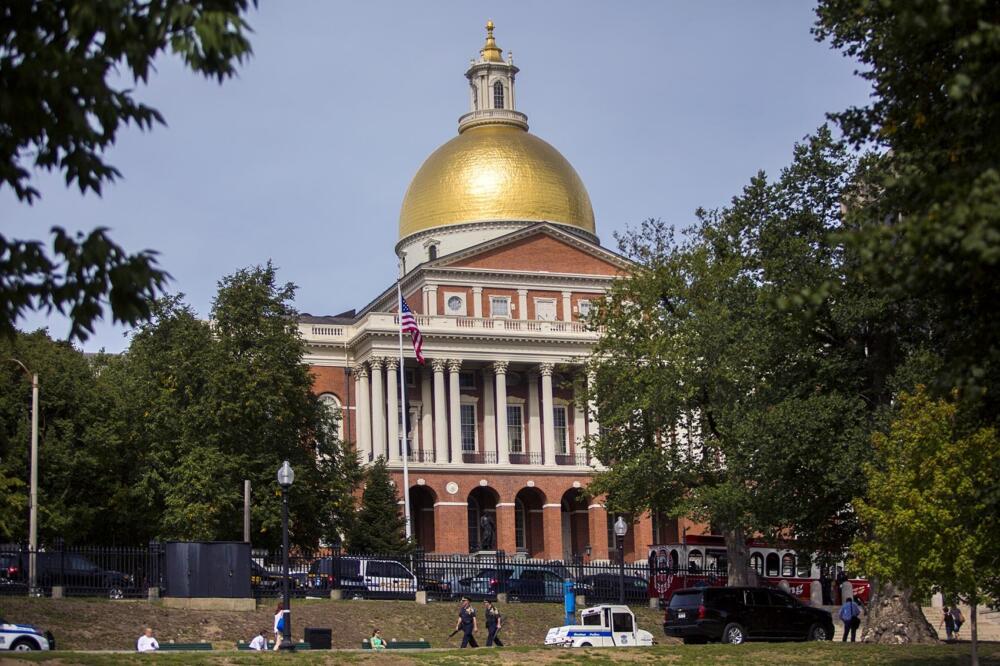
The Massachusetts House shuttled a trio of bills into conference committee Thursday before breaking for a long weekend, giving the Legislature ample leeway to negotiate issues surrounding violence prevention efforts for healthcare workers, home care licensure and campaign finance rules for ballot question committees
Under new legislative rules, the branches do not need to reach final agreements on major bills by July 31. Instead, they only need to ship differing bills into negotiating panels by that date, and can they continue working on final legislation during and after campaign season
The revamped timeline is meant to avert the midsummer legislative chaos that has characterized recent election years, when lawmakers ended up ironing out key details of laws in the middle of the night or failed to reach deals altogether
“Why would we now go back to the old ways of trying to make it by the deadline of July 31?” House Speaker Ron Mariano told reporters last week. He added, “It’ll all work out in the end, whether it’s July 31, Jan. 1, Dec. 31.”
The House created two new conference committees Thursday, initiating the process to reconcile healthcare bills it passed in November with versions that cleared the Senate last week
Reps. Michael Day of Stoneham, Brandy Fluker-Reid of Boston and Hannah Kane of Shrewsbury are on the conference committee to hash out legislation (H 4767) making it a felony to assault healthcare workers — with the offense carrying up to 10 years in state prison and up to a $5,000 fine. Day is co-chair of the Judiciary Committee
Perpetrators under the Senate version (S 3184) would be charged with misdemeanor offenses and face up to two and a half years in a house of correction, though Middlesex District Attorney Marian Ryan said prosecutors could still pursue felony charges in more violent attacks. The Senate must now name conferees
Reps. Thomas Stanley of Waltham, Frank Moran of Lawrence and David DeCoste of Norwell were named to the negotiating panel for legislation (H 4706) establishing a licensure process for home care workers, with the state’s rapidly growing population of older adults placing heightened strain on the industry. Stanley co-chairs the Aging and Independence Committee. It’s now up to the Senate, which passed its home care bill (S 3183) on a voice vote, to complete the conference committee
The House also filled out the negotiating panel for legislation requiring more intense campaign finance reporting for ballot question committees and potentially laying the groundwork for an overhaul of the entire initiative petition process
The Senate on Monday named Sens. Sal DiDomenico of Everett, Jacob Oliveira of Ludlow and Ryan Fattman of Sutton as negotiators. The House tapped Reps. Daniel Hunt of Boston, Alice Peisch of Wellesley and Paul Frost of Auburn on Thursday
Hunt is co-chair of the Election Laws Committee. Peisch was the House lead on the legislative committee that reviewed initiative petitions and recommended no action on all ballot questions in the last two cycles
With Beacon Hill casting a critical eye on special interest groups pushing ballot questions, bills approved by the House and Senate (H 5558 / S 2916) expand disclosure rules for ballot campaigns in an effort to create a steadier stream of information about funding the House unanimously passed its bill on July 1
The House bill creates a legislative commission to review the whole initiative petition process as outlined in the state constitution and seeks statutory and constitutional amendment recommendations to alter the process by the end of 2027
Under both bills, statewide initiative petition committees would need to file monthly financial reports with the Office of Campaign and Political Finance until 60 days before the election. Once the election is within 60 days, committees would need to file reports twice a month. Under current law, committees aren’t required to report on their finances between Jan. 20 and September
Both bills also require paid signature gatherers to use petition forms that clearly say they are being paid and ban campaigns from offering rewards based on the number of signatures a gatherer collects, like fee-per-signature agreements
There are nine questions heading for the 2026 ballot and this election cycle has been fraught with issues surrounding ballot questions. But under the new legislative rules, a ballot question compromise may not emerge until after the November election
Other bills already in conference committee deal with energy affordability, child welfare, environmental borrowing, data privacy, cellphone use in schools and social media regulations, immigration protections and higher education infrastructure borrowing
