

Getting your Trinity Audio player ready…
Some of the fiercest beasts of prey in your garden are on your side. They’re predatory insects that protect your plants by controlling the populations of more harmful bugs
“The overwhelming majority of insects in your garden are beneficial to plants,” said Sharon Yiesla, plant knowledge specialist in the Plant Clinic at The Morton Arboretum in Lisle
That’s a big reason to go slowly and think hard before spraying any insecticides in the garden. “You’re likely to kill more of the bugs that are your allies than the ones that are doing damage,” she said. “Give predatory insects a chance to work first.”
Take, for example, the mealybug destroyer. It’s your ally against mealybugs, small white insects that suck sap from many kinds of plants and exude sticky honeydew that feeds mold
The mealybug destroyers look very much like mealybugs, but they are hunters. “If you see a mass of white mealybugs on a plant and some of them are moving, those are the mealybug destroyers,” Yiesla said. “The mealybugs are sitting still and sucking sap, and the destroyers are eating them.” They eat scale insects such as magnolia scale as well as mealybugs
Like many insects, mealybug destroyers are beneficial throughout their life cycle. The white mealybug destroyers are actually larvae of a type of ladybug that, as an adult, also eats mealybugs and other insects
Adult ladybugs are most known for eating aphids, but the various species are ferocious hunters of varied prey
Most ladybug larvae have elongated bodies, often orange and black, adorned with spikes like tiny alligators. The next stage, the pupa, is a bright orange bobble that sometimes alarms gardeners who fear it is bad news. In fact, it’s about to metamorphose into an adult ladybug
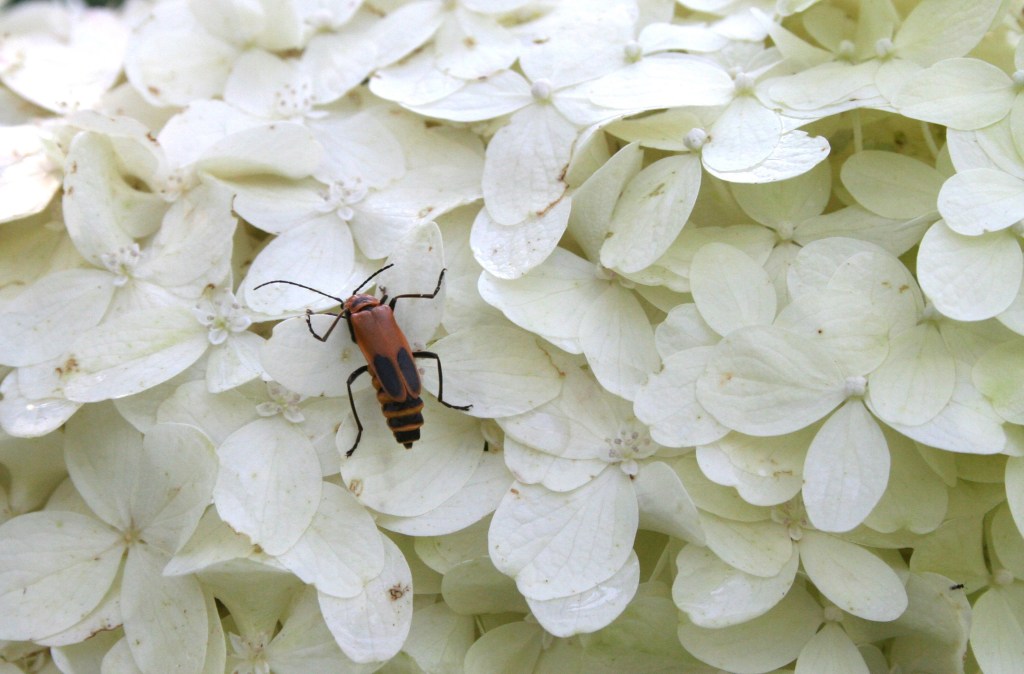
Soldier beetles are another helpful predator. “They look kind of like lightning bugs that don’t light up,” she said. Soldier beetles eat nectar and pollen, so they are often seen on flowers, but they also eat many kinds of insects
To protect these and other garden allies from friendly fire, never spray a pesticide until you have had the insect problem precisely identified by experts such as the Plant Clinic (mortonarb.org/plant-clinic) and gotten a recommendation about how to respond
“It may be that the problem is not very serious or the insect you’ve spotted is actually a good guy,” Yiesla said. “Often the best response to an infestation is to take care of the beneficial insects that nature provides to us, and let them deal with it.”
For tree and plant advice, contact the Plant Clinic at The Morton Arboretum (630-719-2424, mortonarb.org/plant-clinic, or plantclinic@mortonarb.org). Beth Botts is a staff writer at the Arboretum
