

Video Duration 05 minutes 30 seconds05:30
Iran MoU expiry won’t change Hormuz standoff: Analysis
Published On 20 Aug 2026
United States President Donald Trump has insisted that his military remains in control of traffic through the Strait of Hormuz, and suggested this past week that the US might even seek to take charge of the territory
On Tuesday, he also claimed that the strait was open for vessels to pass through, despite Iranian insistence that the waterway was closed for all ships that don’t seek Tehran’s approval before transit, and even though the US itself has a naval blockade in place targeting all Iran-linked ships
At the same time, Trump has threatened to bomb Oman, a US ally that sits across the Strait of Hormuz from Iran – the waterway lies in the maritime territories of Iran and Oman – in an apparent bid to dissuade Muscat from striking any deal with Tehran to jointly manage the strait
So who really is in control of the Strait of Hormuz at the moment?
Amid the claims and counterclaims from both sides, actual data on the traffic passing through the waterway offers vital clues. We break it down
What are the two main routes through the Strait of Hormuz?
Before the war started, the Strait of Hormuz was largely considered a single waterway, without distinctions between “Iranian” or “Omani” routes, and ships entered and exited along well‑established traffic separation schemes, mostly along the central part of the strait
Decisions on how ships navigated the strait were determined by port calls, charter terms and safety rather than fear of military consequences
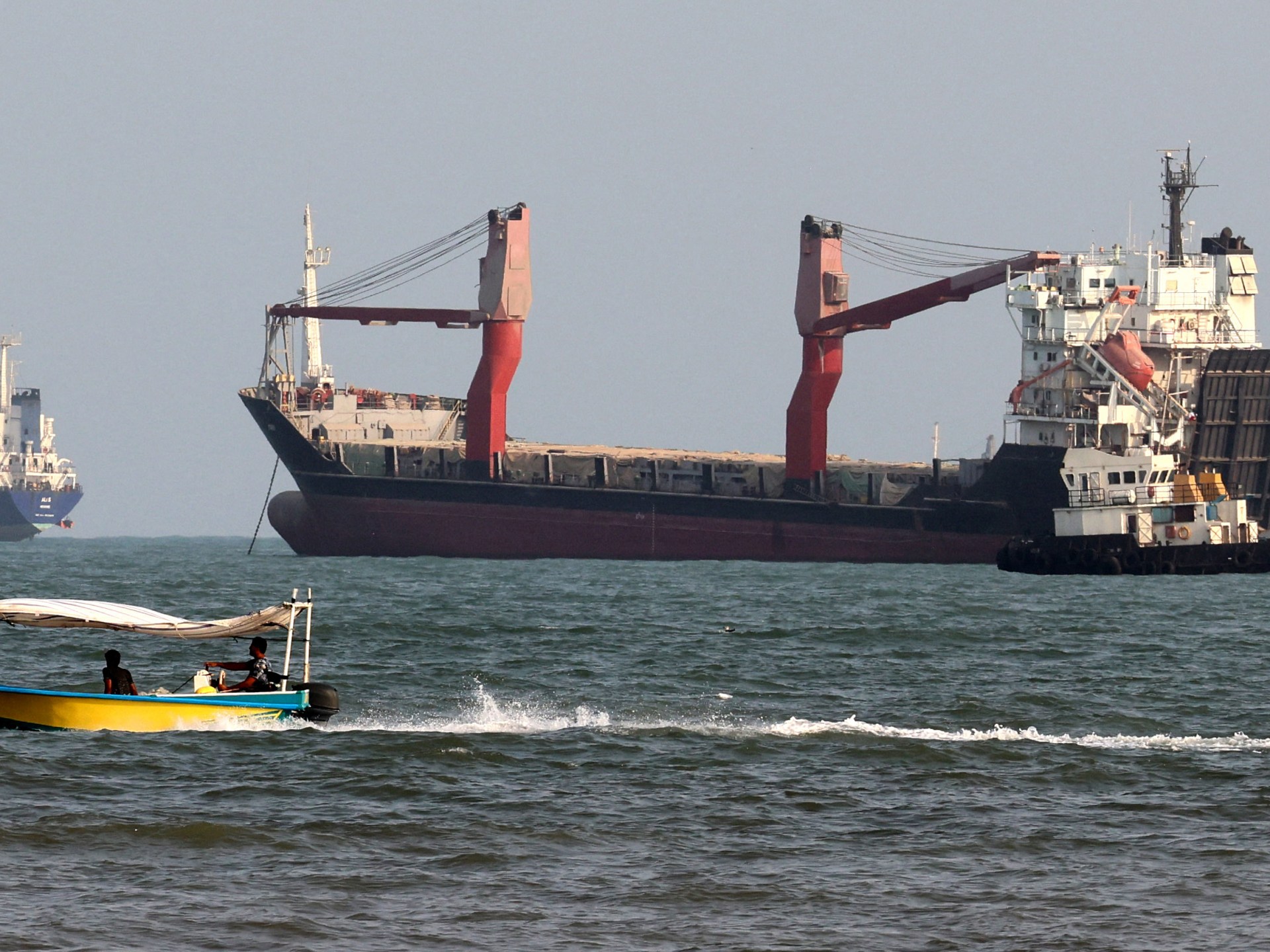
Since the war has spiked tensions between the US and Iran over the Strait of Hormuz, the waterway has been fractured into two main routes. Tehran insists on the northern, Iranian route, hugging Iran’s coast near Larak Island and Qeshm Island, and feeding directly into Iranian ports and offshore terminals
Advertisement
The other route is the southern, Omani route, closer to Oman and further from Iran’s shoreline. This is the route that Washington insists on, and is the one used by commercial carriers under US Naval protection
What routes do ships carrying oil and gas use?
Data from maritime intelligence firm Kpler shows that 112 vessels carrying crude, liquefied petroleum gas (LPG) and liquefied natural gas (LNG) passed through the Strait of Hormuz – either entering the Gulf or leaving it – between August 1 and August 19
Of those tankers and carriers, 21 openly used the Iranian route and only two formally used the Omani route
The remaining 89 vessels, which make up more than 80 percent of the total oil and gas traffic through the strait in this period, went along dark or otherwise unclassified routes
This happens when a vessel’s movements cannot be fully tracked or clearly linked to a declared route because the vessel either turns off its Automatic Identification System (AIS) transponder or the AIS data does not neatly fit into Kpler’s defined Iranian or Omani corridors. Hence, it is not clear which route these vessels took
“While these transits can be observed once vessels reappear after crossing, the nature of dark routing makes it highly difficult to determine what proportion may also have used the Omani route or to confirm their precise routing from the available data,” Mohamed Rafik Halitim, a customer success manager for maritime and commodities at Kpler, told Al Jazeera
What about cargo beyond just oil and gas?
Kpler’s data shows that 236 ships in all transited through Hormuz between August 1 and August 19. This includes not just oil and gas vessels, but others carrying dry cargo and chemicals
Of these ships, 83 openly used the Iranian route, only three publicly used the Omani route and two used the old pre-war route that ran through the centre of the strait
But the bulk of the ships, 148 of them, again went dark or used unknown routes while transiting through the strait. That’s more than six out of 10 ships that passed through Hormuz in this period
By comparison, 35 percent of vessels openly used the Iranian route, and only a handful used the Omani or pre-war route publicly.
Why are so many vessels switching off their transponders?
Since the beginning of the war, both Iran and the US have not only threatened, but have actually bombed vessels that they each claim are violating their routes or rules for maritime navigation through the waterway
Hence, several vessels are turning off their transponders to strip away the digital identifiers that military forces use to target them
Advertisement
“Switching off transponders can reduce the visibility of a vessel’s precise location and movements, although it also creates concerns about maritime safety and transparency,” Neil Quilliam, an associate fellow at the Middle East and North Africa Programme at the UK-based think tank Chatham House, told Al Jazeera. “Some operators believe the commercial and security benefits outweigh those risks under current conditions.”
On August 8, the United Arab Emirates accused Iran of attacking a tanker owned by the Abu Dhabi National Oil Company (ADNOC) with a missile as it tried to pass through the strait
In a statement, ADNOC said that since the beginning of the war, 15 of its vessels had been attacked by missiles and drones while transiting the strait, killing one crew member and injuring 20. The ADNOC statement did not blame either side
Last month, the US fired on an oil tanker traversing through the strait towards Iran’s Kharg Island. The US said it fired Hellfire missiles at the ship after it ignored several warnings
On August 11, the US said a Navy helicopter also fired two Hellfire missiles at the Panama-flagged Vela Nova cargo vessel, adding that the ship was attempting to break its blockade of Iranian ports in the Gulf of Oman, which connects directly to the Strait of Hormuz
Another reason to switch off transponders is to conduct ship-to-ship cargo transfers, mid-route, without being seen, experts say
“According toluding Saudi Arabia, Iraq, and Kuwait, have sent out some shipments through the Omani route by turning off their vessel tracking and by doing ship-to-ship transfers,” energy policy researcher and consultant Marc Ayoub told Al Jazeera
In essence, a ship that wants to avoid the threat of Iranian missiles would travel through the Omani route with its transponder off, but then passes its cargo over to a ship outside the strait, which then ferries it to its final destination. The original “dark” ship then returns to its port of origin undetected
Ayoub added that a number of Iranian vessels are also transiting through the Omani route – often including ship-to-ship transfers – to avoid sanctions against Iran and the US blockade
“They send their shipment to Oman through the Omani route, they change the documents of those shipments so that they appear as if they are exported by Oman, and then they send it to the oil market.”
Are ships more scared of defying Iran or the US?
The fact that most ships passing through the strait are switching off their transponders or using unknown routes means that it is impossible to know, for now, exactly how many are actually using either the Iranian or the Omani route
That in turn means it is difficult to conclusively say who “controls” the strait at the moment
But the data does tell us which of the two powers vessels are more willing to defy and who they’re more scared of offending
Despite a US naval blockade backed by the world’s most powerful navy, a fifth of all energy-carrying ships openly transited Hormuz through the Iranian route, defying Trump’s threats. And that number rose to 35 percent of all vessels when carriers ferrying cargo and chemicals are included
Advertisement
By contrast, only two oil and gas ships, and four vessels in all, openly used a route other than the one prescribed by Iran.
The conclusion: The fear of offending Tehran appears to outweigh Trump’s threats
Is Iran losing control of the Strait of Hormuz?
Experts say that Iran still retains significant capacity to control maritime traffic in the strategic waterway
“Iran is not losing control in the current status quo,” Ayoub said
However, he added that this scenario could ultimately become unsustainable for global oil markets
“Iran still retains significant capacity to disrupt maritime traffic and threaten shipping in the Strait of Hormuz,” Quilliam said
“However, the growing use of alternative logistics arrangements, ship-to-ship transfers, and enhanced regional maritime security measures suggest that Iran’s ability to exert pressure through the strait is not absolute,” he added
Why is the Strait of Hormuz significant to the Iran war?
The Strait of Hormuz is a critical waterway through which one-fifth of the world’s oil and LNG supplies were shipped before the US-Israel war on Iran began on February 28. Roughly 130 ships sailed through the strait each day, compared with the 236 in all that passed over 19 days in August 2026
Iran closed the strait in early March, allowing only a few ships it deemed “friendly” to pass through the strait, until it signed the MoU with the US on June 17. Since then, it has become the key issue holding up talks for a lasting peace plan to end the war on Iran
The US, meanwhile, has established its own blockade on Iranian ports in and around the strait. Last week, it fired on a Panama-flagged cargo vessel it accused of attempting to reach Iranian ports and which, it said, had failed to follow orders to change course
The crisis has triggered global energy shortages, and the price of oil has soared. The price of Brent crude, the global benchmark, was about $66 a barrel just before the Middle East conflict began. Over the course of the war, the price has surged past $100 on several occasions, most recently on July 23. In March, the price rose as high as $119
The price of Brent crude fell significantly after the US and Iran agreed to a ceasefire in April, and then when they signed the MoU in June. But with tensions rising again, so too has the price of oil: Brent stood at $92.9 per barrel on Thursday morning
“If Tehran’s influence over shipping flows is perceived to be diminishing, this could weaken one of its traditional
