

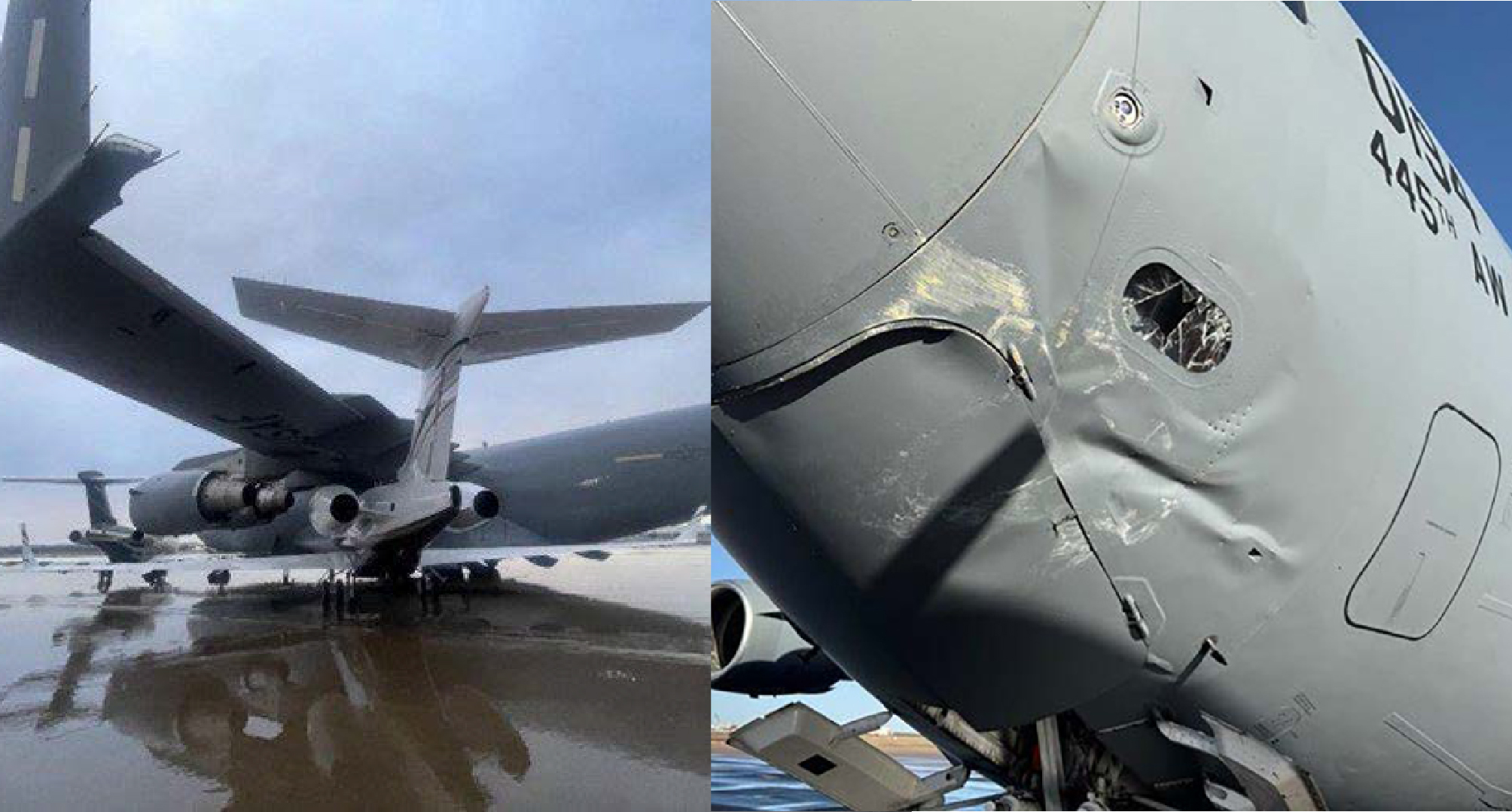
An overnight storm that hurled two business jets into the side of a US Air Force C-17 Globemaster III last year has ended with a milestone that could reshape military aircraft maintenance for decades
Instead of waiting years for a replacement part that nobody was willing to manufacture, the Air Forceused a robotic metal-forming system to produce it itself
Almost a year later, the strategic airlifter was back in the sky
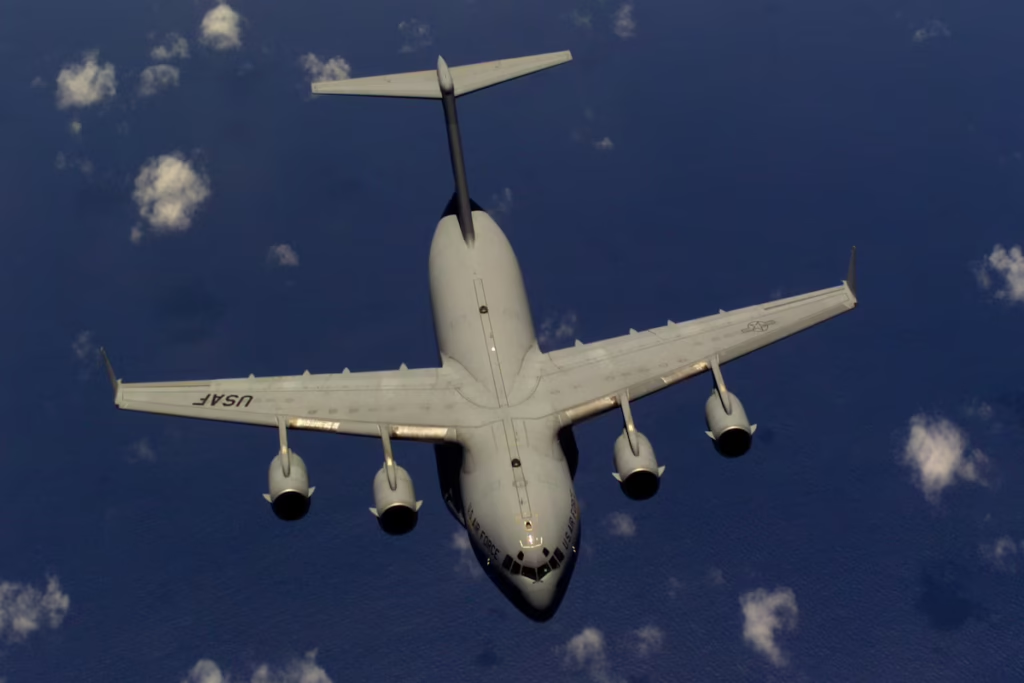
It is the first time a component produced using the Air Force’s Incremental Sheet Forming (ISF) technology has flown on an operational aircraft
More importantly, it offers a possible answer to one of the biggest problems facing ageing military fleets: what happens when the aircraft is still needed but the parts are no longer available
The aircraft’s ordeal began long before anyone switched on the robot
A violent Texas storm changed everything in minutes
In the early hours of 4 March 2025, severe thunderstorms swept across the Dallas-Fort Worth area, bringing large hail, violent wind gusts and tornado warnings
At Perot Field Fort Worth Alliance Airport, where a C-17 from the 445th Airlift Wing had been parked overnight, the weather turned destructive
Wind microbursts approaching 80mph tore across the airfield. Two privately owned Bombardier Challenger business jets broke free and were blown into the much larger military transport aircraft
The collisions smashed into the left side of the Globemaster, damaging its access door, fuselage and nose section
Although the aircraft remained flyable, it was far from mission ready
Engineers approved a temporary repair to the damaged nose panel, allowing the aircraft to make the journey back to Wright-Patterson Air Force Base in Ohio with its landing gear locked down for the entire flight
Once home, maintenance crews repaired the damaged door and fuselage. The nose, however, presented a much bigger challenge
Why Boeing could not
Replacing the damaged nose panel should have been routine
Instead, maintainers ran into a problem becoming increasingly common across mature military aircraft programmes
Boeing concluded that no supplier was prepared to manufacture the single replacement panel. Producing the specialised tooling needed for one isolated component simply made no commercial sense. An attempt to repair the damaged panel also failed
The prospect was stark. The aircraft could spend at least a year waiting for a solution before another year of repair work even began. For the 445th Airlift Wing, that was not considered acceptable
The unit operates one of the Air Force Reserve’s mission-essential C-17 fleets, supporting global airlift operations alongside active-duty Air Mobility Command forces
Rather than accepting a prolonged grounding, the 445th Maintenance Group turned to the Air Force Rapid Sustainment Office (RSO), part of the Air Force Life Cycle Management Center
Its Automation and Robotics team believed the damaged panel could become the perfect proving ground for an emerging manufacturing technology
How the Air Force used robotic manufacturing to build a new replacement part
Instead of stamping the replacement using expensive production tooling, engineers used the ISF. Unlike conventional manufacturing, the process gradually reshapes a flat sheet of metal using a robot that precisely presses the material into its final form
Because dedicated tooling is unnecessary, unique or extremely low-volume components can be produced far more quickly than through traditional manufacturing methods
Working with engineers from the University of Dayton Research Institute, the Rapid Sustainment Office began manufacturing the replacement panel in January 2026. The panel moved from robotic forming to structural testing and repeated fit checks before receiving approval for installation
Following a final fit assessment in April, Boeing and maintainers from the 445th installed the completed panel during July
“When the mission demanded immediate action, the RSO stepped up,” said Mary Schuler, Automation and Robotics Lead Programme Manager at the Air Force Rapid Sustainment Office
“By leveraging the ISF, with critical support from UDRI, we didn’t just meet the need. We significantly decreased our timeline, reducing the repair process from years to only a few months.”
Final work included testing the aircraft’s nose landing gear and completing adjustments around the repaired section. On 30 July this year, the aircraft returned to flight
For the Air Force, that first flight represented much more than the recovery of a single transport aircraft. It marked the operational debut of a manufacturing method designed to keep ageing fleets flying even when conventional supply chains reach a dead end
How ageing aircraft fleets are creating a new sustainment challenge
The successful repair comes at a time when every C-17 has become increasingly valuable
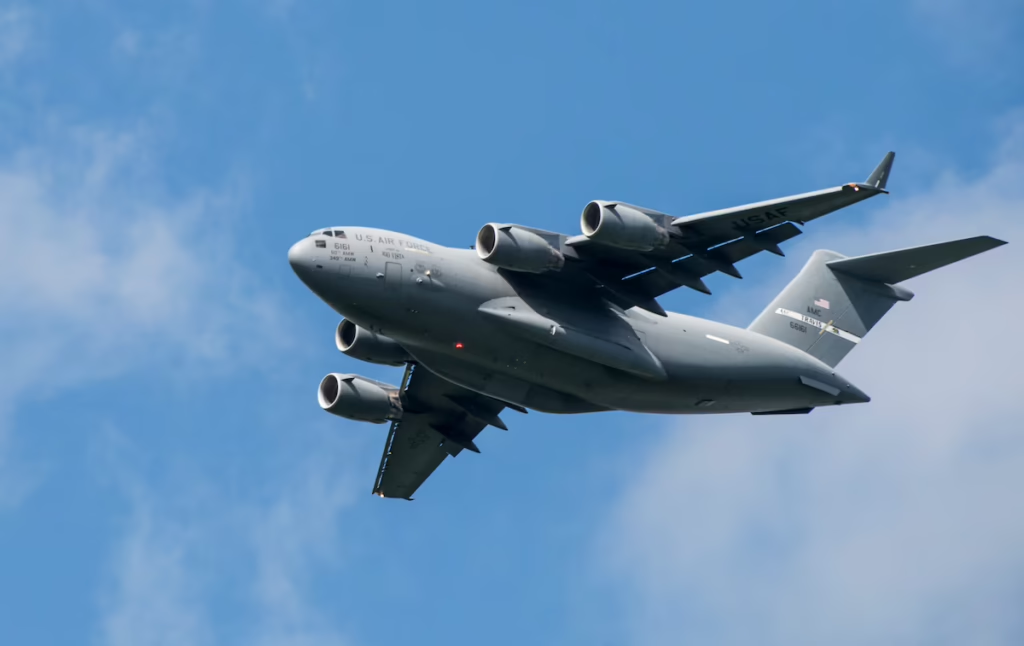
Boeing built 279 C-17 Globemaster IIIs before the production line closed in 2015. Today, roughly 275 remain in service worldwide, serving with the United States and a small group of international operators including the UK, Australia, Canada, India, Qatar, Kuwait, the United Arab Emirates and NATO’s Strategic Airlift Capability. With no successor in production, the aircraft are expected to remain the backbone of Western strategic airlift for decades
That longevity brings an increasingly familiar challenge
Aircraft designed in the late 1980s and produced through the early 2010s are now entering a period where some suppliers have disappeared, specialist tooling has been retired and manufacturing lines have long since closed. Even relatively simple structural components can become difficult or commercially impossible toroblem confronting military ang them
What makes the C-17 Globemaster III so important
The Globemaster III occupies a unique position in military a
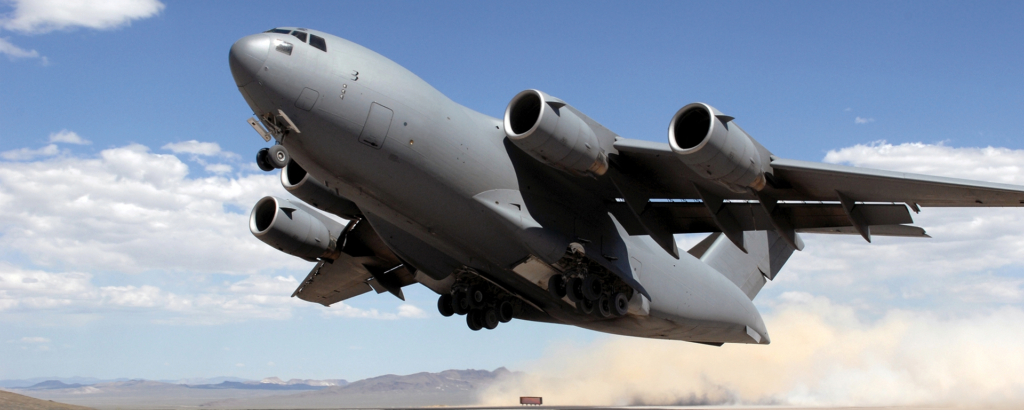
Designed to combine strategic range with tactical flexibility, it can carry heavy armoured vehicles, helicopters, humanitarian supplies and troops across intercontinental distances before operating from relatively short or austere runways closer to the front line
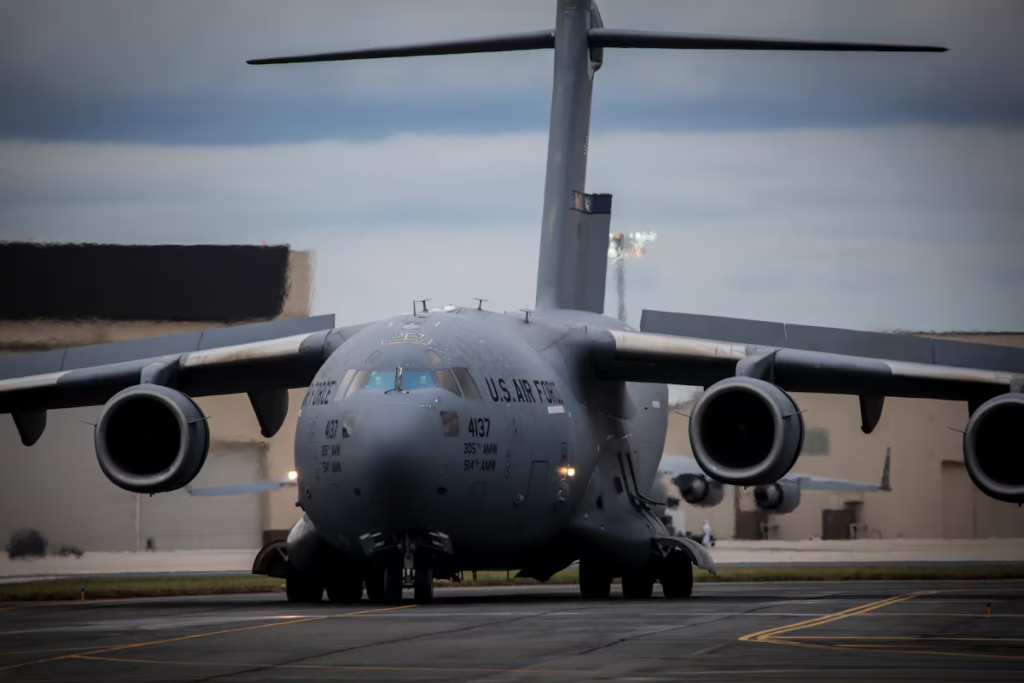
Its ability to back up, turn within confined areas and operate from semi-prepared airstrips has made it one of the most versatile airlifters ever built
Those capabilities have seen the aircraft used in almost every major US military operation since it entered service, while also becoming a familiar sight during disaster relief missions, humanitarian evacuations and the rapid movement of military equipment around the world
For many operators, replacing the aircraft is simply not an option. Keeping them flying has therefore become a strategic priority
Why aircraft sustainment is becoming a strategic priority
The repair also comes as the Pentagoncontinues examining how ageing fleets are supported
A recent Department of Defense Inspector General audit reviewed aspects of Boeing’s C-17 sustainment arrangements, highlighting concerns over spare-parts pricing and the long-term management of logistics support
While the audit focused on contracting and sustainment practices rather than aircraft availability, it underlined the growing complexity of maintaining a transport fleet that will remain in frontline service for many years
Against that backdrop, technologies capable of manufacturing replacement components on demand are attracting increasing attention across the US military
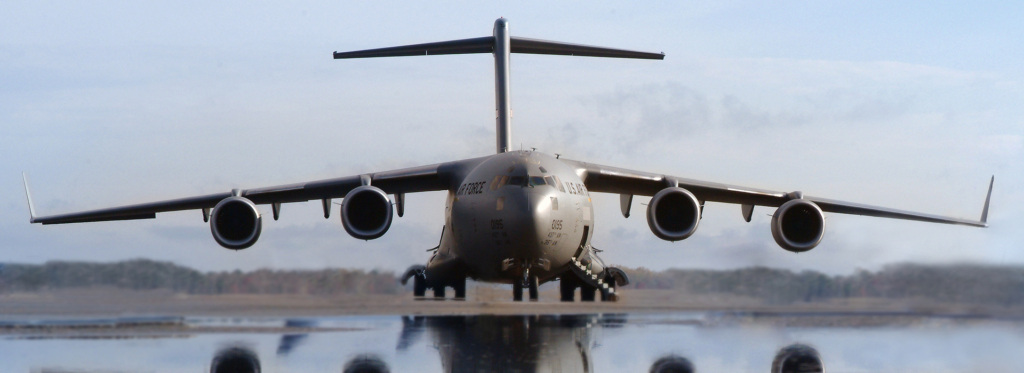
Rather than depending entirely on suppliers that may no longer exist, sustainment organisations are exploring advanced manufacturing to reproduce certified components when conventional supply chains cannot respond quickly enough
Could robotic manufacturing transform military aircraft maintenance?
The Globemaster repair is only the beginning
According to the Air Force, the same Incremental Sheet Forming capability is already being used to manufacture components for the KC-135 Stratotanker and the F-15
Although officials have not identified the specific components involved, the move suggests the technology is being viewed as more than a one-off engineering success. Instead, it is becoming part of a wider effort to give maintainers new options as aircraft fleets continue to age
For air forces around the world, the challenge is no longer simply acquiring advanced aircraft. It is ensuring that aircraft already in service can continue flying safely for decades after the original production lines have fallen silent
Read more defence news on AGNRead more defence news on AGN
News
DefenceDefence & SecurityInnovation & TechnologyAdvanced ManufacturingC-17 GlobemasterIncremental Sheet FormingRapid Sustainment OfficeUS Air Force
Sign up for our newsletter and get our latest content in your
inbox.
1
US Air Force says B-21 Raider remains on track for 2027 service entry US Air Force says B-21 Raider remains on track for…
Northrop Grumman B-21 R…
August 10, 2026
2
What makes a fighter jet ‘sixth generation’? What makes a fighter jet ‘sixth generation’?
6th generation fighter …
August 9, 2026
3
F-22 vs F-35: What’s the difference and which fighter jet is better? F-22 vs F-35: What’s the difference and which fighter jet…
fighter jets
August 8, 2026
4
Australia’s F/A-18s to be first foreign fighters with secretive AIM-260 missilesAustralia’s F/A-18s to be first foreign fighters with secretive AIM-260…
AIM-260 JATM
August 7, 2026
Related Topics
More from
Why United Airlines and Virgin Atlantic are winning with Starlink WiFi Why United Airlines and Virgin Atlantic are winning with Starlink WiFi
August 10, 2026
Why are airlines keeping older aircraft in service for longer? Why are airlines keeping older aircraft in service for longer?
August 9, 2026
How far can a passenger plane fly without stopping? How far can a passenger plane fly without stopping?
August 8, 2026
eSAF could solve aviation’s fuel problem. So why is almost nobody making it? eSAF could solve aviation’s fuel problem. So why is almost nobody making it?
August 7, 2026
What makes a fighter jet ‘sixth generation’?What makes a fighter jet ‘sixth generation’?
August 9, 2026
F-22 vs F-35: What’s the difference and which fighter jet is better?F-22 vs F-35: What’s the difference and which fighter jet is better?
August 8, 2026
Australia’s F/A-18s to be first foreign fighters with secretive AIM-260 missilesAustralia’s F/A-18s to be first foreign fighters with secretive AIM-260 missiles
August 7, 2026
Ukraine moves towards anti-ballistic missile capabilities as Freyja takes shape Ukraine moves towards anti-ballistic missile capabilities as Freyja takes shape
August 7, 2026
US Air Force says B-21 Raider remains on track for 2027 service entryUS Air Force says B-21 Raider remains on track for 2027 service entry
August 10, 2026
Ukraine moves towards anti-ballistic missile capabilities as Freyja takes shapeUkraine moves towards anti-ballistic missile capabilities as Freyja takes shape
August 7, 2026
Korean Air to adapt Archer Midnight eVTOL for military transport missions Korean Air to adapt Archer Midnight eVTOL for military transport missions
August 5, 2026
Possible fifth J-36 prototype spotted as analysts caution against comparisons with the F-47 Possible fifth J-36 prototype spotted as analysts caution against comparisons with the F-47
August 4, 2026
eSAF could solve aviation’s fuel problem. So why is almost nobody making it?eSAF could solve aviation’s fuel problem. So why is almost nobody making it?
August 7, 2026
Why is sustainable aviation fuel so scarce and expensive?Why is sustainable aviation fuel so scarce and expensive?
August 1, 2026
Amsterdam Schiphol champions airport quality as it reveals €801 million investment Amsterdam Schiphol champions airport quality as it reveals €801 million investment
July 29, 2026
India’s ePlane strengthens supply chain with global aerospace partners as e200X moves towards certification India’s ePlane strengthens supply chain with global aerospace partners as e200X moves towards certification
July 28, 2026
