


As students head back to school across Georgia, some parents are worried about more than academics
They’re worried about whether some children will have enough to eat
For Chenequa Mathis, a DeKalb County substitute teacher who also runs her own tutoring business, Global Thinkers in Decatur, hunger is something she sees far too often in the classroom
“The stats say 40%,” Mathis said. “But just from what I’ve witnessed, I believe it’s every bit of 60% — maybe even 75% of students are receiving free or reduced lunch.”
Mathis says many of the schools where she works serve predominantly low-income families, making school meals an essential part of the school day
“I just think about children coming to school hungry,” she said. “If you’re hungry, you can’t focus. It affects the way you’re supposed to perform in the classroom.”
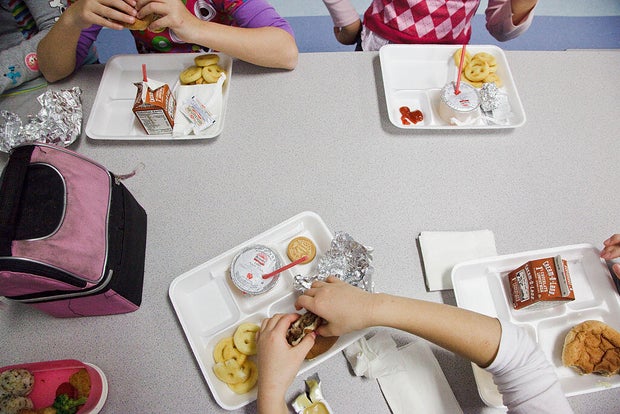
A new report from the Center for American Progress, a Washington-based policy organization, warns that changes to federal food assistance programs could create new challenges for schools that provide free breakfast and lunch to every student
The report examines the potential effects of provisions in the federal “One Big Beautiful Bill Act,” which tightened certain eligibility and administrative requirements for the Supplemental Nutrition Assistance Program (SNAP). Researchers say that while the law does not directly change school meal programs, it could indirectly affect whether some schools remain eligible for the Community Eligibility Provision (CEP)
Under CEP, schools with enough students automatically enrolled in SNAP, Medicaid or Temporary Assistance for Needy Families (TANF) can offer free breakfast and lunch to every student without requiring families to complete individual meal applications
“If a certain percentage of your student base qualifies automatically, your school qualifies,” said Dr. Imani Barnes, a Georgia state representative from Tucker who holds a doctorate in public health. “If that percentage is reduced because not as many students are qualifying, then your school doesn’t qualify.”
According to the Center for American Progress, 1,254,521 Georgia students attended schools participating in the Community Eligibility Provision during the 2024–25 school year
The report estimates that nearly 800,000 Georgia students receive free meals because their schools qualify under CEP, rather than because their families are individually certified through SNAP, Medicaid, or TANF
If a school loses its eligibility, families would once again have to submit applications for free or reduced-price meals. Those who no longer qualify could pay an estimated $1,134 annually to provide school lunches for two children, according to the report
“That’s a lot to families who are already strapped,” Barnes said. “Gas is extremely high right now. Then they have to start budgeting almost $1,200 more.”
Barnes said the consequences extend well beyond household finances
“It has been proven that an empty stomach cannot produce the amount of energy a child needs to retain — or even absorb — the information that’s being given to them,” she said
Mathis agrees
“Just imagine going to school hungry,” she said. “You’re going to be grumpy. You can’t focus. It changes the way you think and the way you’re expected to perform in the classroom.”
The Georgia Department of Education said it has not yet received federal guidance explaining how the new law will affect school meal eligibility
In a statement, the department encouraged all eligible families to apply for free or reduced-price meal benefits through their local school nutrition program. Officials noted that students who are not automatically certified through SNAP, Medicaid or TANF may still qualify based on household income
For educators like Mathis, the issue ultimately comes down to giving children the best chance to succeed
“It’s not just about feeding kids,” she said. “It’s about making sure they’re ready to learn.”
With many lower-income Georgia families already balancing rising costs for housing, groceries and transportation, advocates say the cost of school lunches could become one more strain on already stretched household budgets
