

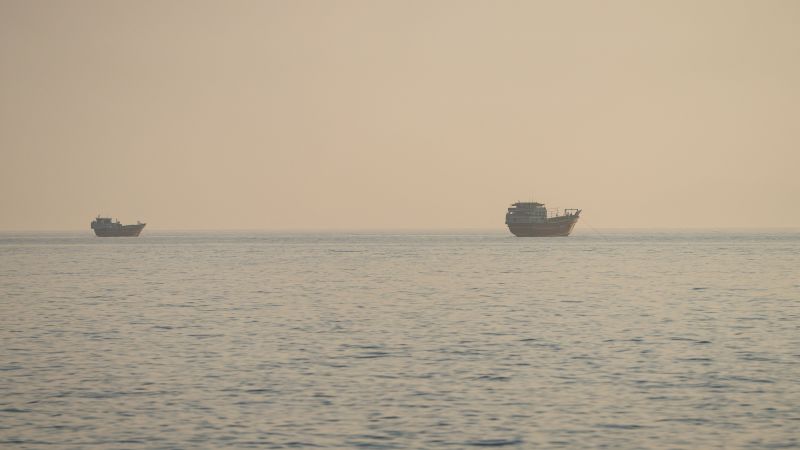
• Maritime alliance:The Saudi defense ministry said Thursday that 14 countries have backed the kingdom’s proposal to establish a “Maritime Defense Alliance” to protect international shipping routes and global trade
• Unrest in the region:Iranian forces struck an air base in Kuwait, state media reported early Friday. Kuwait’s army and state media has not yet confirmed the attack. This comes after Egypt reported a drone strike earlier this week, which no party has claimed responsibility for
• In Lebanon:Israel said it destroyed tunnels in southern Lebanon with tons of explosives, claiming the infrastructure was central to a plan by Iran-backed Hezbollah to invade communities in northern Israel. Iran has previously demanded Israeli withdrawal from Lebanon as a condition for talks with Washington
8 Posts
As inflation skyrockets in Iran, many civilians will feel the bite of poverty and hardship in the coming months, said Hadi Kahalzadeh, economist and non-resident fellow at the Quincy Institute
“Iran right now is experiencing the highest inflation rates in its modern history,” he told CNN early Friday. “For half the population right now experienced a 100% inflation year.”
Iranian media reported earlier this month that food prices have skyrocketed as the fallout from the war hits consumers. The prices of certain food items have increased by 300% to 400%, Khabar Online news agency reported
The labor market has also shrunk, Kahalzadeh said. The UN predicted in a March report that up to 4.1 million more people in Iran could fall into poverty due to the conflict, potentially raising the poverty rate to as high as 41%
A major problem Iranians face as the war continues is that “people are living in constant uncertainty… they can’t make any plans for the future, they have no hope that there is any meaningful change on the horizon,” he added
The Iranian economy does show some signs of resilience, said Kahalzdeh, adding he doesn’t anticipate a total collapse. But economic pain will be unevenly distributed; those with government affiliations may be more protected, while “most of the population” will feel the pinch, he said
“The daily life of people would get worse, definitely in the coming months,” he said
Video released by Iranian state media appears to show Iranian forces launching projectiles towards Kuwait.
Iranian forces targeted military infrastructure at an air base in Kuwait, according to state media on Friday
The attack, which took place “several hours ago,” targeted the Ahmad al-Jaber Air Base, Press TV reported early Friday local time
As of early Friday local time, Kuwait’s army and state media had not confirmed the attack on their English-language social media channels
Iran has previously targeted US infrastructure at military bases in neighboring countries in retaliation for American strikes on its territory
More countries are getting pulled into the US-Iran conflict, even those that have tried for months to avoid deeper involvement – with Saudi Arabia announcing a maritime alliance, and Egypt reporting a drone strike for the first time
- Maritime alliance:Fourteen countries backed a Saudi proposal to establish a multinational “Maritime Defense Alliance,” aimed at protecting international shipping routes and global trade, said the kingdom on Thursday.
- Strait of Hormuz:Iran said the waterway would remain closed as long as US “threats” and “interference” with shipping in the region continue. Vessel traffic through the strait and Bab el-Mandeb, another chokepoint, remained depressed.
- Egypt port attack:Iran’s foreign minister called Egypt an “important friend and partner” whose security was of “utmost importance” on Thursday, after a port in the country was struck in a drone attack on Wednesday. No party has claimed direct responsibility, and no injuries or deaths have been reported.
- Qeshm strike:US strikes on Iran on Wednesday killed a couple and their two-year-old child in their home on Qeshm Island, which sits near the Strait of Hormuz, according to Iranian state media. Two other children, aged 11 and 7, were pulled out of the rubble.
- Meanwhile in Lebanon:Israeli officials said they had destroyed tunnels in southern Lebanon using about 700 tons of explosives. They alleged the Iranian-backed group Hezbollah had violated the ceasefire agreement a day earlier, but provided no details about the alleged violation.
- Senate vote:The US Senate failed to advance a resolution aimed at rebuking President Donald Trump over the Iran war. It was the 13th time the Senate has voted on an Iran war powers measure since the beginning of the year.
Mohammed Tawfeeq, Aida Karimi, Karina Tsui, Avery Schmitz, Billy Stockwell, Leila Gharagozlou and Morgan Rimmer contributed reporting
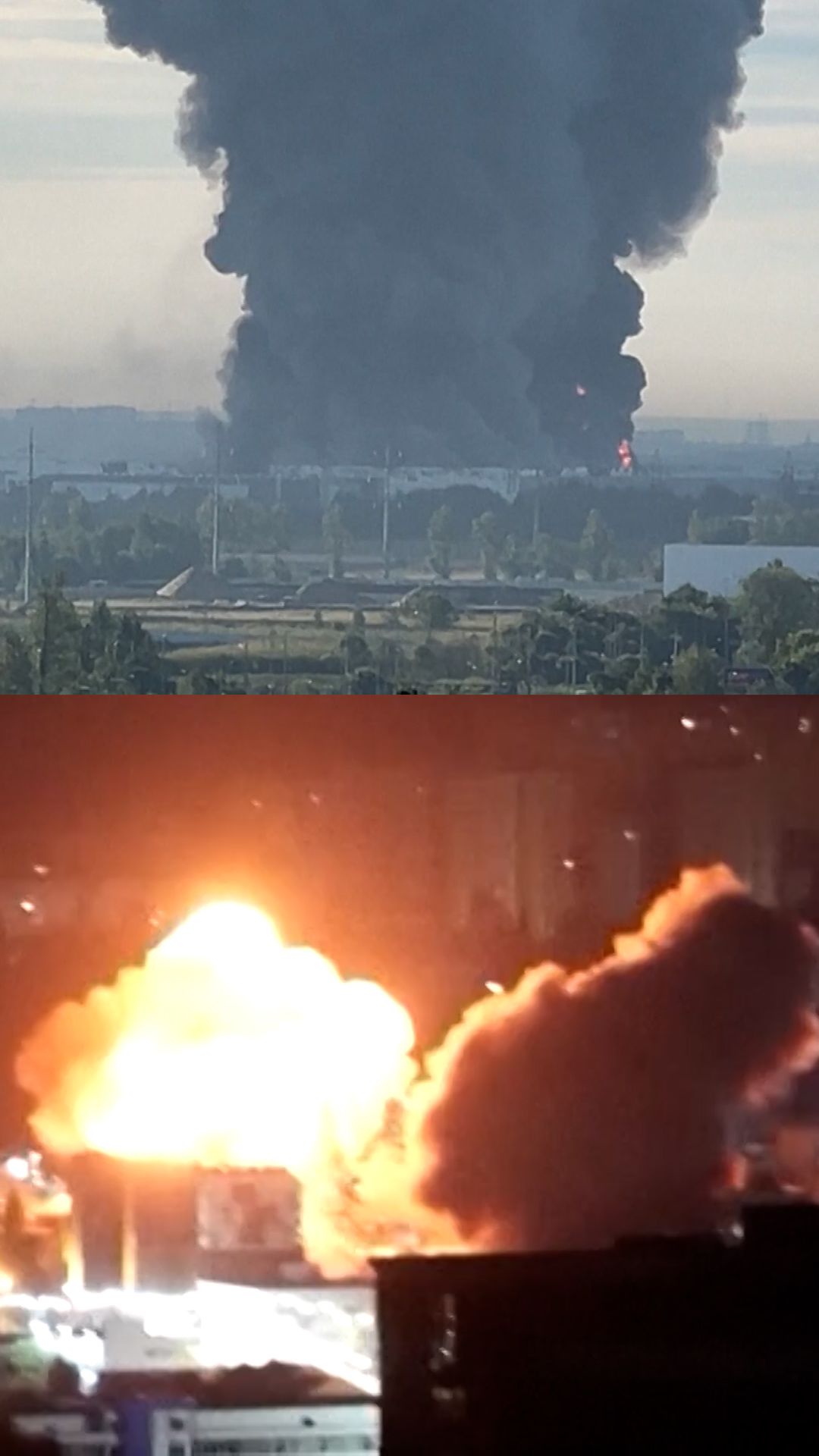
President Donald Trump kicked off his second term promising to be a “peacemaker.” But now he’s struggling to end two widening wars: the one he started with Iran, and the one he inherited between Russia and Ukraine. CNN’s Kevin Liptak explains
Trump’s ‘peacemaker’ promise collides with reality
President Trump kicked off his second term promising to be a “peacemaker.” But now he’s struggling to end two widening wars: the one he started with Iran, and the one he inherited between Russia and Ukraine. CNN’s Kevin Liptak explains
2:32• Source:
CNN
Trump’s ‘peacemaker’ promise collides with reality
2:32
The Israeli military destroyed tunnels in the Beaufort area of southern Lebanon using about 700 tons of explosives, Israeli Prime Minister Benjamin Netanyahu and Defense Minister Israel Katz said in a joint statement
The statement alleged that the underground infrastructure was central to a plan by Hezbollah to invade communities in northern Israel. It said the operation followed what Israel described as Hezbollah’s “blatant violation” of the ceasefire agreement a day earlier, but provided no details about the alleged violation
“The State of Israel will not accept any violation of the ceasefire agreement,” Netanyahu and Katz said, warning that any attempt to harm Israeli forces or civilians would be met with “a harsh and powerful response.”
The statement said Israeli troops would “remain in the security zone in southern Lebanon and will continue to destroy any terror infrastructure in order to prevent any attempt by Hezbollah to rebuild its capabilities.”
Hezbollah did not immediately comment
Some context:Iran has previously demanded Israeli withdrawal from Lebanon as a condition for talks with Washington
A drone attack that targeted an Egyptian port on Wednesday could be a warning from Iran that its conflict with the United States can spread far beyond the current theater of war, a regional expert said
No party has claimed responsibility for the attack yet, and no injuries or deaths were reported
It’s possible that the attack came through one of Tehran’s proxy militias rather than from Iran itself, H.A. Hellyer, senior associate fellow at the Royal United Services Institute (RUSI), said
The attack took place during cargo operations at a liquefied natural gas terminal
British maritime security firm Ambrey said an initial assessment indicated that a floating LNG storage facility – US-owned and operated flying the Marshall Islands flag – was struck. Multiple industrypected drone strike caused a fire that spread to a second vessel
This is the first time Cairo has been directly drawn into the ongoing regional conflict, despite serving as one of the diplomatic channels for the warring parties during mediation efforts earlier this year
Throughout the war, Egypt has both condemned Iran’s attacks on Gulf countries and also publicly urged US President Donald Trump to end the war
But Egypt aligned itself with neither camp, Hellyer noted. If this is how Iran responds, he added, “that doesn’t look very good in terms of keeping Egypt off-side.”
Cairo is nonetheless unlikely to retaliate, he said. “Egypt is very, very conservative about engaging (in) offensive actions.”
Relations between Iran and Egypt broke down after Iran’s 1979 revolution, beginning one of Tehran’s longest diplomatic estrangements with an Arab nation. Contacts between the countries’ foreign ministers intensified, however, during the US-Israeli war against Iran
Fourteen countries have backed a Saudi proposal to establish a multinational “Maritime Defense Alliance,” aimed at protecting international shipping routes and global trade, Saudi Arabia’s Ministry of Defense said in a statement Thursday
The countries are Saudi Arabia, Kuwait, Bahrain, Qatar, Pakistan, Turkey, Egypt, Jordan, Yemen, Bangladesh, Nigeria, Sudan, Djibouti and Somalia
The ministry said military chiefs and other representatives from 43 countries attended a meeting on the initiative, either in person or by video link. A European Union delegation also took part
Participants discussed attacks on commercial vessels, energy carriers and maritime infrastructure, along with the risks they pose to navigation, global supply chains and the international economy, according to the statement
“It was agreed that the Kingdom of Saudi Arabia would be the founding and leading country of the alliance, and host its main headquarters,” the statement said
The proposed alliance is “an open international defensive initiative” for countries that share its goals and principles, according to the statement, adding that it would seek to enhance maritime security and preserve “the freedom of navigation and global trade.”
The 14 countries issued a joint statement supporting the project and welcoming the consensus reached on its founding arrangements, according to the ministry. Other participating countries also expressed support and were completing domestic approval procedures, it said
Saudi Arabia is getting pulled further into the Middle East conflict, conducting joint strikes with the US against Iraq this week – despite the kingdom having spent months trying to avoid deeper involvement
What happened:Washington and Riyadh launched strikes on “logistics and weapons site” in multiple regions of Iraq on Wednesday local time, following attacks by Iran-backed armed groups on US forces and Saudi oil facilities
At least 20 people were killed and 32 others injured, according to the Popular Mobilization Forces (PMF), the umbrella group for Iran-aligned Iraqi militias that were targeted in the strikes
Iraq and Iran’s response:Iran’s Foreign Ministry condemned the attacks Iraq’s recently elected President Nizar Amidi called the attacks “unacceptable and a flagrant violation of Iraq’s sovereignty.”
Why Saudi Arabia got involved:In the last week, the kingdom has faced enemies from three directions: missile attacks from the Iranian-backed Houthis in Yemen, drone attacks from pro-Iranian militias in Iraq and renewed threats from Tehran
On top of attacks to Saudi oil infrastructure, the Houthis also announced a blockade of Saudi shipping through a chokepoint in the Red Sea. This is a major escalation for the kingdom, which had re-routed much of its oil exports through Red Sea ports as the Strait of Hormuz remains paralyzed
Throughout the war between Iran, the US and Israel, the Saudi kingdom had kept open channels of communication with Tehran. But it may be losing patience as it fends off attacks from Iranian-backed proxies, while its economy suffers from the war
Officials meet:Saudi Defense Minister Khalid bin Salman met with Vice President JD Vance in Washington, DC, on Wednesday. They discussed the joint strikes, Saudi Arabia’s response to attacks on its infrastructure, and the kingdom’s view on the ongoing war, according to
The minister also met with President Donald Trump, a
