

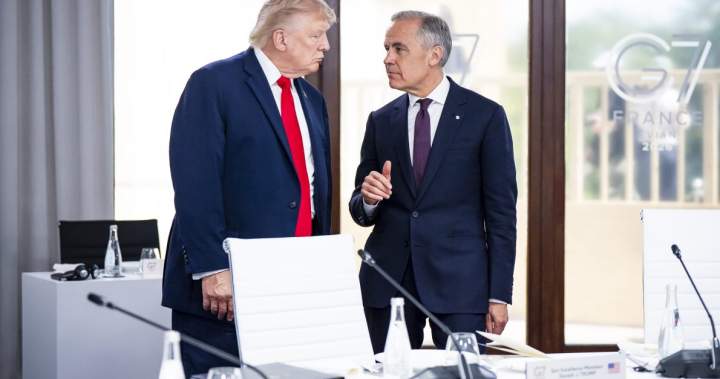
The U.S. said Monday it will be imposing an additional 50 per cent tariff on Canadian imports due to retaliatory and “discriminatory” measures Canada took in response to U.S. President Donald Trump’s <a href="https://todaytrendnews7.com/trumps-new-50-tariffs-on-canada-risk-igniting-a-fresh-trade-war/” title=”Trump’s new 50% tariffs on Canada risk igniting a fresh trade war”>tariffs

Trump signed threeexecutiveorders, each one using a different justification for the new tariff: the provincial and territorial boycotts on American alcohol products, Canada’s retaliatory tariffs on U.S.-made vehicles and auto parts, and quotas on American dairy imports under Canada’s supply management system
The new tariff will take effect in 30 days and will apply to goods covered by the Canada-U.S.-Mexico Agreement on free trade (CUSMA), according to the orders
“Over the past year and a half, only two countries have chosen to retaliate against President Trump’s tariffs rather than negotiate a deal with the United States: the People’s Republic of China and Canada,” the White House said in a statement on the new tariff
“President Trump’s tariffs have resulted in 18 deals opening new markets for U.S. exports and bringing reciprocity back to America’s trade relations. Yet Canada has elected to discriminate against the United States rather than address Canadian trade barriers.”
The tariff will be imposed under Section 338 of the U.S. Tariff Act of 1930, which allows a president to tariff goods from any country that “discriminates … against the commerce of the United States,” the act says
The statute has never been used for this purpose before, a senior administration official told reporters on background
Only energy products, critical minerals, potash, fish, and goods already facing Section 232 tariffs like steel, aluminum and autos will be exempt
The lists of goods subject to the new tariff covers Canadian alcohol, dairy and agricultural products, as well as furniture, paper, hockey sticks and other gear, cement, clothing and textiles
“This is not a trade war,” the official said. “These are defensive measures taken to remedy discriminatory actions by Canada.”
The new tariff comes after the U.S. declined to renew CUSMA for another 16 years at a scheduled review earlier this month. The trilateral trade pact will now be subject to annual reviews, and will expire in 2036 unless it’s renewed in the future
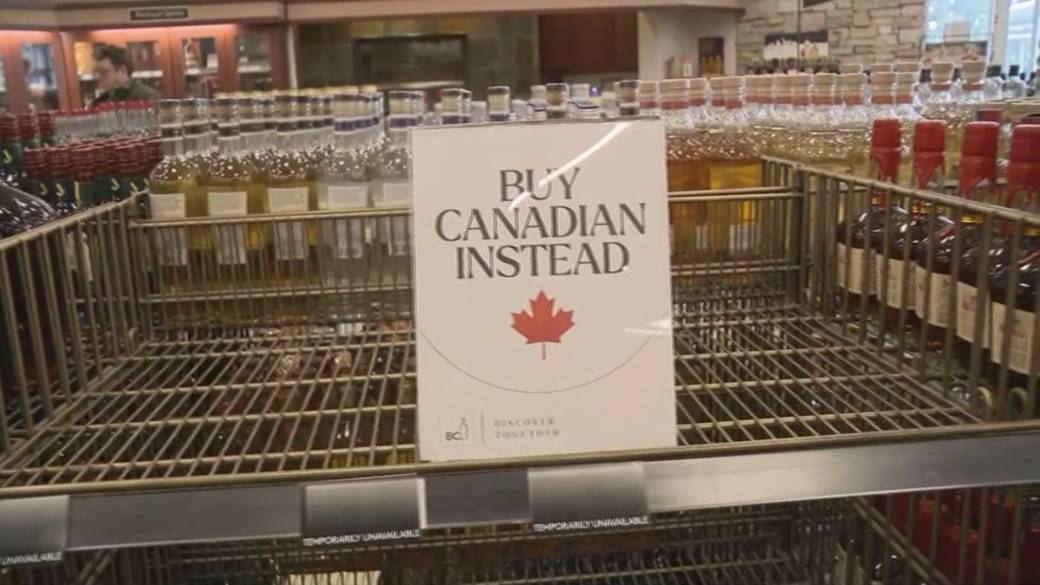
Trump administration officials have cited the U.S. alcohol boycotts, which were enacted last year after Trump began tariffing Canada and Mexico to spur actions to combat fentanyl trafficking, as a major irritant in CUSMA and bilateral trade talks
5:06
U.S. targets Canadian alcohol bans
While Alberta and Saskatchewan dropped their bans last summer, the other provinces and territories have upheld them, defending the actions as appropriate given Trump’s attacks on Canadian trade and sovereignty

Get breaking National news
Get breaking Canada news delivered to your inbox as it happens so you won’t miss a trending story.
By providing your email address, you have read and agree to Global News’ Terms and Conditions and Privacy Policy.
Ontario Premier Doug Ford said this month that the “fastest and only way to get U.S. alcohol back on Ontario shelves is for the U.S. to drop its illegal tariffs on Canada,” after U.S. Republican Congresswoman Claudia Tenney introduced legislation seeking to punish Canada for the boycotts
Ford said Monday in a social media post on X that, if the new U.S. tariff goes ahead, “Canada should respond tariff for tariff, dollar for dollar.”
“I’ll never stop fighting to protect Ontario,” he wrote
Prime Minister Mark Carney also defended the bans when pressed by reporters in April, while noting they were decisions made by provinces and territories rather than Ottawa
“You know what’s an irritant? Fifty per cent tariffs on steel, 50 per cent tariffs on aluminum, 25 per cent tariff on automobiles, all the tariffs on forest products,” he said
“Those are more than irritants. Those are violations of our trade deal.”
Canada’s supply management system for its dairy sector has long been a target of Trump’s anger over Canadian trade, but Ottawa — at Quebec’s urging — has defended the quota system
Carney has said the issue was not on the table for CUSMA negotiations
“Any weakening (of supply management) is non-negotiable,” Quebec Premier Christine Frechette posted in French on X. “We will defend it without compromise.”
Frechette called the threatened tariff “unjustified and concerning,” adding now was “the worst time to add a layer of instability to Quebec’s economy.”
Carney is set to meet with premiers at an in-person meeting in Charlottetown on Thursday, where the new tariff threat is now expected to dominate the discussion. Frechette said she would raise the issue with Carney at the meeting
Earlier Monday, Carney said he spoke with Trump about trade on Sunday when the two were together at the FIFA World Cup final match in New Jersey
“The president and I had a conversation more broadly strategically about trade and where that’s going,” he said
The Trump administration official, however, told reporters that Trump did not raise the possibility of the new tariff with Carney on Sunday
The official said trade talks are ongoing with Canadian officials but noted “we’re not in a formal negotiating stage at this point,” with no timeline in place for that process to begin
U.S. negotiations with Mexico, meanwhile, have been progressing since earlier this year
10:28
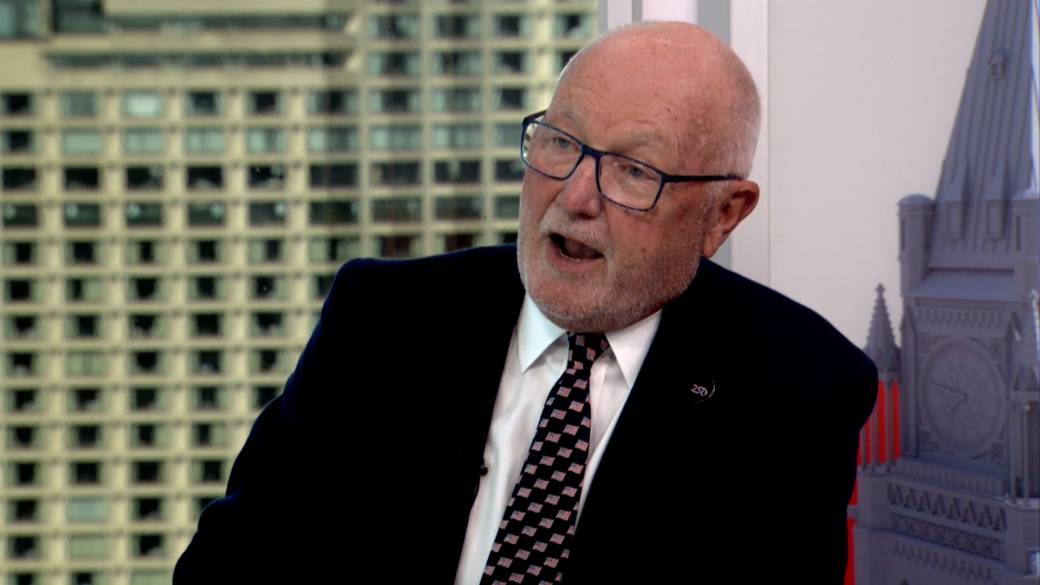
US Ambassador Pete Hoekstra on Trump’s latest threats over wildfire smoke
The official added that the new tariff is not related to the tariffs Trump threatened this weekend on Canada over wildfire smoke that has crossed into the U.S
Trump has “asked for options on that,” the official said
The Canadian Chamber of Commerce called the new tariff threat “a regrettable escalation” by the U.S., but expressed confidence that discussions between the two countries may lead to a resolution before the 30-day window closes
“We knew this would get bumpier before landing,” president and CEO Candace Laing said in a statement, adding the business group has warned the federal government about the possibility of Section 338 tariffs
“Both sides need to use this window to make meaningful progress in advancing formal talks. There are important discussions to get to that will strengthen not threaten our shared prosperity.”
—With files from Global’s Reggie Cecchini and the Canadian Press
