

byRebecca Lowthorpe|Updated on20th July 2026 at 2.01pm
Follow Grazia on Google
There are said to be no more than 4,000 women in the world actually on the books as haute couture clients. Not that others couldn’t afford it – plenty could – but buying couture is as much an attitude, a belief that fashion is art, as it is a ritual, a club whose membership is elitist and tiny. So who is it really for? Increasingly, the client isn’t the point. Every season, couture becomes more of a stage where the big names compete not for sales but for bragging rights over sheer technical wizardry. And, most obviously, it’s also a marketing machine: the right face, front row, in the right dress, syndicated a million times by lunchtime. This is not cynical, it’s simply how couture earns its keep in a world that no longer measures success in bespoke fittings alone.
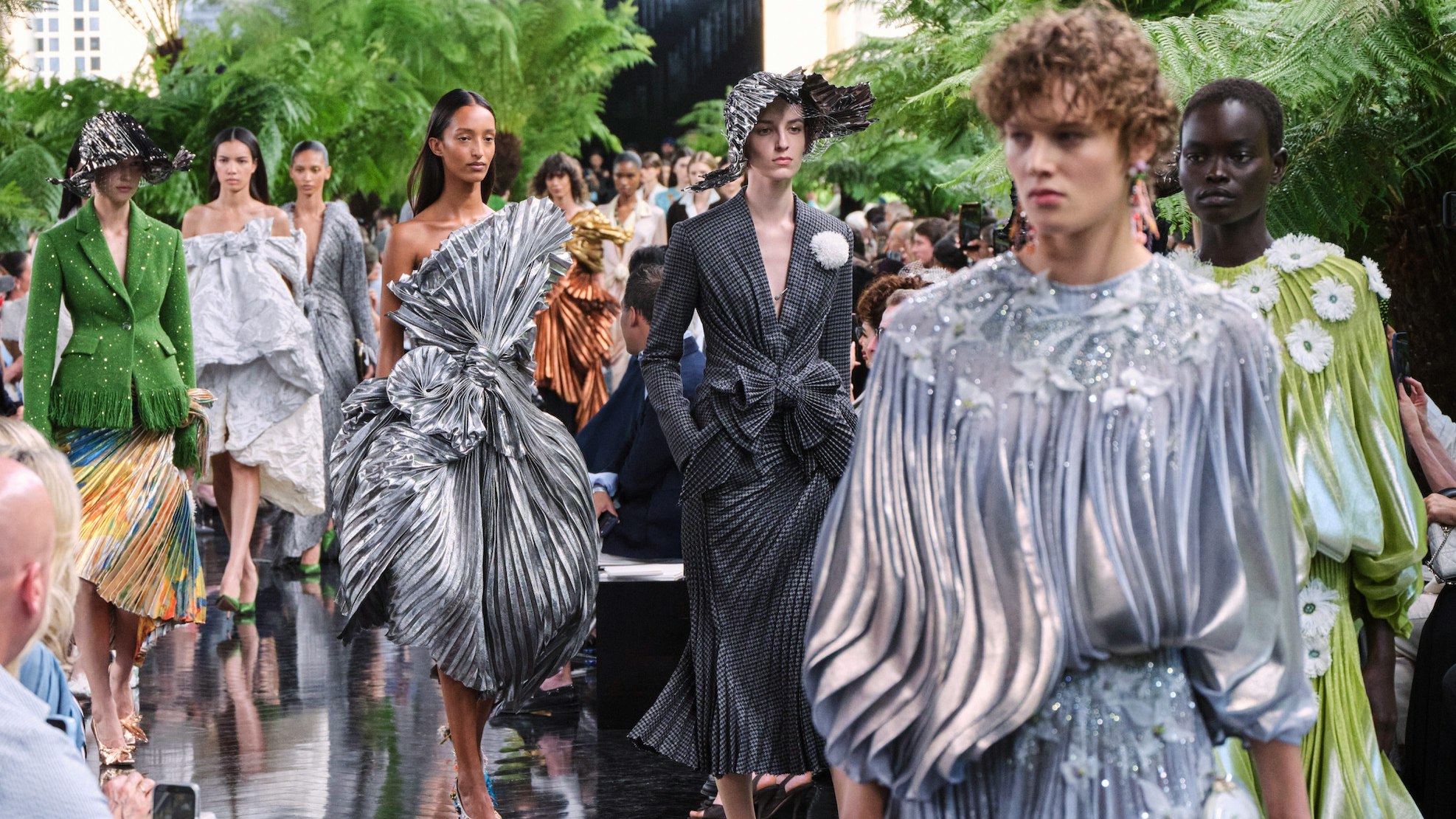
Couture’s biggest story this season – aside from a new set of names who aren’t remotely new, but who are, at last, having their moment – wasn’t a battle of the big brands so much as a startling case of parallel thinking. The internet already has a name for it: the Anderblazy effect. Jonathan Anderson at Dior and Matthieu Blazy at Chanel, both bedding in brilliantly in their second couture seasons, are on such similar paths that the two have become almost impossible to talk about separately – not that what they do is interchangeable, nothing so crude – but the two grandest maisons are moving in uncanny lockstep, each finding whimsy, heritage and impossibly intricate things to say about florals.
©Getty Images
Blazy has been hailed as something close to a second coming, an aura clinging to everything he touches, critics not just lapping it up but genuinely salivating. Anderson, meanwhile, has been bracketed as the one still finding his feet at Dior. For me, it’s the opposite. With Blazy, gorgeous as Chanel is, you know roughly what you’re getting; with Anderson, there’s still real surprise in it. Anderson’s Dior is a laboratory of ideas that reaches beyond fashion – this season cross pollinating with the American abstract expressionist Lynda Benglis, craft pushed to its absolute limit.
But the question on everyone’s lips was the still-unseen Taylor Swift wedding dress. The mind boggles because Anderson is cool and conceptual while Swift’s taste is princessy fairy tale. So, aside from the room going bananas over the finale bridal look – fern and dandelion leaves rendered entirely in white lace (how cool if that was the actual dress) – Anderson proved here why he’s got the job, and why she’d choose him in the first place
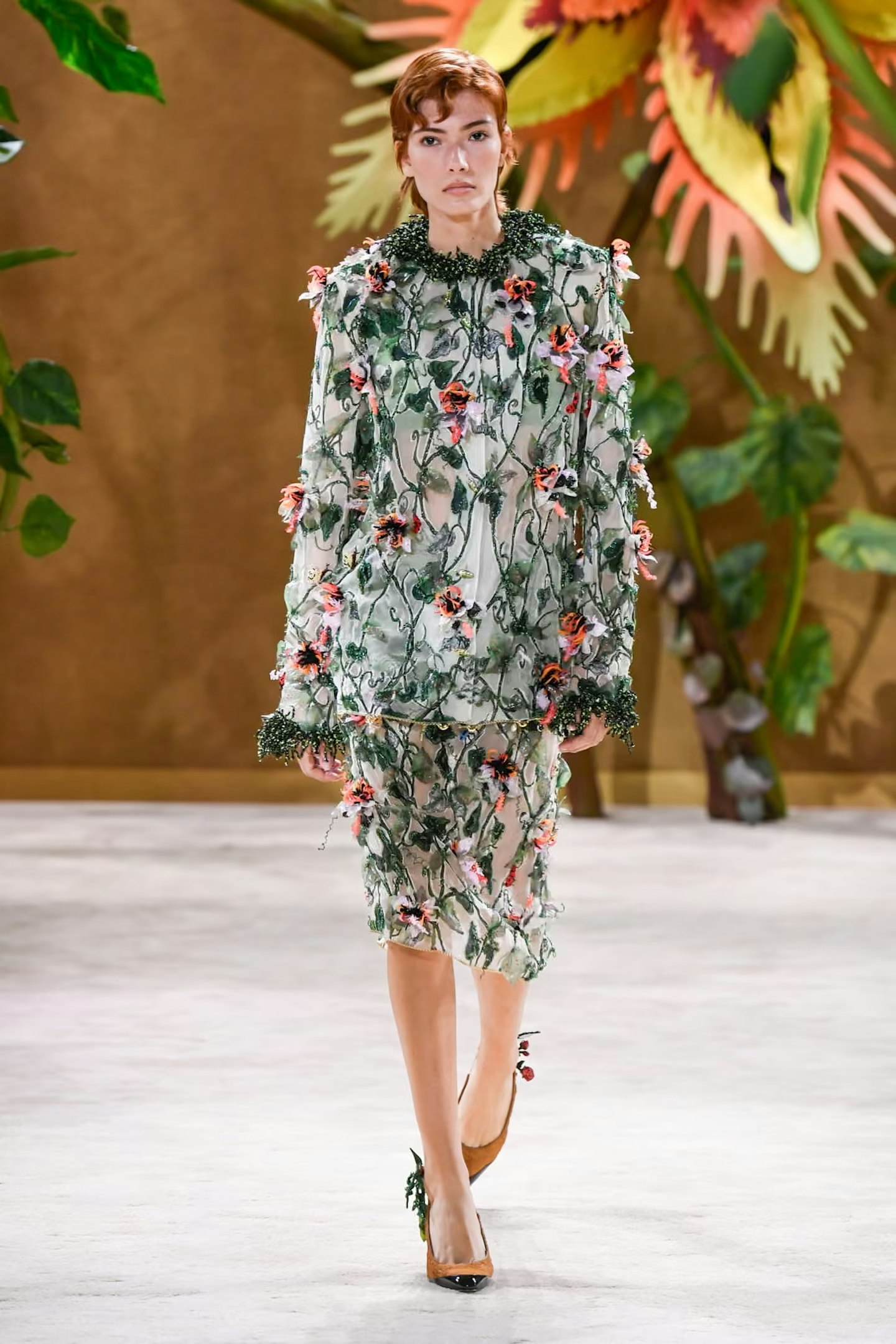
Blazy’s Chanel was pure enchantment: a small salon overrun with vines and toxic flowers, inspired equally by Jumanji and a book of fairy tales found in Gabrielle’s own library. Quickly dubbed the ‘Matthieu and the Beanstalk’ collection, it had tweeds and heels climbing with foliage, dresses like spiralling vines, one suit made from individually dyed silk petals. Inside a jacket, a witty to-do list on satin Post-it notes – private pleasure for the woman who’ll be the only one to ever find it. That’s Blazy all over: the wink that says these clothes are for real life, when of course they’re anything but – this is the most rarefied fashion there is. But maybe that’s the joke, and the point. Everything about his Chanel, right down to the age-blind casting, insists on joy over reverence – never mind that joy here costs an arm and a leg.
©Getty Images
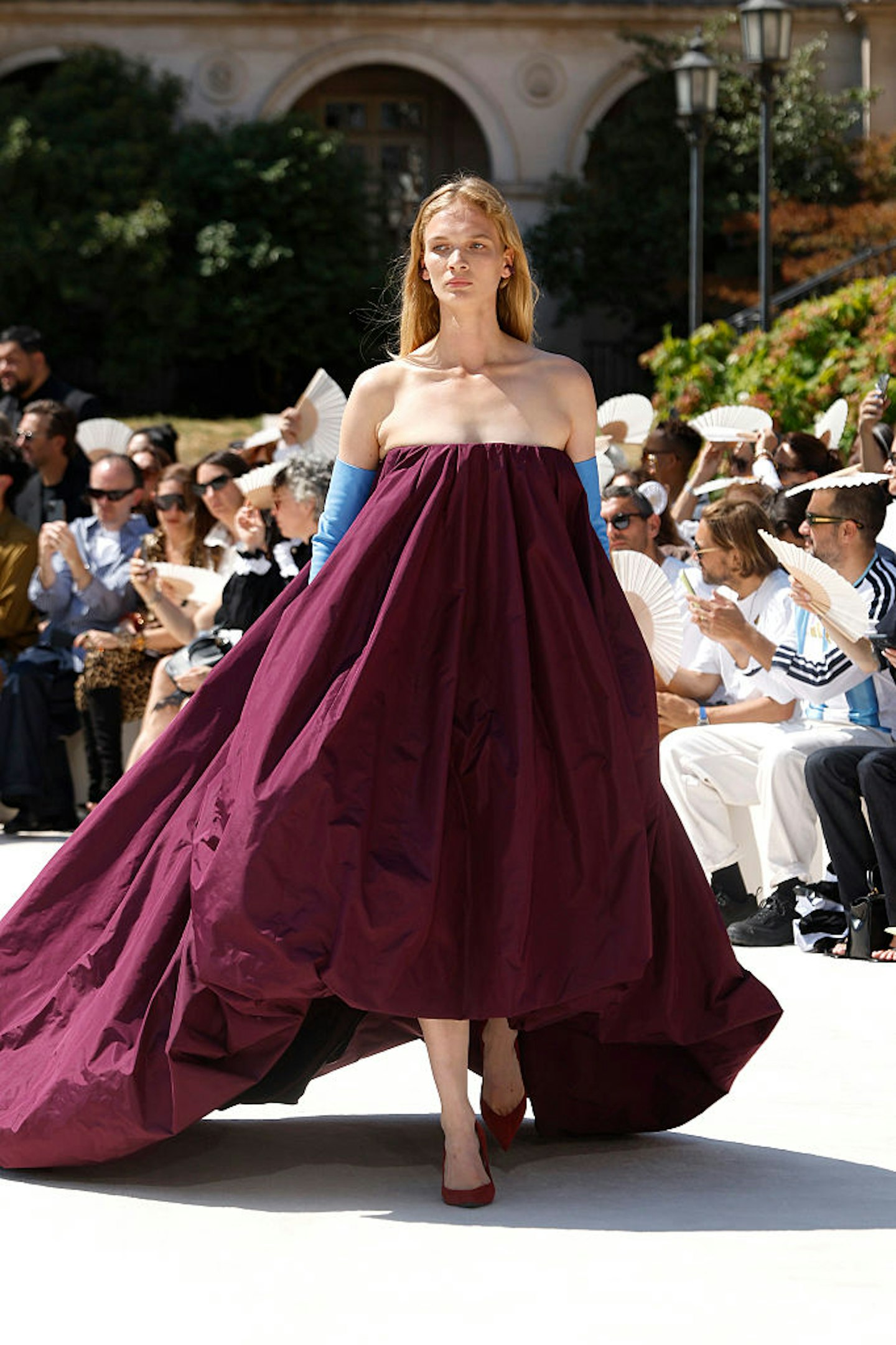
Then there was Pierpaolo Piccioli’s Balenciaga – his first Balenciaga couture – and, inevitably, the knives were out fast: too familiar, too Valentino. So what? Familiar territory isn’t a crime when it looks this good. Cut Piccioli and he’d bleed colour – improbable combinations you’d never think would sit together: maroon and peppermint, sugar pink against tart lemon. Yes, it was a continuation – the sack, the trapeze, the balloon skirt, the colour-drenching – all now infused with Balenciaga’s 1960s archive and the solid curves of Barbara Hepworth – oh, and a sparkly couture version of the City bag. Does it matter that we’ve half-seen this before? Not when it looks this bloody amazing.
Staged in the gardens of the Cité Universitaire in the near-40°C heat, silhouettes swept and bounced around the body like brushstrokes made solid. One skirt (Lord knows how you’d get it through a doorway) was carved from so much grey tulle the model appeared to be walking inside a cloud. Gigi Hadid, engulfed in black raven feathers – who knows how she survived the heatwave – is exactly the kind of image Balenciaga couture should exist for
There were quieter triumphs too. Silvana Armani’s Giorgio Armani Privé – titled ‘Boudoir’, an intimate space where dressing becomes ritual, a private pleasure of choosing how to meet the world – nudged the house forward without discarding a single code: sinuous velvet blazers, looser trousers, flat shoes – even with dramatic evening columns. Nothing was overdone, and that was the point: couture you could really imagine living in. Days later, in Rome, Maria Grazia Chiuri unveiled her first Fendi couture – a homecoming I missed, but one that shared the same instinct: gorgeous, grown-up, real-life wearability over spectacle.
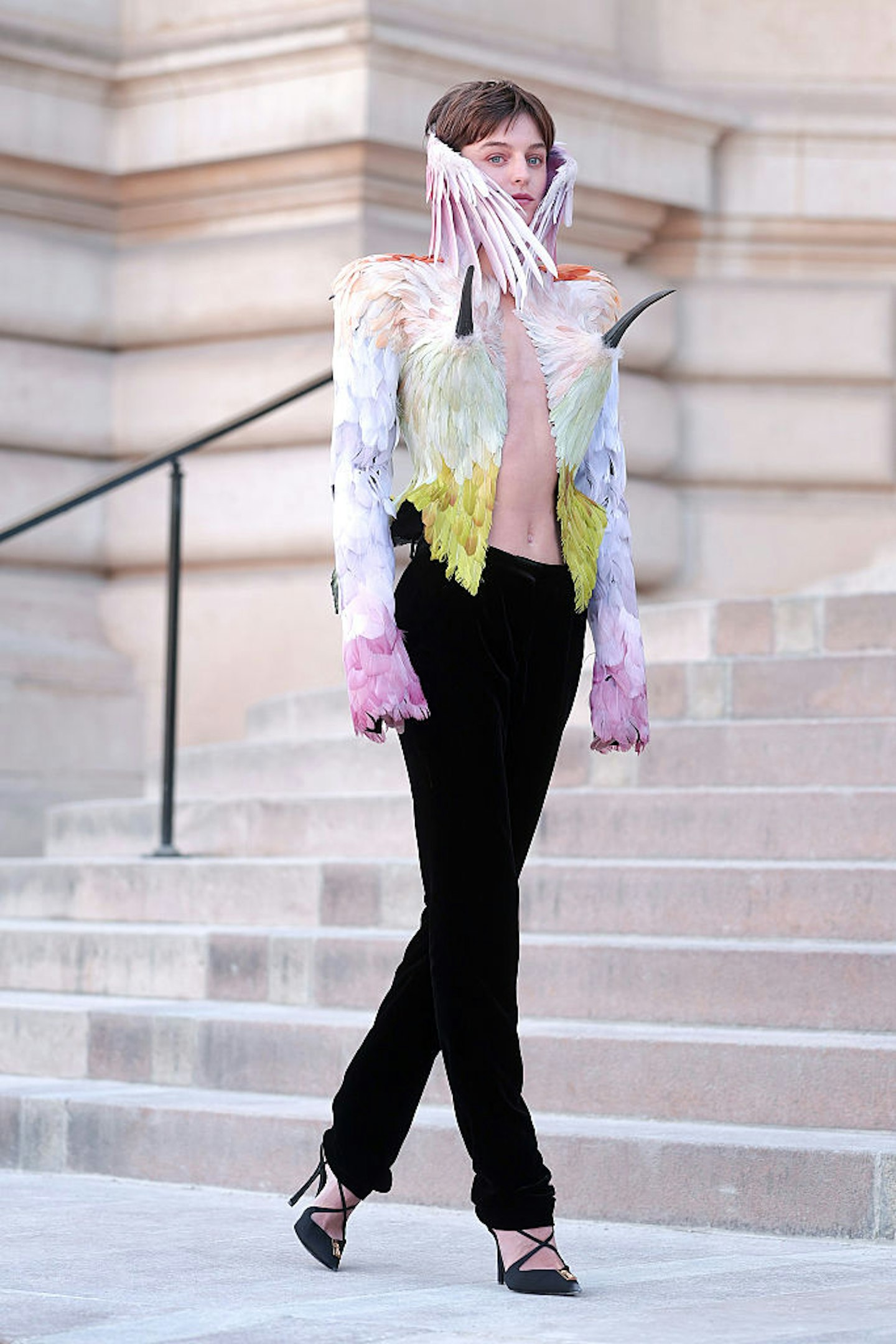
It feels harsh that Daniel Roseberry’s Schiaparelli gets overlooked against these monumental maisons, but what he produced was no less masterful – just a different taste, a different customer. His couture looked built in an underwater lab, hitting every high point of the season: a silicone moulded bustier sculpted in jellyfish blue worn by Karlie Kloss – tick. Real flowers, zillions of them, worked into a skirt suit and shoes – tick. Extraordinary synthetics – a liquid black latex ‘octopu-suit’ with curling tentacles, a jacket encrusted with fish scales – made with couture’s oldest techniques – tick. Real people, front row, in the full surrealist regalia – tick. Michelle Yeoh, Bad Bunny and, most sensationally, Emma Corrin in feathers so dense they looked like a bird of paradise – proof, yet again, that getting the right star to wear your clothes is arguably the whole point.
©Getty Images
Which brings us to couture’s real new guard – names that aren’t exactly new, but who’ve finally, thanks to exactly that kind of star power, become impossible to ignore. Get ready to hear a lot more about Ashi Studio, whose greatest fan is Teyana Taylor, and Michael Stewart, with his bespoke-only label Standing Ground – moulded corsets, a cobwebby wedding dress of handmade Carrickmacross lace, worn by none other than Kristen McMenamy – earned him the season’s critical crown
But it was Robert Wun who made the case loudest. His real currency isn’t the runway but the red carpet: he dressed no fewer than eight guests at May’s Met Gala, and Cardi B who had taken a look straight off his couture runway, perched in a scarlet ‘sofa’ dress. He closed the show with a witchy black coat that threatened to take flight, multicoloured inflatables ballooning from every seam – breaking the internet before it had even finished its tour of the runway
But it was Duran Lantink the critics went wild for. It’s hard to do anything genuinely new in couture – that honour this season belonged to him. His first couture collection for Jean Paul Gaultier, as the house’s first permanent creative director besides its founder, took Marie Antoinette and Gaultier’s own 1985 ballet costumes and made them erupt: a funnel of tulle shooting from the chest, a bomber jacket detonating from the belly, alongside actual wearable things like the best couture denim jacket you’ll ever see. Gaultier himself rushed backstage, speechless. Which is, in the end, the whole story of this season: couture that left you goosebumped, breathless, pushing every envelope going.
Rebecca Lowthorpe worked as fashion director for Grazia from 2016 to 2019; she is currently Grazia’s associate, overseeing the fashion content
Just so you know, we may receive a commission or other compensation from the links on this website – read why you should trust us
