

34 Posts
• Diplomatic scramble:Mediators have been working to de-escalate and get talks on track after recent strikes between the US and Iran. There’s been a lull in fighting as the diplomatic effort unfolds
• Strait of Hormuz:Senior US officials said Washington expects Tehran to issue a statement soon that the key waterway is open and commercial vessels won’t be attacked. Without safe passage assured in the strait, where traffic has once again slowed to a crawl, a US official said nuclear talks can’t begin
• Each side publicly defiant:Iran’s foreign minister accused the US of violating their agreement, while its top negotiator said Tehran distrusts the US and warned that, if necessary, his country is ready to mount an “all-out defense.” US President Donald Trump has issued grave threats against Iran
• Nuclear sites:Satellite imagery obtained by CNN reveals Iran may be attempting to rebuild nuclear facilities damaged by US-Israeli bombing
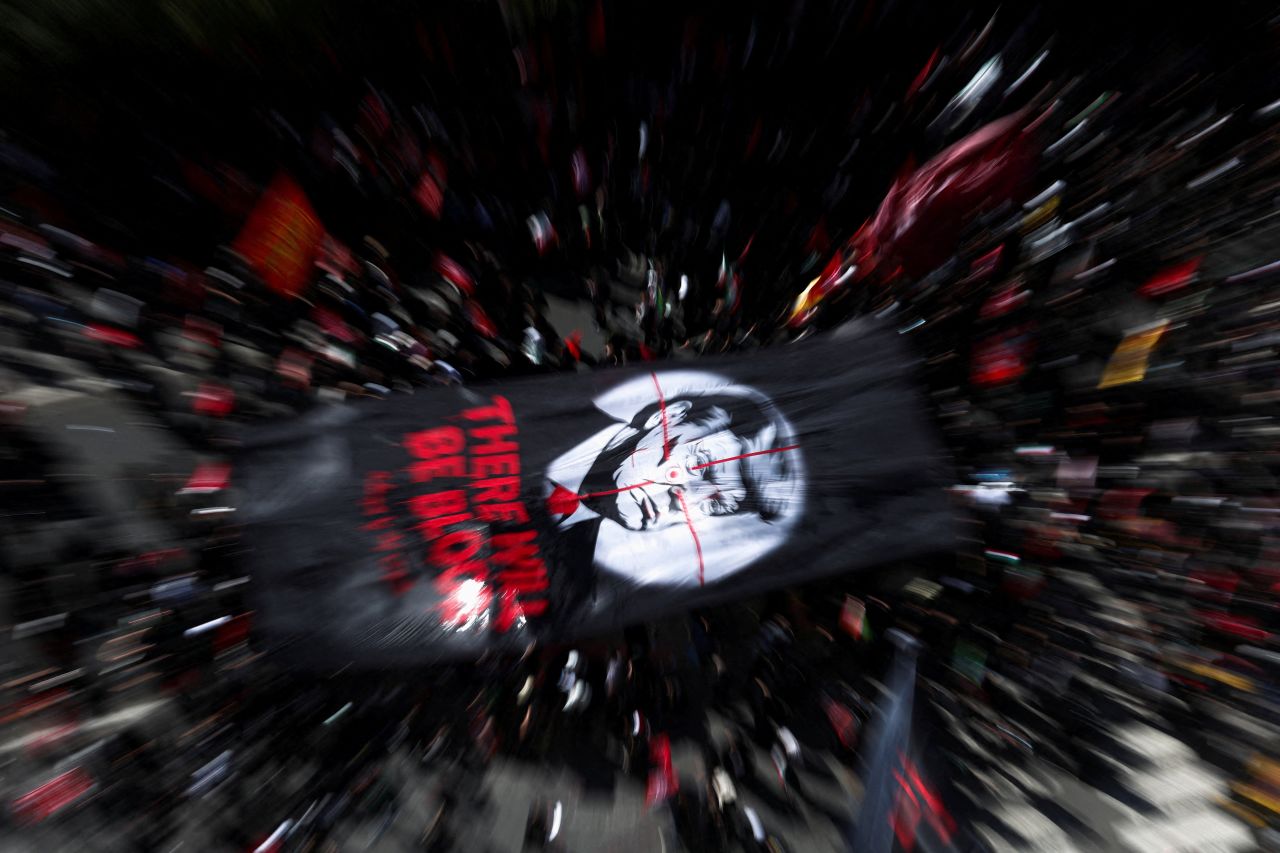
Mourners carry a banner against U.S. President Donald Trump as they gather on the day of the burial of Iran’s late Supreme Leader Ayatollah Ali Khamenei, who was killed on February 28 in Israeli and US airstrikes.
US President Donald Trump has said “missiles are locked and loaded” and ready to strike Iran, should Tehran try to assassinate him
“1000 Missiles are Locked and Loaded and aimed at the Islamic Republic of Iran, with thousands of more to immediately follow, should the Iranian Government act on its threat, pronounced in many corners of the Globe, to assassinate, or attempt to assassinate, the sitting President of the United States of America, in this case, ME!,” Trump wrote on his Truth Social platform Friday
He added that “orders have already been given” and the US military is “ready, willing, and able, for a one year period of time, subject to extension, to completely decimate and destroy all areas of Iran.”
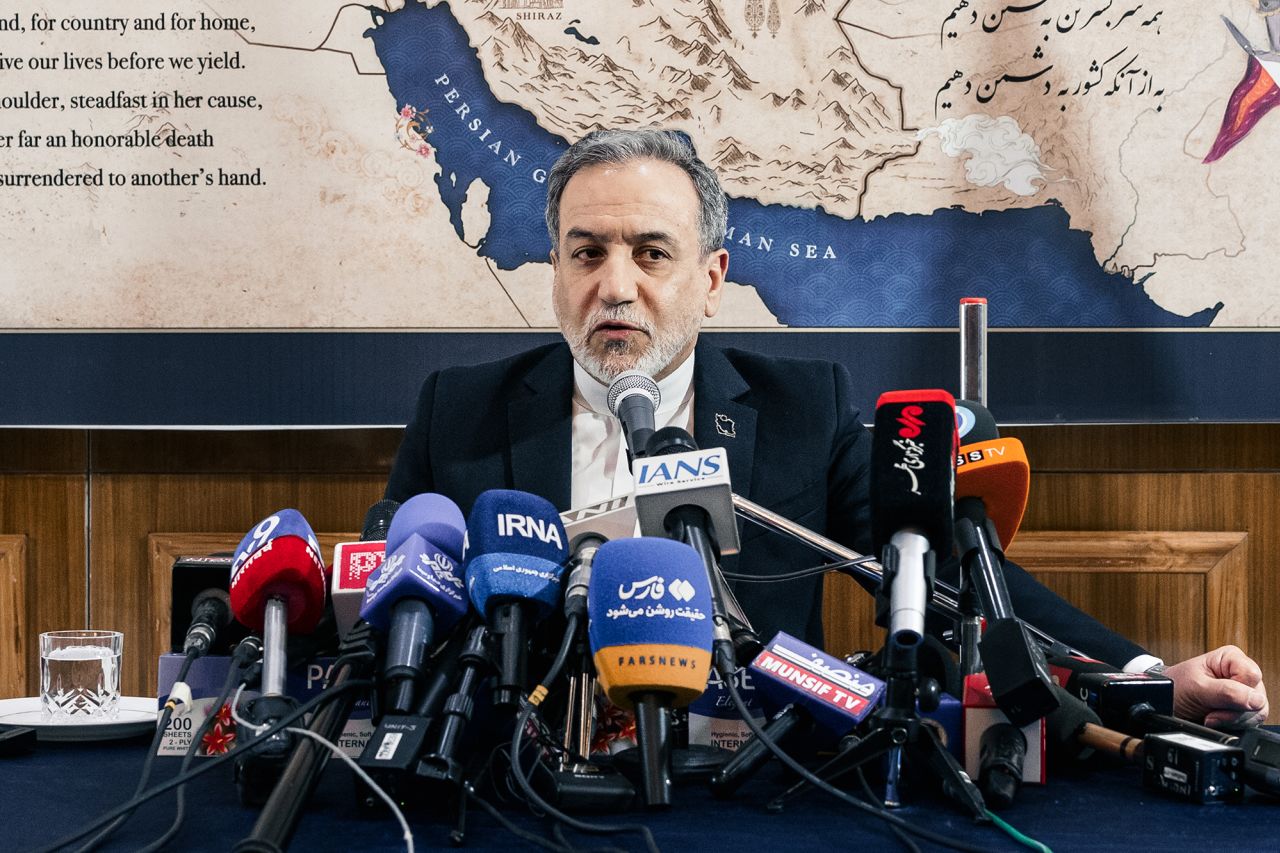
Iran’s Foreign Minister Abbas Araghchi attends a press conference at the Iranian embassy in New Delhi, India, on May 15.
Iran’s foreign minister Abbas Araghchi accused the United States of violating a clause on Tehran’s nuclear program in theirmemorandum of understanding (MoU)
The ninth paragraph of the MoU states that pending the final deal, Iran will “maintain the current status quo of its nuclear program” and that the US will “not impose any new sanctions and will not deploy additional forces in the region.”
The Trump administration on Friday imposed fresh sanctions on Tehran following Iranian attacks on commercial ships in the Strait of Hormuz earlier this week
Araghchi wrote the “violation follows other violations and missteps by the United States,” adding: “There can only be mutual compliance.”
The sanctions are the latest in a string of retaliatory actions by the administration for those attacks. They come as the administration seeks to re-up pressure on the regime as diplomatic efforts falter. The US earlier this week carried out days of bombing of Iranian targets and rescinded a waiver to allow Iran to sell its oil without sanctions
On Friday, President Donald Trump again declared that the MoU is “over,” but said that talks with Tehran would continue
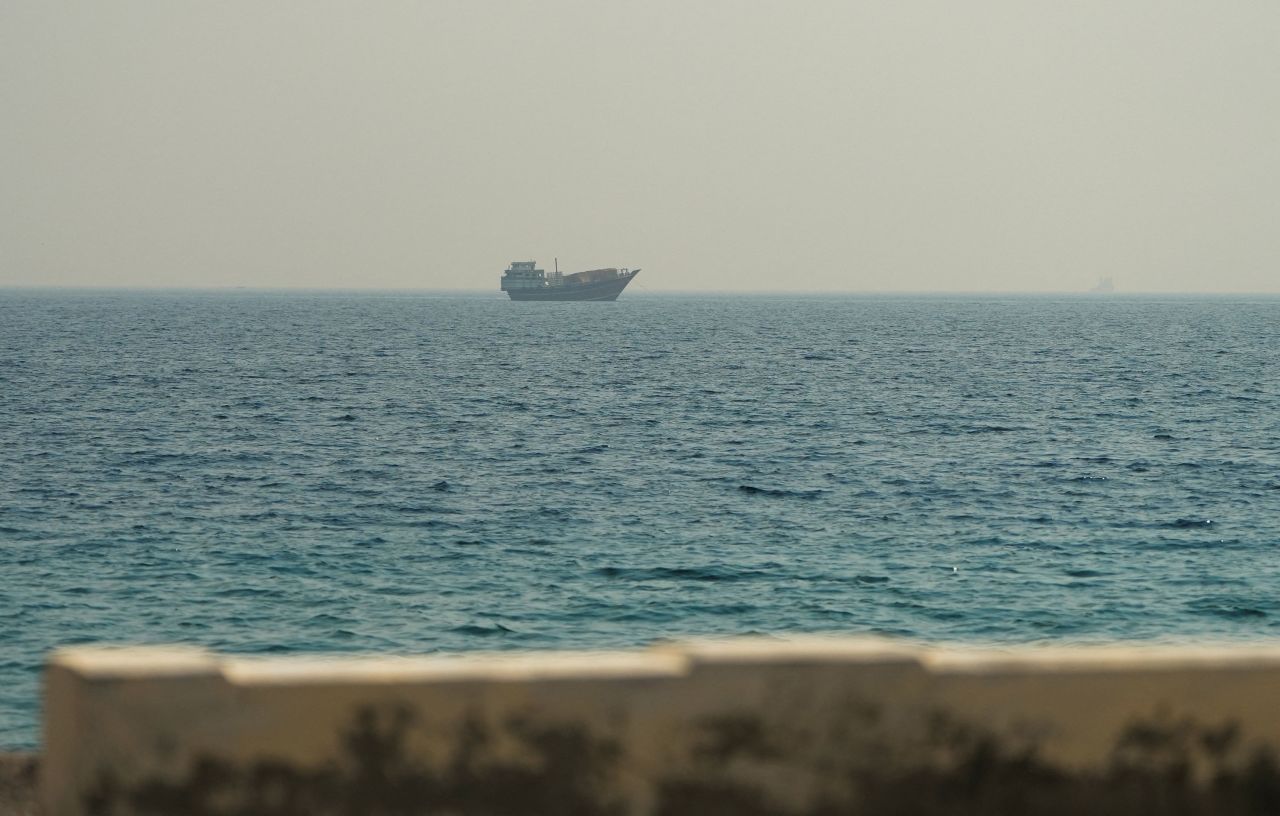
A vessel at the Strait of Hormuz, as seen from Musandam, Oman, on Thursday, July 9.
Senior US officials said Washington expects Tehran to issue a public statement in the coming days that the Strait of Hormuz is open and commercial vessels attempting to transit the waterway won’t be attacked
Without safe passage assured in the strait — which has seen traffic once again severely depressed — then the two sides will “never” move on to negotiations on nuclear weapons, a senior US official said
The officials declined to specify the consequences for Iran if it does not issue such a public declaration. But in broad terms, they warned the US could take further action
The strait — which runs between Iran and Oman, with their Exclusive Economic Zones (EEZ) meeting in the middle — has emerged as the key stumbling block to the ceasefire, as Iran continues to assert control over parts of the waterway and went on to fire ships earlier this week. In response, the US launched days of military strikes on Iranian targets
Here’s what else to know:
- More Strait of Hormuz updates: Following the Iranian attacks on commercial ships in the strait, the Trump administration on Friday imposed fresh sanctions on Tehran. As traffic in the strait remains muted, at least 15 commercial vessels transited the waterway in the past 24 hours, according to MarineTraffic data.
- Iran “distrustful” of US:The country’s top negotiator, Mohammad Bagher Ghalibaf, said Friday that they remain “distrustful of the Americans,”adding that, “during the negotiations, I made it clear to the US vice president that we have no trust in you.” Ghalibaf reiterated that Iran will continue to defend itself.
- On an Iran deal:Any final deal with Iran must include the US obtaining Iran’s enriched uranium, a senior US official insisted Friday, telling reporters: “If we don’t get the dust, we do not have a deal with Iran.”
- Travels to Oman:Iranian Foreign Minister Abbas Araghchi is expected to travel to Oman on Saturday to discuss the Strait of Hormuz and broader regional developments, a source familiar with the matter told CNN. Ghalibaf has said Tehran is prepared for “all-out defense” if the US breaks the Memorandum of Understanding signed last month.
- Official talks: US Secretary of State Marco Rubio spoke with Saudi Foreign Minister Faisal bin Farhan about “the importance of close coordination to promote regional security and stability,” according to a readout from the US State Department. Their call comes a day after Rubio met with the Saudi ambassador to the US, and as regional countries try to stop recent US-Iran tensions from escalating.
- More talks:Also on Friday, Prince Mohammed bin Salman bin Abdulaziz Al Saud of Saudi Arabia had a phone call with US President Donald Trump, where the two leaders “reviewed cooperation between the Kingdom and the United States and ways to strengthen it in several areas,” according to a readout of the call.
CNN’s Jennifer Hansler, Eyad Kourdi, Lauren Kent, Kevin Liptak, Kit Maher and Aida Karimi contributed reporting
This post was updated with more information
American social media influencers have been seen attending the funeral of the late Supreme Leader Ayatollah Ali Khamenei in Iran
They claim to be showing solidarity with Iran and questioning Western coverage of the country, but are they serving as propaganda for the regime?
CNN’s Isobel Yeung talked to one American who was there:
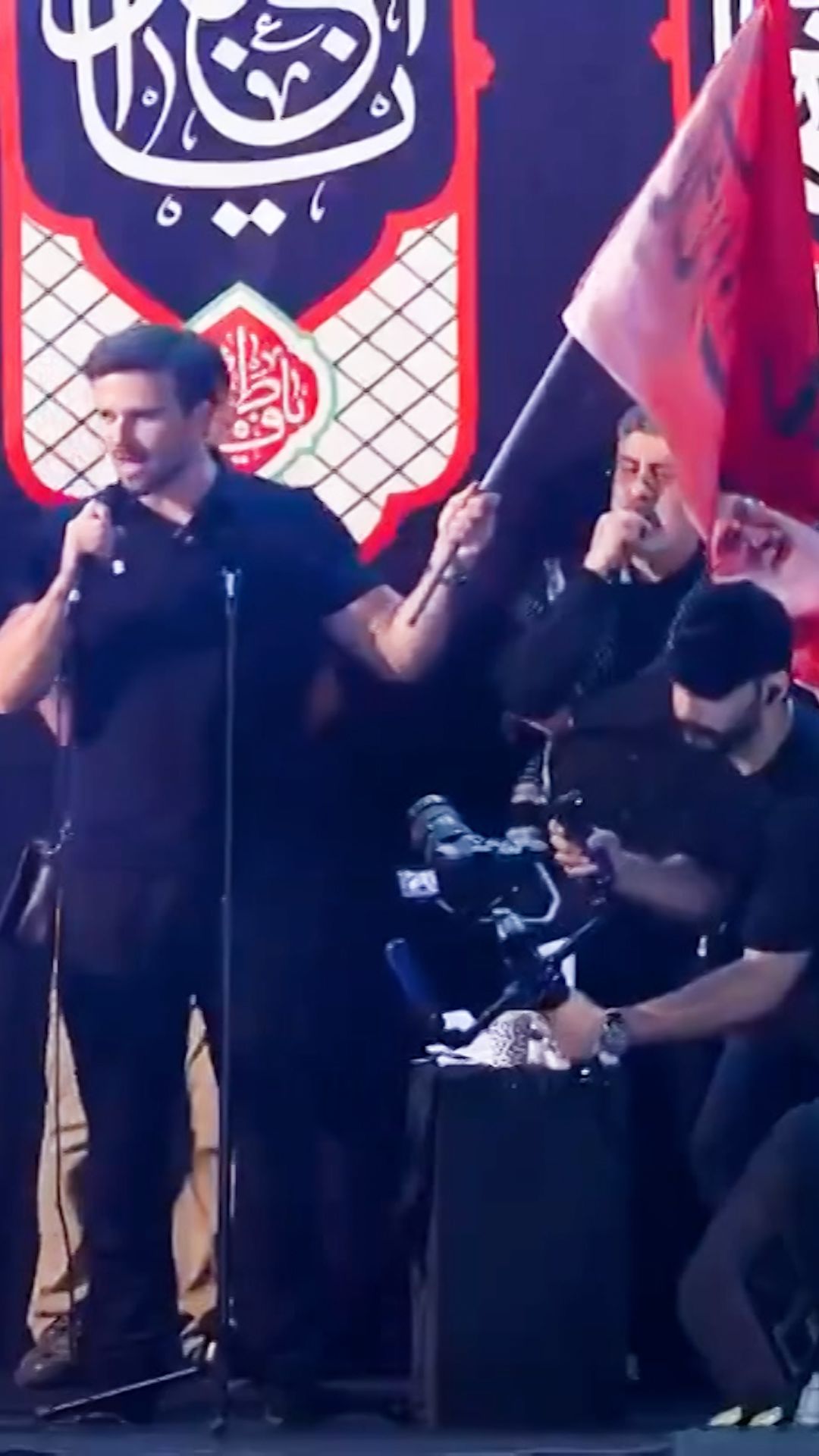
Why are US influencers attending Iranian Supreme Leader’s funeral?
American social media influencers have been seen attending the funeral of the late Supreme Leader Ayatollah Ali Khamenei in Iran. They claim to be showing solidarity with Iran and questioning western coverage of the country, but are they serving as propaganda for the regime? CNN’s Isobel Yeung reports
2:22• Source:
CNN
Why are US influencers attending Iranian Supreme Leader’s funeral?
2:22
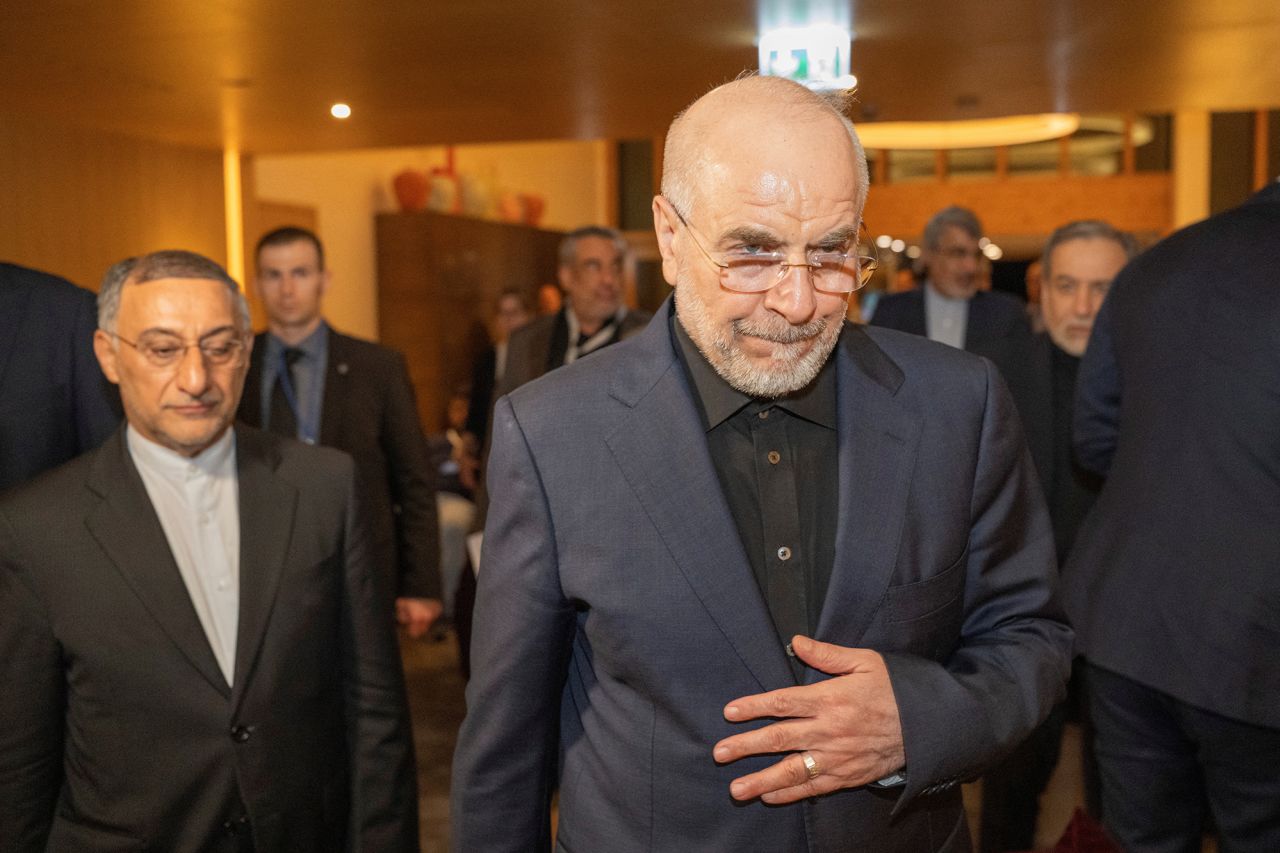
Speaker of the Islamic Parliament of Iran, Mohammed Bagher Ghalibaf, centre, at the Buergenstock resort in Obbuergen, near Lucerne, Switzerland, on June 20.
Iran remains “distrustful” of the US, the country’s top negotiator Mohammad Bagher Ghalibaf said on Friday
Ghalibaf, who serves as Iran’s parliament speaker, said he expressed this sentiment during indirect talks with the US in Switzerland last month, according to Iran’s state-run Islamic Republic News Agency (IRNA)
“We are distrustful of the Americans. During the negotiations, I made it clear to the US vice president that we have no trust in you,” Ghalibaf said
He reiterated that Iran will continue to prepare to defend itself, even after signing the memorandum of understanding with the US
Ghalibaf added that Iran will not surrender and “submit to oppression.”
If Iran won’t allow tankers to freely traverse the Strait of Hormuz then the two sides will “never” move on to negotiations on nuclear weapons, a senior US official said Friday
“If they never are able to honor the easiest part of the commitment, which is not shooting at ships, then, of course, we’re never going to get onto the nuclear negotiation,” the senior US official said on a call with reporters. “What you see, in some ways, is the power struggle within Iran playing out in real time. We have a lot of options if the hardliners get the upper hand.”
The signing of the memorandum of understanding triggered a period of 60 days for Iran and the US to negotiate and reach a final agreement. But hostilities in the region, which prompted US retaliatory strikes, have threatened negotiations
Adding that the ball is in the Iranian’s court, the official appeared cautiously optimistic that the more rational factions of Iranian leadership could halt the attacks on ships but acknowledged the uncertainty of the matter
“We can’t make their decisions for them. They’re going to have to decide, meaning the sensible people in their system, whether they can get control and stop shooting at ships. And if they do that and they do that for a long time, that will give us some confidence that they could actually honor a nuclear deal,” they said. “We continue to have some confidence that the rational people in their system will be able to rein in those hardliners. You never know. You can’t predict the future.”
At the NATO Summit in Turkey this week, Trump called Iranian leadership “scum” and “cuckoo.”
The United States expects Iran to issue a public statement in the coming days that the Strait of Hormuz is open and that commercial vessels attempting to transit the waterway won’t be attacked, according to senior US officials
The officials declined to specify the consequences for Iran if it does not issue such a public declaration. But in broad terms, they warned the US could take further action
“If it’s not their position, then it’s not going to be a great day for them,” one official said, saying the US expectation is Iran adopts the position on the strait following a meeting between Iranian Foreign Minister Abbas Araghchi and his Omani counterpart, Badr al-Busaidi, on Saturday
The officials described this week’s attacks on vessels in the strait as conducted by an “errant part” of Iran’s system that was working to undermine the memorandum of understanding signed between the US and Iran last month
The White House sees a power struggle underway in Tehran between moderates who support diplomacy with the US and hardliners who are opposed to the agreement signed at Versailles in June
Another official said Iran admitted in communications with the United States the strikes on merchant ships had been a mistake
“They came back to the table and said we screwed up,” the official said
But even with that information, which the officials said was conveyed to the United States by Iran, President Donald Trump still resolved to respond with strikes
“President Trump didn’t care. He basically said, you know, if you hit us, we’re going to respond 20 times,” one official said
Any final deal with Iran must include the US obtaining Iran’s enriched uranium, a senior US official insisted Friday, telling reporters: “If we don’t get the dust, we do not have a deal with Iran.”
However, the official said, “We have a lot of options if they resist giving the dust,” including “continued military, diplomatic, economic leverage points.”
President Donald Trump had been dismissive about obtaining the nuclear material earlier this week, saying during the NATO summit in Turkey that “We’ve already got the nuclear material, because it’s so far underground.”
“Nobody’s going to be able to get it except us,” he added
The memorandum of understanding between the US and Iran included a point on a “minimum methodology” for Iran to down blend its enriched uranium “on site under the supervision of the IAEA.”
While Iran “reaffirms that it shall not procure or develop nuclear weapons” within the MOU, the finer details of enrichment and nuclear were to be worked out in negotiations toward a final deal
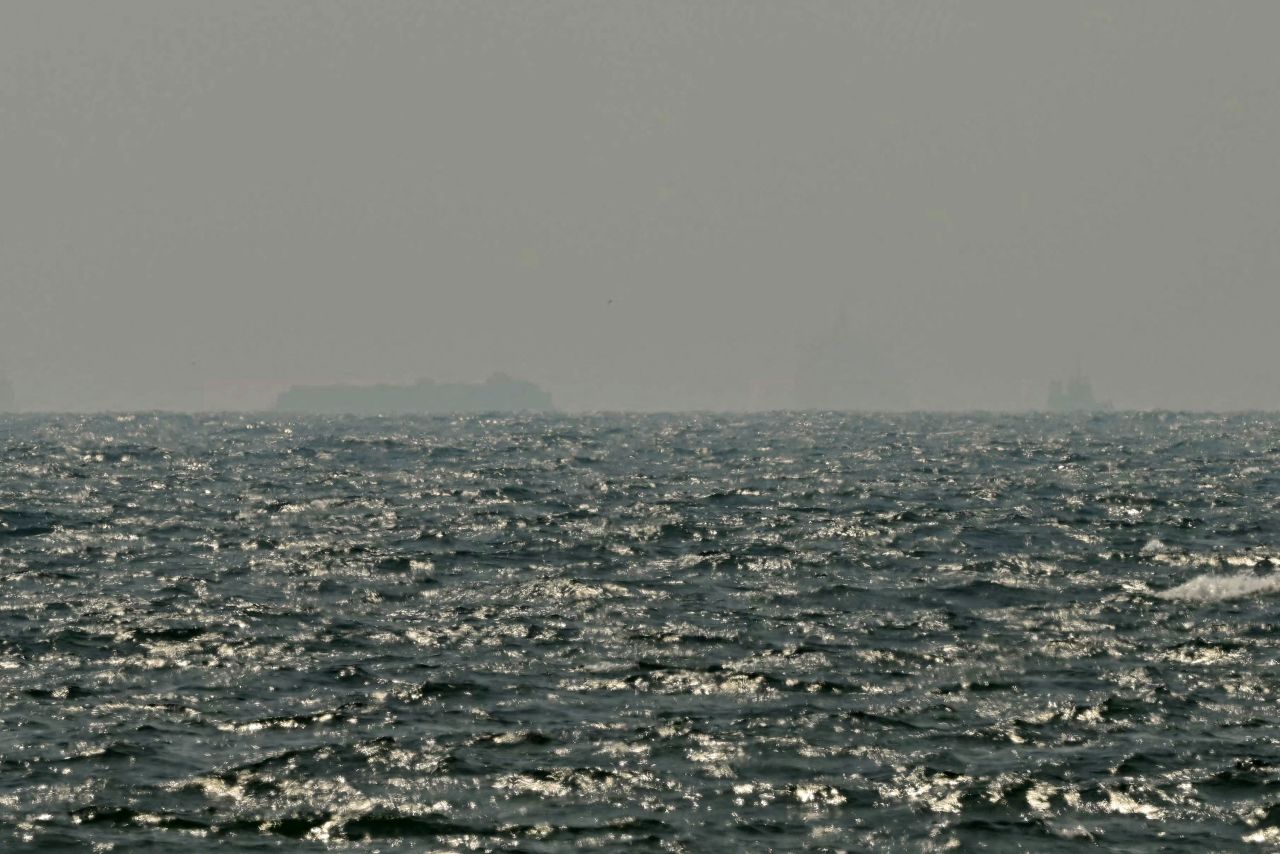
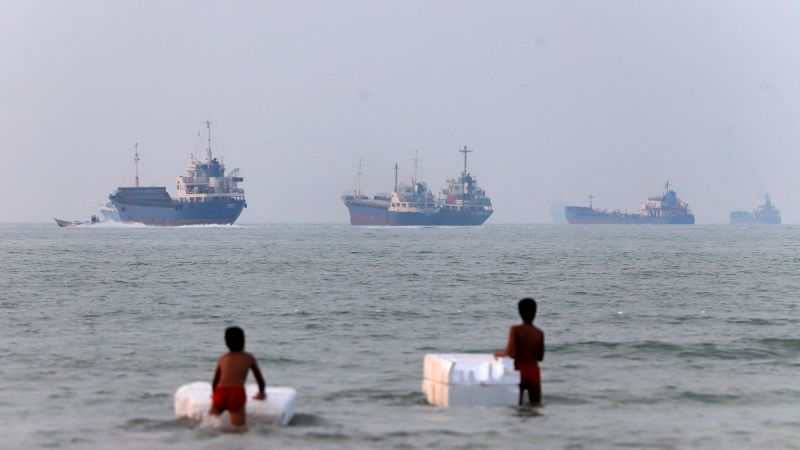
Ships are seen in the horizon as they sail off the coast of Ajman on July 10. Traffic through the Strait of Hormuz has fallen sharply since July 8, especially through the UN-backed Omani route, analysts said, after vessels were attacked earlier this week.
Commercial shipping traffic through the Strait of Hormuz remains severely depressed, according to open-
At least 15 commercial vessels transited the Strait of Hormuz in the past 24 hours as the US and Iran traded strikes. The US official confirmed the depressed rate of crossing, saying more than 20 ships the Strait on Thursday
Of the 15 ships visible in open-ve tankers. An additional four cargo vessels crossed the Strait into the Gulf of Oman
These figures remain in line with subdued vessel traffic observed in recent weeks, which surged briefly during US-Iran negotiations. Before the war, roughly 110 vessels passed through the Strait each day on average
Despite these signs, CENTCOM maintains that the Strait is “open” to vessel traffic
The region has also experienced months of GPS spoofing, a form of navigational interference that causes ships’ broadcast positions to appear in incorrect locations. These vessel crossings do not appear to have been spoofed
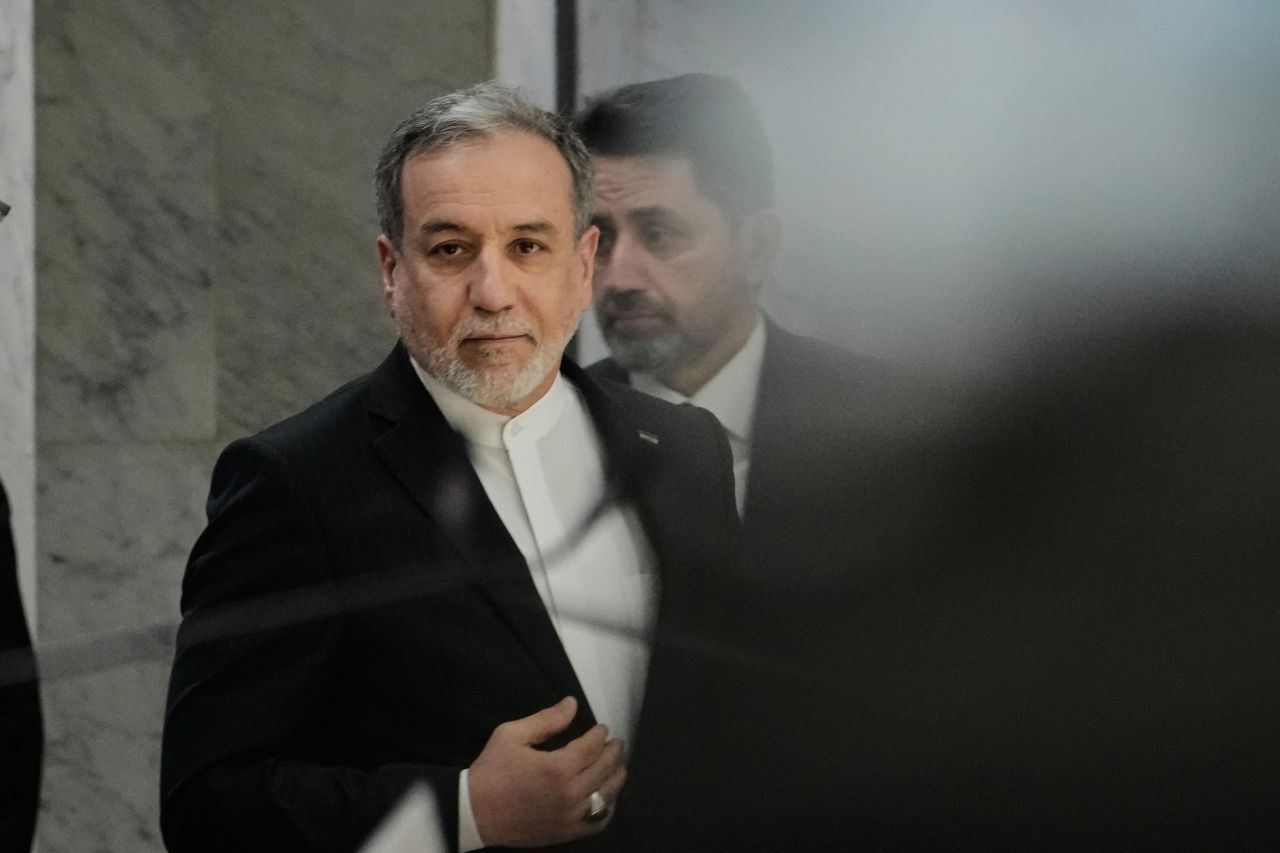
Iranian Foreign Minister Abbas Araghchi arrives in Baghdad, Iraq, June 28.
Iranian Foreign Minister Abbas Araghchi is expected to travel to Oman on Saturday to discuss the Strait of Hormuz and broader regional developments, a
Iranian state media IRNA has also reported that Araghchi will travel to Oman on Saturday along with a diplomatic delegation, particularly to discuss the situation in the strait
The expected visit comes as interlocutors try to revive the faltering diplomatic process. On Friday, US President Donald Trump again declared that the US-Iran Memorandum of Understanding is “over,” but said that talks with Iran would continue
Iran’s chief negotiator, meanwhile, said Tehran is prepared for “all-out defense” if the United States breaks the Memorandum of Understanding
The Strait of Hormuz – which runs between Iran and Oman, with their Exclusive Economic Zones (EEZ) meeting in the middle – has emerged as the key stumbling block to the ceasefire, as Iran has continued to assert control over parts of the key waterway and fired on ships earlier this week. In response, the US launched days of military strikes on Iranian targets
Although US officials have said Iran cannot control the strait, the Memorandum of Understanding does not explicitly spell that out. Instead, it is ambiguous, calling for Iran to “make arrangements… for the safe passage of commercial vessels” and engage with Oman “to define the future administration” of the waterway
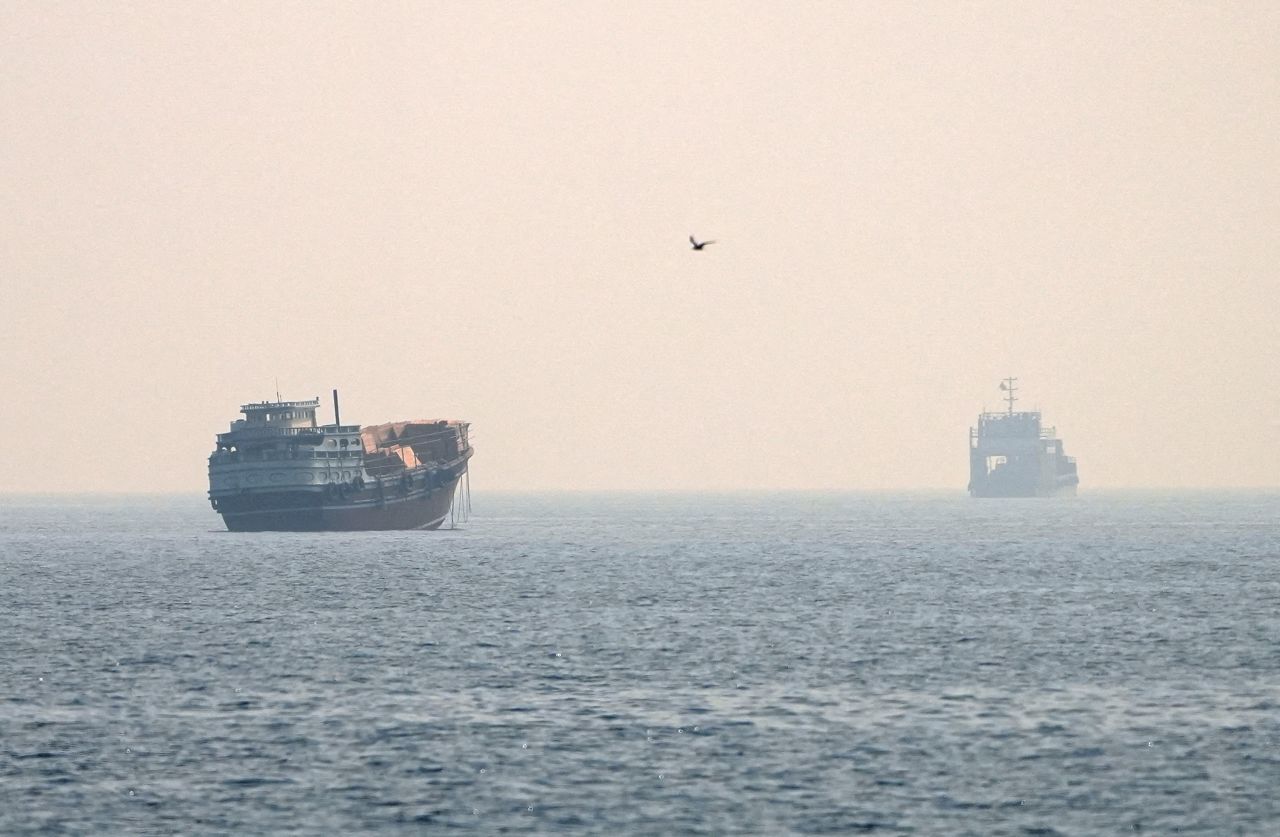
Vessels at the Strait of Hormuz, as seen from Musandam, Oman, July 8.
The Trump administration on Friday imposed fresh sanctions on Tehran following Iranian attacks on commercial ships in the Strait of Hormuz earlier this week
The sanctions are the latest in a string of retaliatory actions by the administration for those attacks. They come as the administration seeks to re-up pressure on the regime as diplomatic efforts falter. The US earlier this week carried out days of bombing of Iranian targets and rescinded a waiver to allow Iran to sell its oil without sanctions
On Friday, President Donald Trump again declared that the US-Iran memorandum of understanding is “over,” but said that talks with Tehran would continue
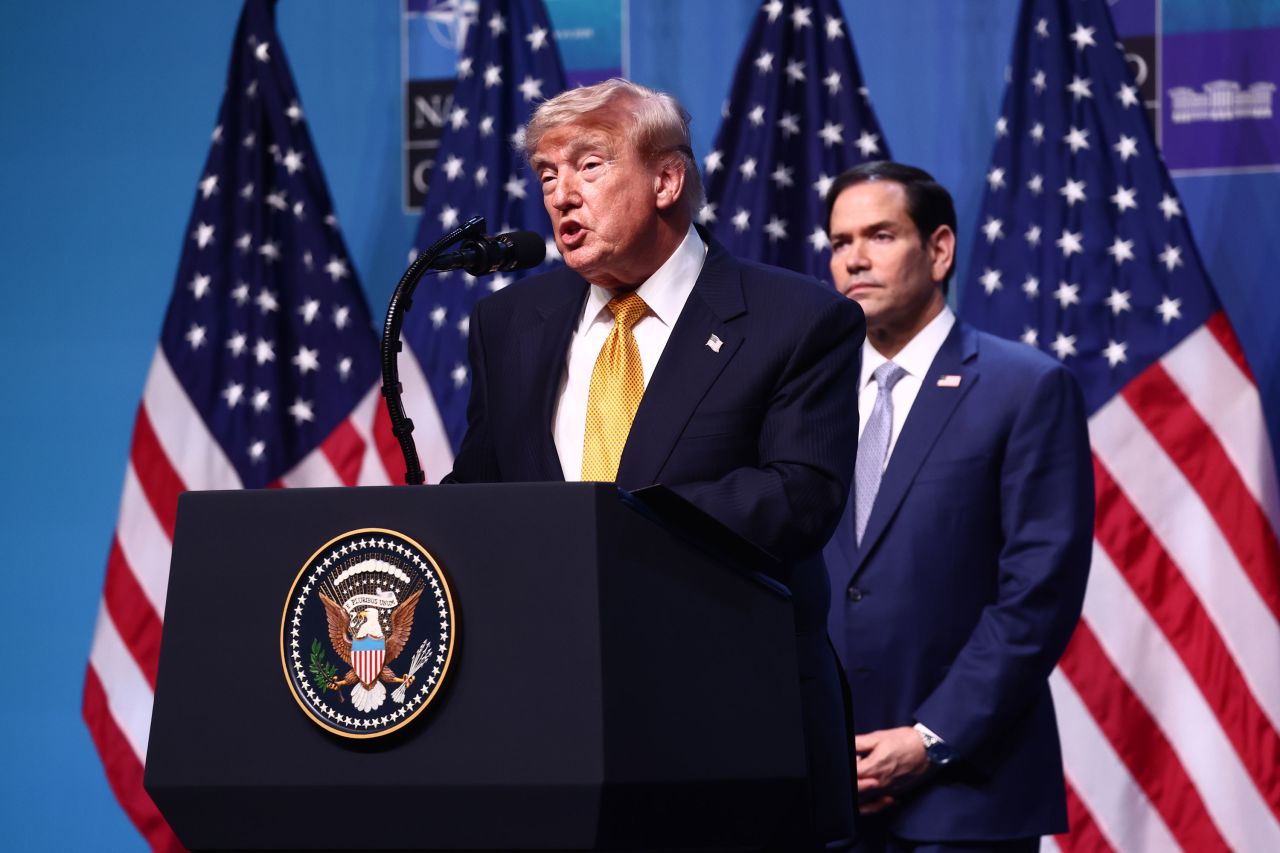
President Donald Trump and Secretary of State Marco Rubio during the press conference at the NATO Summit in Ankara, Turkey on July 8.
The ceasefire between the United States and Iran is over, President Donald Trump said today, as mediators work to try to get both sides back to the bargaining table
It follows a flurry of strikes in recent days after Tehran targeted multiple vessels in the Strait of Hormuz, where traffic is still at a trickle and questions remain about key details of the memorandum of understanding agreed by both sides last month
Here’s the latest:
- Trump said the US has agreed to continue talks with Iran, but he also reiterated that Washington has informed Tehran that the ceasefire is no longer in effect. Trump did not order additional strikes Thursday.
- Chief negotiator Mohammad Bagher Ghalibaf said Iran is prepared for “all-out defense” if the US breaks their agreement. “Of course, ending the war is a priority for countries around the world. However, everyone must understand that this conflict will never end with Iran’s surrender.”
- Qatari negotiators have traveled to Iran to meet officials there in an effort to de-escalate the situation, a diplomat with knowledge of the visit told CNN. Iran’s President Masoud Pezeshkian also held a phone call with Pakistan’s Prime Minister Shehbaz Sharif this afternoon. Qatar and Pakistan have been key mediators between the warring sides.
- The US military strategy has been to deliberately strike and then pause to avoid escalation and to let diplomacy work, a US official told CNN.
- The Trump administration doesn’t want Israel involved in the fighting over concerns of losing control of the conflict, according to two Israeli sources. On Thursday, Israel’s defense minister said the Israel Defense Forces was ready to resume the war against Iran once again.
- Satellite imagery obtained by CNN from Vantor shows signs that Iran may be attempting to rebuild its nuclear facilities. The images show activity at nuclear sites and missile facilities in late June and early July.
- Russia’s state nuclear energy corporation, Rosatom, has started returning employees of Bushehr Nuclear Power Plant to Iran, according to Rosatom’s director-general. Bushehr is Iran’s only nuclear power reactor in operation.
- Meanwhile, Trump told The New York Post he has “left instructions” for the United States to respond with overwhelming military force if Iran were to assassinate him.
CNN’s Tal Shalev, Mostafa Salem, Alejandra Jaramillo, Aida Karimi, Anna Chernova, Allegra Goodwin, Katie Polglase and Lauren Kent contributed reporting to this post
Iran’s President Masoud Pezeshkian held a phone call with Pakistan’s Prime Minister Shehbaz Sharif on Friday afternoon to discuss the latest developments in the Middle East, according to readouts from the Pakistani government and Iranian state media
The Pakistani Prime Minister’s Office described the conversation as “warm and cordial,” and said that Sharif “expressed deep concern over the recent escalation in tensions in the region and underscored the urgent need to restore regional peace and stability.”
“The Prime Minister stressed the importance of upholding the commitments undertaken under the Islamabad Memorandum of Understanding (MoU), describing it as an enduring framework for promoting mutual understanding, respect and shared prosperity in the region and beyond,” the readout added
Pakistan and Qatar have served as key mediators in previous rounds of diplomatic discussions
Meanwhile:Qatari negotiators have travelled to Iran to meet officials there in an effort to de-escalate the situation and create conditions for US-Iran talks to resume, a diplomat with knowledge of the visit told CNN on Friday. The trip was planned in coordination with the United States, the
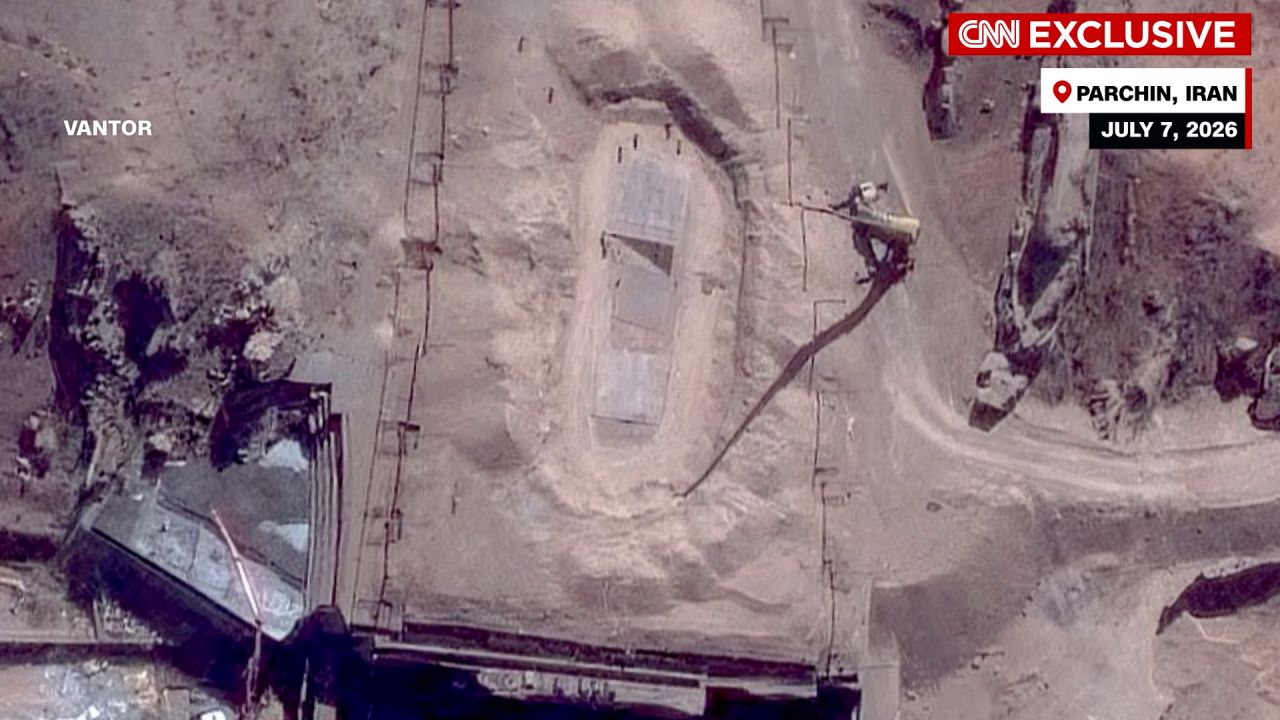
CNN Exclusive: New satellite imagery reveals Iran may be rebuilding suspected nuclear facilities
3:00• Source:
CNN
CNN Exclusive: New satellite imagery reveals Iran may be rebuilding suspected nuclear facilities
3:00
Exclusive satellite imagery obtained by CNN from Vantor shows signs that Iran may be attempting to rebuild its nuclear facilities
A CNN visual investigation found new activity at several nuclear sites and missile facilities across the country in late June and early July. The activity at nuclear sites in particular raises questions as to whether Tehran violated the memorandum of understanding it signed with the United States on June 17
For weeks, satellite providers have withheld imagery across the region following a US government request. CNN was able to analyze imagery after those restrictions were briefly relaxed. With US military action restarting, some restrictions have already come back into effect
CNN found notable activity at a site in the Parchin military complex, known as Taleghan 2, where experts believe explosive material for nuclear weapons is stored. An analysis of the facility in conjunction with the Institute for Science and International Security identified repair and reconstruction work to several impact holes left by the US-Israeli bombing campaign, in images taken on June 22 and July 7
At Pickaxe Mountain, a suspected underground nuclear site, imagery taken on June 21 shows vehicles entering and exiting tunnels, while the memorandum was in effect
CNN has approached both the Iranian and US governments for comment on these findings. A Pentagon official told CNN they would not discuss battlefield conditions or intelligence matters due to operational security
Speaker of the Islamic Parliament of Iran, Mohammed Bagher Ghalibaf, centre, at the Buergenstock resort in Obbuergen, near Lucerne, Switzerland, on June 20, 2026.
Iran’s chief negotiator Mohammad Bagher Ghalibaf has said Tehran is prepared for “all-out defense” if the United States breaks the Memorandum of Understanding signed last month
That 14-point agreement spelled out provisions for reopening the Strait of Hormuz, easing certain financial restrictions on Iran, and set expectations for addressing Iran’s nuclear program during future technical talks. The memorandum also noted that both Iran and the US would cease fire “on all fronts.”
“We do not trust the Americans. During the negotiations, I made it clear to the US vice-president that we have absolutely no trust in them,” Ghalibaf also said, IRIB reported on Friday. “Of course, ending the war is a priority for countries around the world. However, everyone must understand that this conflict will never end with Iran’s surrender.”
What the US has said:Ghalibaf’s comments come as US President Donald Trump said Friday that the United States has agreed to continue talks with Iran, but also reiterated that the ceasefire is “over.”
“The Islamic Republic of Iran has asked us to continue ‘talks.’ We have agreed to do so,” Trump wrote in a Truth Social post. “But the United States has stated to them, in no uncertain terms, that the Cease Fire is OVER!”
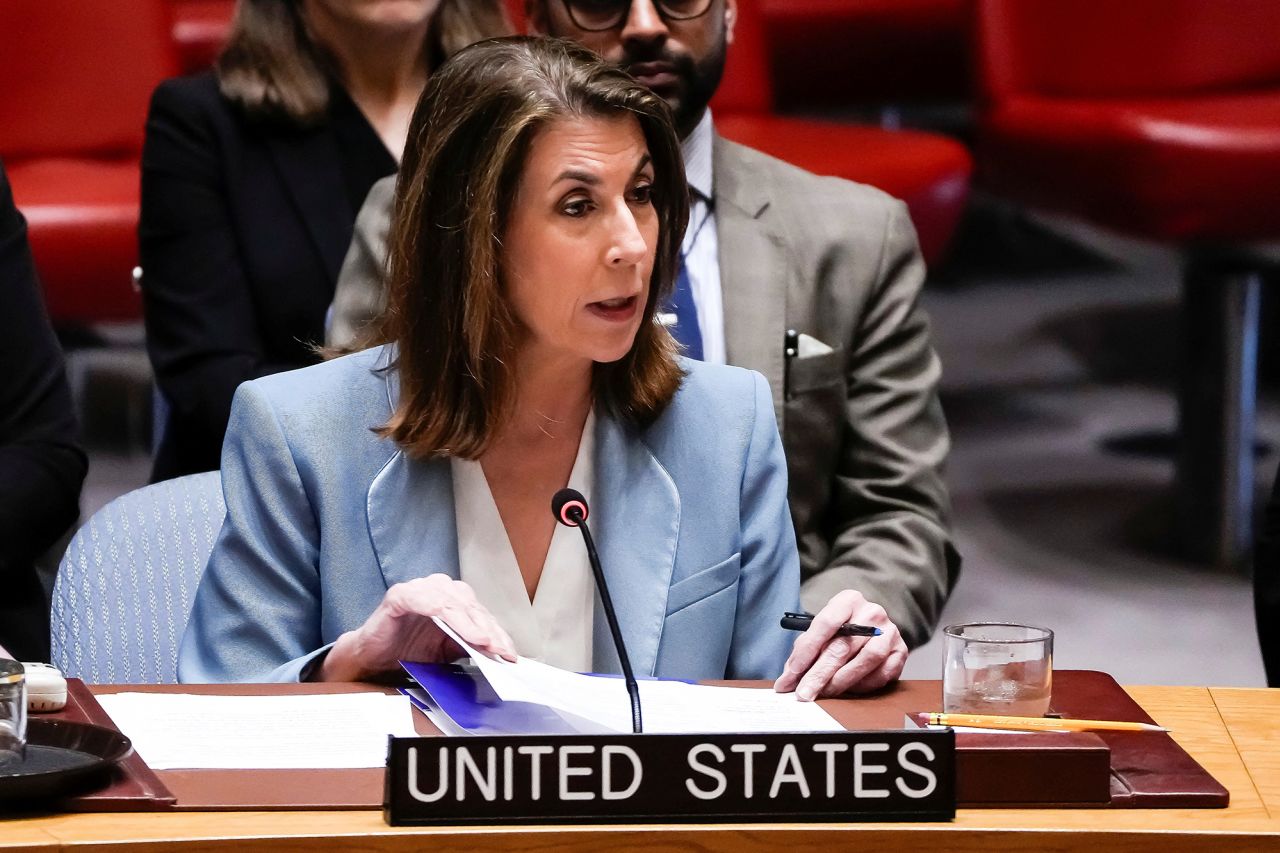
Deputy Representative of the United States to the United Nations Tammy Bruce addresses a UN Security Council meeting on the situation in Iran, at the United Nations headquarters, in New York City, on July 10, 2026.
The United States prefers a diplomatic solution to the conflict with Iran, but at the same time, “stands ready to hold Iran to account for its acts that defy international peace and security,” Deputy US Representative to the United Nations Tammy Bruce said today
It comes as the US repeatedly struck Iran this week after Tehran targeted multiple vessels in the Strait of Hormuz. US President Donald Trump said the US has agreed to continue talks with Iran but that Washington has informed Tehran the ceasefire established in a Memorandum of Understanding between the two countries is over
Bruce said that in the last week, Iran has “taken actions that defy the substance and the spirit of the understanding established between our two countries.” She urged the United Nations to “remain fully engaged” on the issue of Iran’s nuclear program and reiterated that Tehran has “contravened international law and this council’s resolutions.”
“President Trump prefers peace, and we urge fellow council members to join us in upholding the instruments of this body,” Bruce said
Other allies also expressed their support, with France’s representative, Jérôme Bonnafont, calling recent attacks by Iran in the Middle East “unacceptable.”
“We will continue to work with all of our partners to contribute to efforts aimed at achieving a durable diplomatic solution that will guarantee that Iran will never acquire a nuclear weapon,” he said
President Donald Trump said he has “left instructions” for the United States to respond with overwhelming military force if Iran were to succeed in assassinating him
“I’ve been on their list for a long time. That’s what we’re dealing with,” Trump told The New York Post on Friday
“The only thing is, I’ve left instructions — if anything happens, to just literally bomb them at levels that they’ve never seen before,” he added
Asked about Israel sharing intelligence of a new Iranian plot to assassinate him, Trump dismissed that there was a new plan, telling The Post: “No, no. Israel came up with nothing.”
The president added that Iran has wanted him dead for years. “I’ve been number one [on Iran’s kill list] for a long time, and it’s the way life is, you know.”
In February 2025, Trump similarly said he’d left instructions if Iran were to assassinate him. “I’ve left instructions if they do it, they get obliterated, there won’t be anything left,” he said during a visit from Israel’s prime minister
CNN’s team embedded with the US Navy spotted multiple commercial vessels in the Gulf of Oman on Friday, not far from the Strait of Hormuz. The vessels’ destinations and origins are unclear, but overall, ship-tracking data shows that crossings of the strait have fallen in recent days, as shipping companies operate with more caution
Confirmed vessel crossings through the narrow waterway fell on Thursday for the second day in a row, dropping to 22 crossings, according to data from MarineTraffic. But that’s unlikely to show the full picture, as some ships in the region are turning off their tracking transponders in an effort to cross undetected
One US official told CNN that diplomacy is happening behind the scenes to ease tensions in the US-Iran conflict. The US has been deliberately striking and then pausing to avoid escalation and let diplomacy work, the official said. It is maintaining a target list as leverage
Meanwhile, aboard the USS Abraham Lincoln, American troops continued to carry out operations that they say are defensive in nature, and the aircraft carrier remains on constant high alert for incoming Iranian attacks
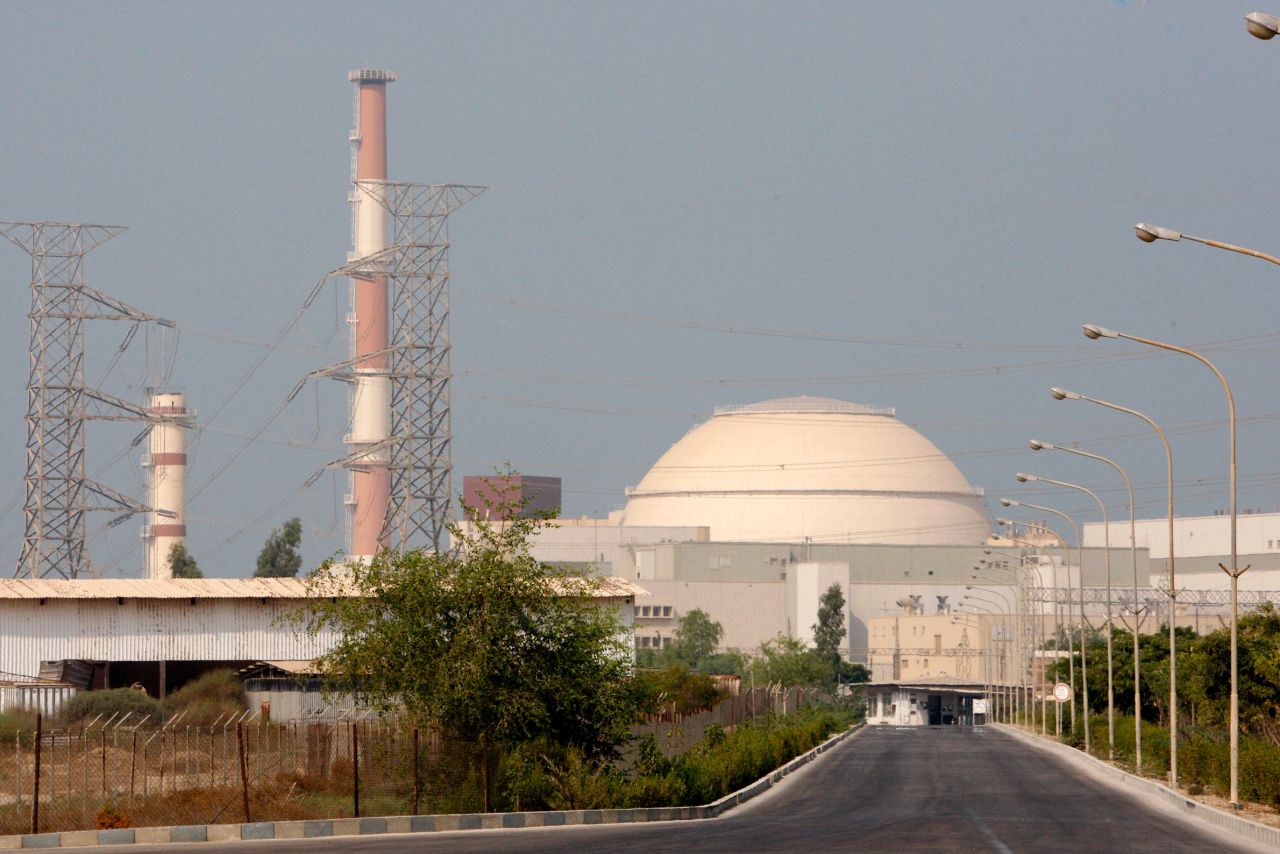
The reactor building of Bushehr nuclear power plant is seen just outside the city of Bushehr, south of Tehran, in August 2010.
Russia’s state nuclear energy corporation, Rosatom, has started returning employees to Iran, according to Rosatom’s director-general
Six Russian employees are now back in Tehran, although the process for returning employees to their posts at the Bushehr Nuclear Power Plant in western Iran has been “halted” due to recent strikes
The Rosatom chief said on Friday that there have been attackson Iran’s Bushehr Province in recent days, but no attacks on the nuclear power plant itself
Evacuated in April: Bushehr is Iran’s only nuclear power reactor in operation. Iranian authorities said back in March that projectiles struck the area around the plant multiple times. Then in April, Iranian state media said a projectile damaged a building near the power plant, killing a security staff member
The outbreak of the US-Iran war prompted Rosatom to evacuate about 200 staff members from Bushehr Nuclear Power Plant in April 4, state media reported at the time
Latest attacks reported:On Thursday night, Iran’s IRNA news agency reported that a military facility near the city of Bushehr was hit by “US-Israeli enemy projectiles,” citing the political and security deputy governor of Bushehr province. IRNA did not provide details on the extent of the damage or casualties
But a US official told CNN the US military is not currently conducting strikes, while Israeli officials said they were “not familiar with any Israeli involvement in strikes in Iran right now.”
CNN’s Mohammed Tawfeeq contributed to this report
