



Most of what you do today won’t be a conscious choice. Research published in Psychology & Health shows that 65 percent of daily behaviors are triggered automatically by the structure of your routine. However, most wellness advice still treats motivation as the main ingredient
A concept called wellness stacking is gaining serious traction among people striving to improve their health and wellness routines, and the science behind it is more grounded than most trends competing for your attention right now. I spoke with Dr. Eanah Whaley, a board-certified clinical psychologist, and Dr. Aurélia Bickler, a licensed therapist and longtime professor, to find out what wellness stacking actually is, why it works neurologically, and how to build one that holds up when life gets hard.
What is wellness stacking and how is it different from building healthy habits

“Wellness stacking is the intentional layering of complementary health behaviors so that one naturally leads into the next,” said Dr. Whaley. “What makes it different from just building healthy habits is the architecture.”
Advertisement
Dr. Bickler described it as layering behaviors that reinforce each other within a single routine, producing what she called “synergy and momentum.” The key distinction, according to Dr. Whaley: “The stack becomes the habit, not the individual behaviors within it.”
The neuroscience behind why stacking small daily habits together actually works

The brain is built for efficiency. “The brain is a pattern recognition machine,” Dr. Whaley explained. “It is constantly looking for sequences it can automate so it can conserve energy for things that actually require conscious thought.”
If you repeat a sequence consistently, the brain encodes it as a single unit, a process neuroscientists call chunking. Dr. Bickler noted this creates cue-based activation over time, meaning each behavior becomes easier to initiate
There’s a reward element, too. Completing a meaningful sequence triggers a small dopamine release. Stack multiple behaviors together and that affects compounds
Why even motivated, self-aware people struggle to maintain wellness routines long term

Motivation isn’t the problem, but relying on it can create challenges. As Dr. Whaley noted, “Motivation is actually a state, not a trait. It fluctuates based on energy, stress, sleep, and competing demands.”
Advertisement
If you build a routine that requires motivation, you’ve built on unstable ground. What sustains behavior long term, she said, is identity and structure
Both experts pointed to the same trap: overbuilding from day one. “People build goals based on their best days, not real life,” cautioned Dr. Bickler
“The best wellness routine is the one you can actually do on your worst day,” Dr. Whaley added. “Not your best day. Not your average day. Your worst day.”
How wellness stacking reduces decision fatigue and makes healthy habits sustainable
Every decision you make draws from the same cognitive rehich is exactly when many people try to make healthy choices
Advertisement
Wellness stacking solves this by making the decision once. “You decide once what your stack looks like and then you follow the sequence without having to re-decide each time,” Dr. Whaley explained. “The cognitive load shifts from daily decision-making to one-time design.”
Dr. Bickler put it simply: stacking removes the decision-making process entirely by embedding behaviors into routines that already exist. Making things as easy on yourself as possible can better your odds of succeeding. Research in behavioral science shows that when healthy behaviors are made as easy and accessible as unhealthy ones, people are significantly more likely to choose them, which is exactly what a well-designed wellness stack does
How to start a wellness stack today: a beginner’s step-by-step guide

Both experts offered the same starting point: find your anchor. “An anchor is a behavior you already do every single day without thinking about it,” Dr. Whaley shared. “Making your bed. Making coffee. Brushing your teeth.” Attach one small wellness behavior to that anchor. You only need to choose one, then leave it alone for two weeks
Dr. Bickler agreed, advising that you add something brief and meaningful right before or after that anchor wellness behavior. She suggested it could be “a one-minute breathing exercise, a quick body stretch, or stepping outside to feel the sun on your face.” The key is to keep it simple and build on your routine slowly
Advertisement
Dr. Whaley was clear on why restraint matters early: “The goal in the beginning is not to build an impressive stack. The goal is to prove to yourself that you can maintain a sequence consistently.”
The best and worst wellness habit pairings, according to psychologists
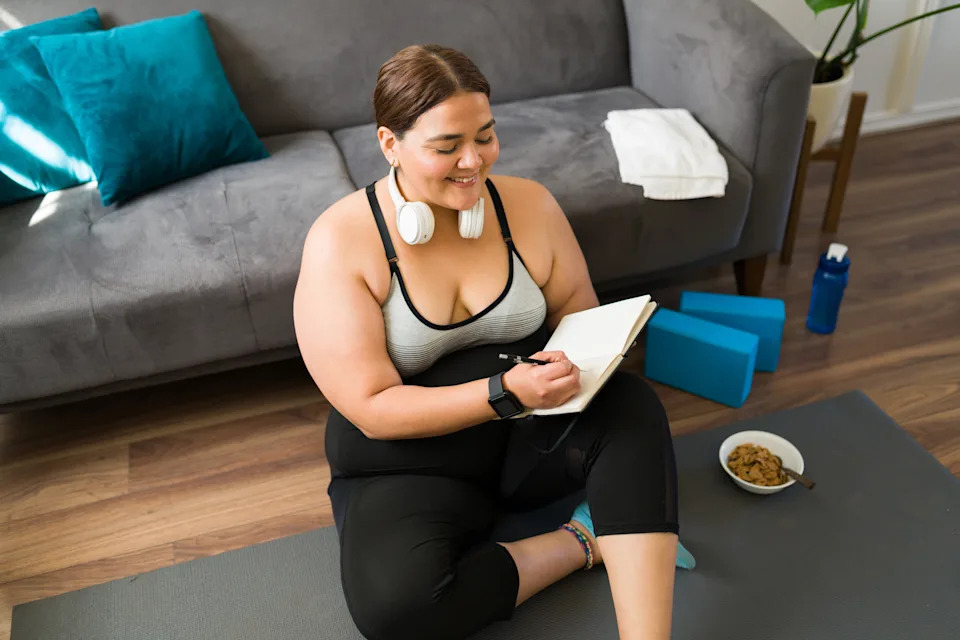
Some behaviors can help inspire more positive actions, while others might undermine your progress. Dr. Whaley pointed to movement followed by journaling as a strong pairing. Physical activity increases blood flow to the brain region associated with self-reflection, making it an ideal primer for reflective practice. Breathwork before meditation works for similar reasons — it lowers cortisol and prepares the nervous system for sustained attention
Intense cardio before bed raises cortisol and body temperature in ways that disrupt sleep, even when physical tiredness makes it feel like a good idea
Dr. Bickler cautioned against overloading. “Adding a stretch, a walk and a breathing exercise to the existing routine of walking the dog might sound like a good idea, but chances are, the brain is likely to feel overwhelmed and end up rejecting all of them after just a few days.”
Advertisement
Her rule of thumb: match behaviors by energy and intention. “Journaling while drinking a cup of coffee works well because both bring quietness and reflection.”
Wellness stacking for anxiety, depression, and chronic stress: what psychologists recommend

For anyone navigating mental health challenges, both experts said wellness stacking may be especially helpful. “These conditions often make decision-making feel overwhelming and starting anything feel nearly impossible,” Dr. Whaley said. “The structure of a stack reduces both of those burdens significantly.”
Dr. Bickler added that people dealing with anxiety or chronic stress tend to thrive on consistency and a sense of control. Wellness stacking, she noted, taps into both
For anyone in a harder season, Dr. Whaley recommended starting with a single behavior. Choose something very small because the goal isn’t an impressive routine. It’s simply important to consistently have one moment each day where you did something for yourself
Advertisement
“That moment is evidence,” she said. “And evidence is what starts to shift the story someone tells about themselves.”
Why wellness stacking may be the antidote to burnout and wellness overload

The wellness industry has never been louder, but for most, the sheer volume of options has become its own” Dr. Whaley observed. “They have more wellness information than any generation in history. What they are missing is a relationship with themselves that makes any of that information actually usable.”
Wellness stacking fits this moment, she said, precisely because it doesn’t add to the noise. Instead of asking you to adopt another trend or optimize another metric, it asks you to get honest about what you can actually do consistently and build from there
Dr. Bickler shared, “I often suggest to shut out all the noise and take a breath — literally take a breath. That in itself will slow the world down, which in itself is wellness.”
Advertisement
For Dr. Whaley, wellness stacking at its most fundamental can be as simple as drinking a glass of water, taking a few conscious breaths, or savoring a moment of stillness before the day starts. Done consistently and in sequence, even the smallest actions become a practice that belongs entirely to you. “And I think it resonates right now,” she said, “because people are tired of being told they need to do more. Sometimes what you need is to do less, but do it every single day.”
Thank you for reading. I invite you to follow me on Yahoo for more about health and wellness
More About Our Experts:Dr. Eanah Whaley, PhD, ABPP, is a Board-Certified Clinical Psychologist, certified grief educator, and retired U.S. Air Force Major specializing in burnout, identity transitions, grief, and behavioral change. Dr. Aurélia Bickler, PhD, LMFT, is an AAMFT Approved Supervisor, longtime professor, and Inaugural Director of the Whole Person Center at National University
Please note: Robin Raven is a journalist covering health and medicine. This article is for informational purposes only and does not constitute medical or psychological advice. Always consult a qualified mental health professional before making changes to your wellness routine
Robin Raven Creator
Robin Raven is a journalist who covers travel, entertainment, health, wellness and more. You can often find her writing songs, flying somewhere she’s never been, reading and listening to Taylor Swift.
Creators are not employed by Yahoo. Views expressed by creators do not reflect the opinions and position of Yahoo.Learn how to become a creator.
