

US ramps up Cuba sanctions and detentions of Americans returning from the island
1 of 4 |
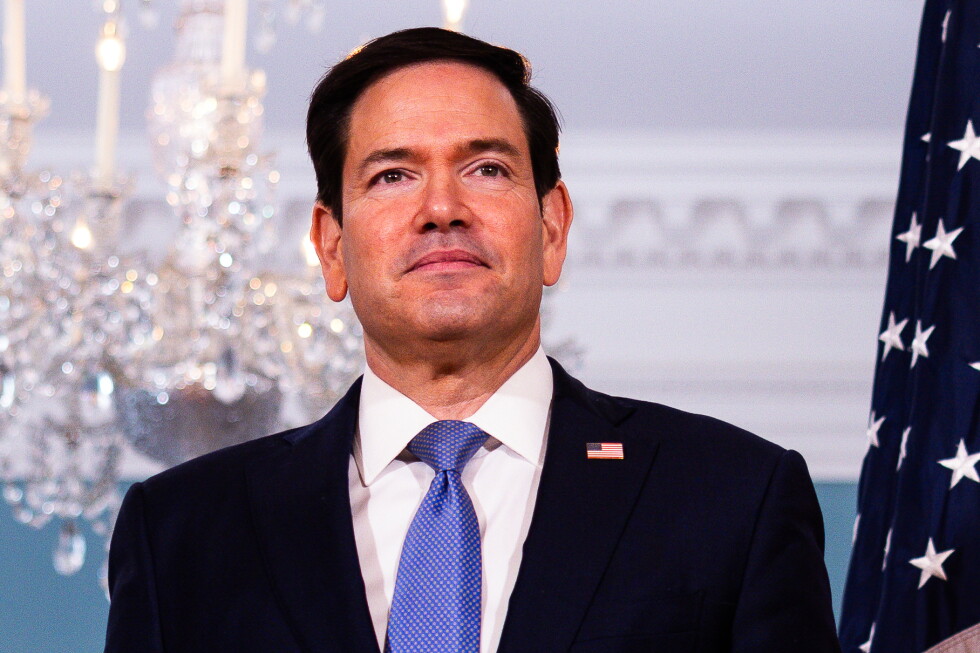
Secretary of State Marco Rubio arrives with Austrian Foreign Minister Beate Meinl-Reisinger, not shown, to the Treaty Room at the State Department, Tuesday, Aug. 11, 2026, in Washington. /Tierney L. Cross)
2 of 4 |
A man carries a pig at the entrance of a market, decorated with a mural of Fidel Castro, in Havana, Cuba, Wednesday, Aug. 12, 2026. /Ramon Espinosa)
3 of 4 |
Street vendors push their cart of vegetables past a mural of Fidel Castro in Havana, Cuba, Wednesday, Aug. 12, 2026. /Ramon Espinosa)
4 of 4 |
An image of Fidel Castro is displayed on a large screen during a gala commemorating the 100th anniversary of his birth at the Karl Marx theater in Havana, Cuba, Thursday, Aug. 13, 2026. /Ramon Espinosa)
1 of 4 |
Secretary of State Marco Rubio arrives with Austrian Foreign Minister Beate Meinl-Reisinger, not shown, to the Treaty Room at the State Department, Tuesday, Aug. 11, 2026, in Washington. /Tierney L. Cross)
1 of 4
Secretary of State Marco Rubio arrives with Austrian Foreign Minister Beate Meinl-Reisinger, not shown, to the Treaty Room at the State Department, Tuesday, Aug. 11, 2026, in Washington. /Tierney L. Cross)
2 of 4 |
A man carries a pig at the entrance of a market, decorated with a mural of Fidel Castro, in Havana, Cuba, Wednesday, Aug. 12, 2026. /Ramon Espinosa)
2 of 4
A man carries a pig at the entrance of a market, decorated with a mural of Fidel Castro, in Havana, Cuba, Wednesday, Aug. 12, 2026. /Ramon Espinosa)
3 of 4 |
Street vendors push their cart of vegetables past a mural of Fidel Castro in Havana, Cuba, Wednesday, Aug. 12, 2026. /Ramon Espinosa)
3 of 4
Street vendors push their cart of vegetables past a mural of Fidel Castro in Havana, Cuba, Wednesday, Aug. 12, 2026. /Ramon Espinosa)
4 of 4 |
An image of Fidel Castro is displayed on a large screen during a gala commemorating the 100th anniversary of his birth at the Karl Marx theater in Havana, Cuba, Thursday, Aug. 13, 2026. /Ramon Espinosa)
4 of 4
An image of Fidel Castro is displayed on a large screen during a gala commemorating the 100th anniversary of his birth at the Karl Marx theater in Havana, Cuba, Thursday, Aug. 13, 2026. /Ramon Espinosa)
By
MATTHEW LEE
Updated [hour]:[minute] [AMPM] [timezone], [monthFull] [day], [year]
Leer en español
WASHINGTON (AP) — President Donald Trump’s administration is increasing pressure on Cuba by imposing more economic penalties on industries in the heavily sanctioned socialist country and broadening enforcement of laws that bar Americans who visit the island from dealings with government-owned or -affiliated businesses
The Treasury and State departments announced Thursday that they are leveling new penalties against nine state-owned mining, metal and construction companies along with the leadership of the Cuban Institute of Friendship with the Peoples, or ICAP
Secretary of State Marco Rubio said the institute is responsible for sponsoring “a vast subversive network in the United States aimed at identifying, cultivating, and radicalizing” Americans
“Just days ago, the regime attempted to use Communist kingpin and despot Fidel Castro’s 100th birthday to reinvigorate this subversive network, ferrying a new brigade of international sympathizers to Havana to network with regime officials,” Rubio said in a statement
“The Trump Administration will not stand by while a hostile foreign power seeks to exploit our freedoms — none of which are afforded to its people — by misleading and corrupting American citizens with lies, spy tradecraft, and other malfeasance as part of the regime’s raison d’être of exporting Marxism, racial resentment, and Communist violence across the world,” Rubio said
Trump’s Republican administration has steadily ratcheted up pressure on Havana, threatening it with potential military intervention even when mired in a conflict against Iran, while also boosting economic sanctions designed to cut off funding for the Cuban government. An oil blockade that the U.S. imposed on Cuba after the American military raid that ousted Venezuelan leader Nicolás Maduro, whose country provided Cuba with subsidized oil, has plunged the already economically crippled island into full-blown crisis.
Cuba accuses the US of trying to hurt the country’s economy
Cuban Foreign Minister Bruno Rodríguez rejected the sanctions in a post on his official X account, asserting that the United States and Rubio are pursuing the “deliberate aim of harming” the economy “to prevent the provision of basic services to the population.”
“In his failed obsession with Cuba, he is now targeting executives and officials from ICAP — an institution that, for over six decades, has promoted friendship, international solidarity, justice, and peace — the exact opposite of what the Secretary of State has always championed in his corrupt policy,” Rodríguez wrote
The latest sanctions follow an operation at the Miami airport last weekend in which several American citizens returning from Cuba after participating in events marking Castro’s birthday were briefly detained Some of them had their cellphones and other personal electronic devices seized for inspection, the officials said
Trump warns of ‘economic D-Day’ against Iran, but Tehran is well acquainted with sanctions
5 MIN READ
US Treasury sanctions Ecuador-to-US cocaine trafficking network
2 MIN READ
United Arab Emirates suspends trade with Iran after coming under renewed missile fire
4 MIN READ
U.S. authorities had been prepared to detain dozens of returning activists for secondary screening, but far fewer were found to meet the criteria for the enhanced questioning by Customs and Border Protection agents, the officials said
The officials, who spoke on the condition of anonymity because details of the operation have not been made public, said those detained were eventually released and allowed to enter the U.S
The officials said anyone detained and released could still face prosecution if it is found they violated U.S. sanctions, which prohibit all transactions with Cuban government-owned entities, including restaurants, hotels and shops. The status of seized cellphones, laptops and tablets, however, was unclear
New sanctions are the latest pressure tactic as Cuba’s economy falls into crisis
The new sanctions on the leadership of ICAP target the group’s president, Fernando González Llort, who had been among five Cuban intelligence officers arrested in the U.S. in 1998 but later released in 2014. They also target its first vice president, Noemí Ramona Rabaza Fernández, and its North America director, Leima Martínez Freire
The metals, mining and construction sector sanctions target a nickel production company, two firms that specialize in the import of heavy industrial products, a mineral ret provides Cuban workers to foreign entities on the island and two enterprises that import vehicles, automotive parts and construction materials
The Trump administration also has stepped up a campaign that portrays Cuba as a grave national security threat to the U.S. In a report released last month, the State Department accused the Cuban government of sponsoring or otherwise supporting left-wing and anti-American activism in the United States for the past six decades
While Cuba has been falling deeper into crisis for around five years, the oil blockade by the Trump administration has thrown the nation into freefall
The lack of fuel to provide Cubans with electricity has plunged the island into all-out blackouts. Access to public transport has effectively disappeared, shortages of things like medicine have worsened, work hours have been slashed to adapt to the outages, and tourism, the island’s economic lifeline, has evaporated
Associated Press writer Andrea Rodríguez in Havana contributed to this report
___
This story has been corrected to show the sanctions are on nine, not 10, companies
