

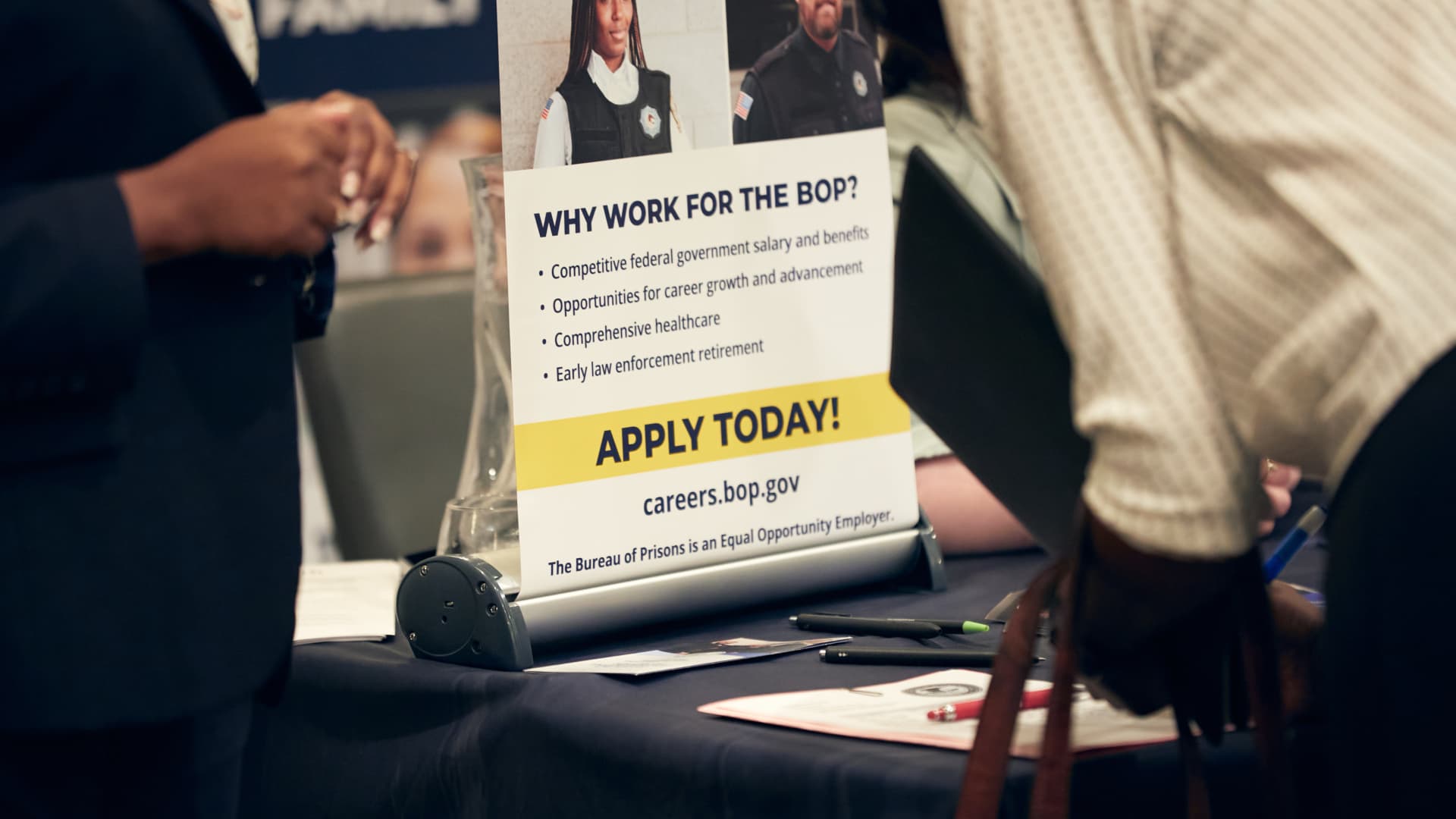
- Nonfarm payrolls unexpectedly declined in July, falling by 23,000 amid a drop of 53,000 government jobs and softness in retail, leisure and hospitality, and slower-than-usual growth in healthcare.
- The unemployment rate edged lower to 4.1%, but was due largely to a further decline in those holding jobs or looking for work.
- Worker pay was nearly flat in the month as well, with the 12-month increase in average hourly earnings slipping to 3.2%, the lowest since May 2021.
watch now
The U.S. economy saw an unexpected declined in jobs during July while the unemployment rate edged lower, the Bureau of Labor Statistics reported Friday in a snapshot that showed a slowing employment picture
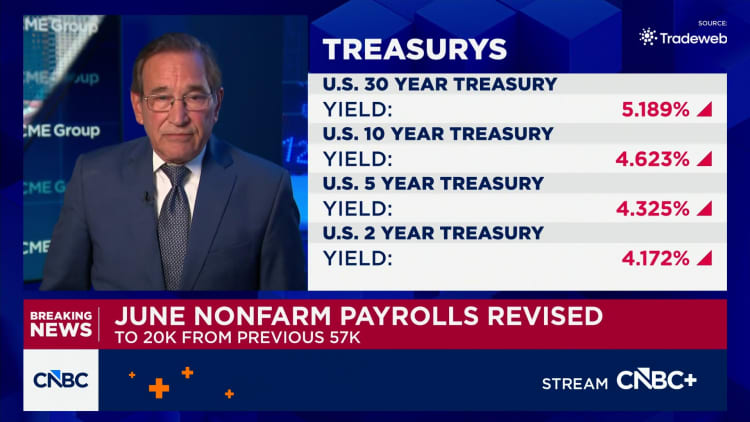
Nonfarm payrolls fell by a seasonally adjusted 23,000 for the month, compared with a downwardly revised 20,000 for June. The Dow Jones consensus forecast had been looking for a gain of 83,000
At the same time, the unemployment slipped to 4.1% as the labor force participation rate fell further to 61.4%, its lowest in more than five years, another indication that fewer Americans were working or looking for jobs
In addition to the weak numbers for June and July, the final count for May was revised down to 63,000, or 66,000 lower than the prior estimate. The revised numbers brought the 12-month average down to just 34,000
“The July employment report solidified that the labor market is not out of the woods quite yet,” said Nicole Bachaud, a labor economist at ZipRecruiter
The drop was led by a 50,000 decline in local government education and a loss of 19,000 retail jobs. Financial activities also posted a fall of 14,000 and leisure and hospitality lost 40,000, a possible consequence of the World Cup tournament ending
Healthcare, which has been the leading sector for job creation, rose by 22,000, which was below its 12-month average of 36,000. Construction also saw an increase of 22,000
Private payrolls did increase for the month, up 30,000 as government jobs declined by 53,000
While jobs held flat, worker pay also saw virtually no gain during the month. Average hourly earnings increased by just 2 cents, bringing the 12-month average down to 3.2%, below the forecast increase of 3.5% and the lowest since May 2021
The report comes with Federal Reserve policymakers split on where interest rates should head in an economy where the labor market had been improving from a moribund year in 2025 while inflation has remained well above the central bank’s 2% target
In recent days, several Fed officials have spoken in favor of raising rates as soon as September if the pace of price increases doesn’t ease. The Federal Open Market Committee last week voted 9-3 to hold its benchmark rate in place
Following the jobs report, traders shifted their bets on when the Fed might hike. Odds for a move in September fell to 44% and to 58.3% for October, according to the CME Group’s FedWatch gauge of futures prices
Stock market futures, meanwhile, posted solid gains amid the expectations for a more dovish Fed. Futures tied to the Dow Jones Industrial Average were up close to 200 points and Treasury yields plummeted after being around the flatline earlier in the session
“This morning’s report is a game changer in the sense that all of the recent focus has been on inflation and this report highlights the risks that are embedded in the labor market as well,” said Chris Zaccarelli, chief investment officer for Northlight Asset Management. “Before today, many were expecting that the Fed had no choice but to raise rates in order to fight stubbornly high inflation, because the job market was so strong, but this report shows that isn’t the case.”
Details of the report confirmed the weak headline numbers
Household employment, which measures the total of people reporting that they are working and is used to calculate the unemployment rate, fell by 87,000. However, the unemployment rate declined because of a decrease of 264,000 in the labor force. Outside of the Covid era, the participation rate is at its lowest since the middle part of 1976
“While the unemployment rate is falling, that is mostly for the wrong reason—not enough workers,” wrote Bill Adams, chief U.S. economist at Fifth Third Commercial Bank. “Immigration compensated for the aging of the workforce in the first few years of the post-pandemic expansion, but that’s not happening anymore.”
The employment-to-population ratio fell again, slipping to 58.9% for its lowest level since May 2014. An alternative jobless measure that includes discouraged workers and those holding part-time jobs for economic reasons held steady at 7.9%
