

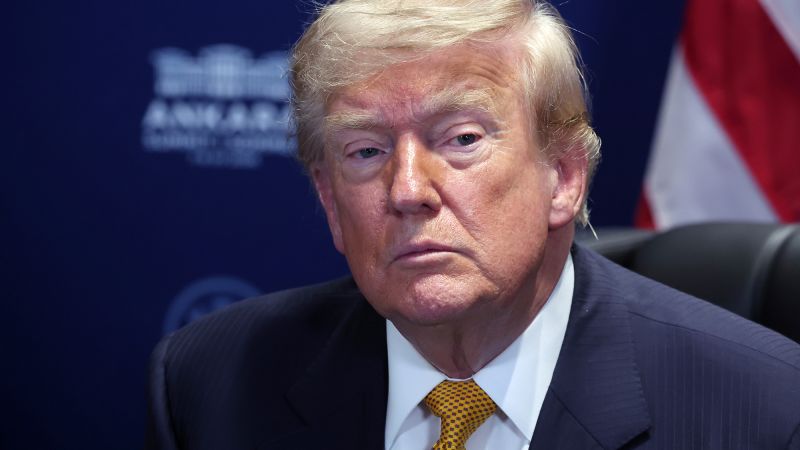
President Donald Trump during a meeting with NATO Secretary General Mark Rutte at the NATO summit in Ankara, Turkey, Wednesday, July 8, 2026.
Three weeks of fragile peace bought President Donald Trump some time and leverage over Iran. But not too much
After Trump signed the Memorandum of Understanding with Iran on June 18, oil prices tumbled, sinking below pre-war levels by last week. The oil market cheered as the Strait of Hormuz reopened somewhat, and crude started gradually flowing out of the Persian Gulf after getting stuck there for months. Gas prices have been slowly falling back down to Earth, too
But three weeks of a partially reopened strait wasn’t enough time to overcome the biggest oil supply shock the world has ever seen. It didn’t offer sufficient time to refill the emergency and commercial stockpiles that the United States needs to supply itself with fuel – and avoid the looming “economic catastrophe” that Trump feared would earn him comparisons to Depression-era President Herbert Hoover
No one knows if this latest exchange of fire in the Middle East is a blip or a return to all-out war. Trump threatened Wednesday to resume America’s naval blockade of the strait – but so far, the strait remains open to ships willing to take the risk to get in and out
But if it closes again, the US economy could take an unwelcome hit
About 200 million barrels of oil escaped the Strait of Hormuz over the past three weeks president of Lipow Oil Associates. That’s the equivalent of two days of global demand
Another caveat: Much of that oil – around 60 million barrels worth – is Iranian, which the Trump administration sanctioned again on Tuesday, giving buyers just 10 days to take hold of it before it’s off-limits again
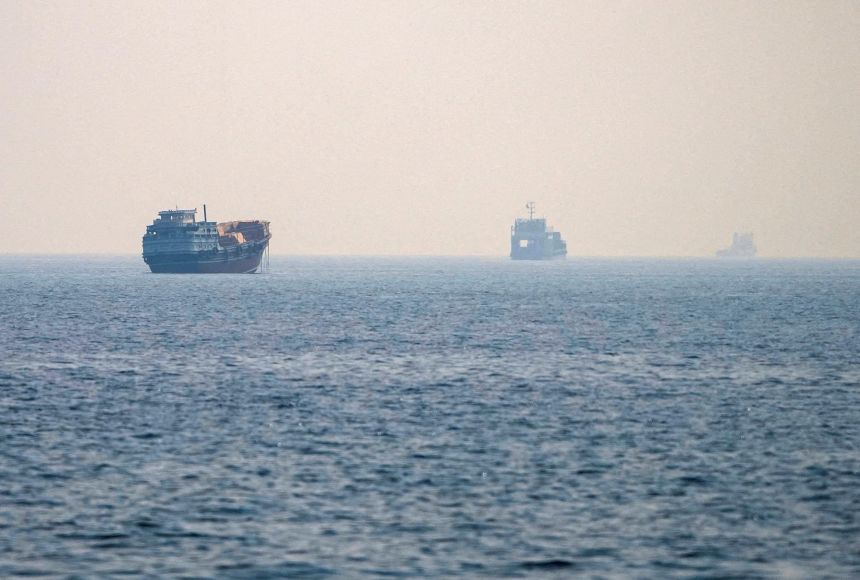
Vessels at the Strait of Hormuz, as seen from Musandam, Oman, on July 8, 2026.
Still, the strait remains open, with a significant risk premium. To commission a tanker to ship oil from outside the strait to Asia, you’ll need around $4 million to $5 million. Getting a vessel to take oil from inside the strait to Asia costs $8 million to $10 million – double the cost
Traffic has been consistently at around a third of normal over the past three weeks, and transits continue today, even after at least four oil and gas tankers turned back afterattempting to travel through the Strait of Hormuz this morning, Reuters reported
That’s why oil is up sharply – but still below where it was trading just after Trump signed the MOU. Brent crude futures were trading just below $78, up 4%, their highest level since the day after the MOU’s signing. In other words, the market is acting like the strait is less open than it was yesterday – but oil is still flowing
If that crude stops flowing, that could create significant problems for America’s oil market
The Strategic Petroleum Reserve, America’s emergency stockpile of oil, has been drawn down significantly since the war broke out to help replace all those barrels of oil lost in the strait. The SPR is now at 319.5 million barrels, down 23% from its pre-war level and at its lowest point since the Reagan administration started filling it in 1983
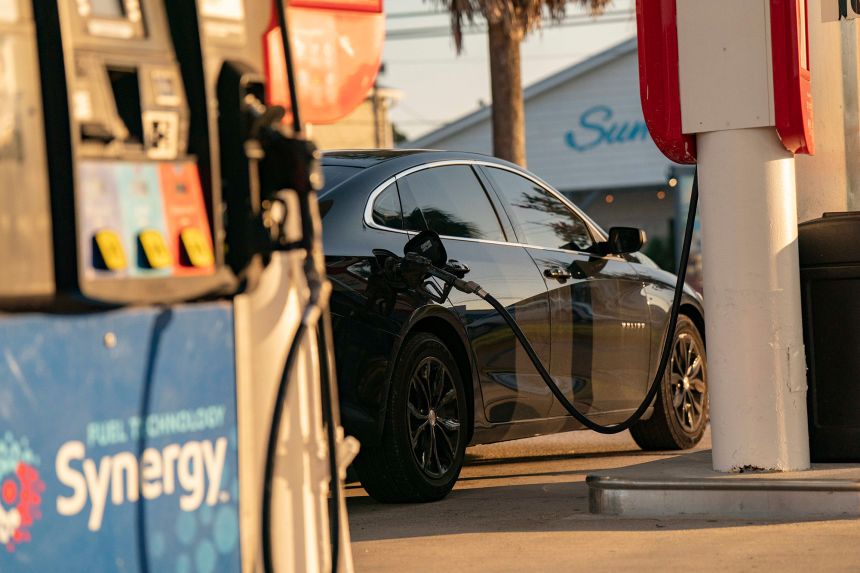
A vehicle is refueled at a gas station in Carolina Beach, North Carolina, on Wednesday, July, 1, 2026.
That puts the United States in a precarious position if it faces severe weather or another full closure of the Strait of Hormuz
Perhaps more crucially, commercial stockpiles remain at critical levels. Inventories in Cushing, Oklahoma, the pipeline crossroads of America, remain below operational stress levels. Stockpiles in Cushing rebounded by around 700,000 barrels last week, but are still less than 20 million barrels, at which point the facility struggles to pipe out crude to refineries across the country
That led Trump to warn that the low oil inventories could damage the US economy and lead him to be compared to Hoover
“I didn’t want to see economic catastrophe,” Trump said at a G7 meeting in late June. “If you kept this going, that could have happened.”
Investors were in a cautious mood: US stocks didn’t react much at the open, but the bond market did – the 10-year US Treasury yield rose to 4.57%, its highest level since late May when oil hit its wartime peak and it looked like the ceasefire was off
As Trump has demonstrated throughout his second term, when bond yields get “yippy,” he listens to the markets
See all topics
