

The Medical Minute: A tick bite left her face paralyzed. Specialized treatment helped her smile again
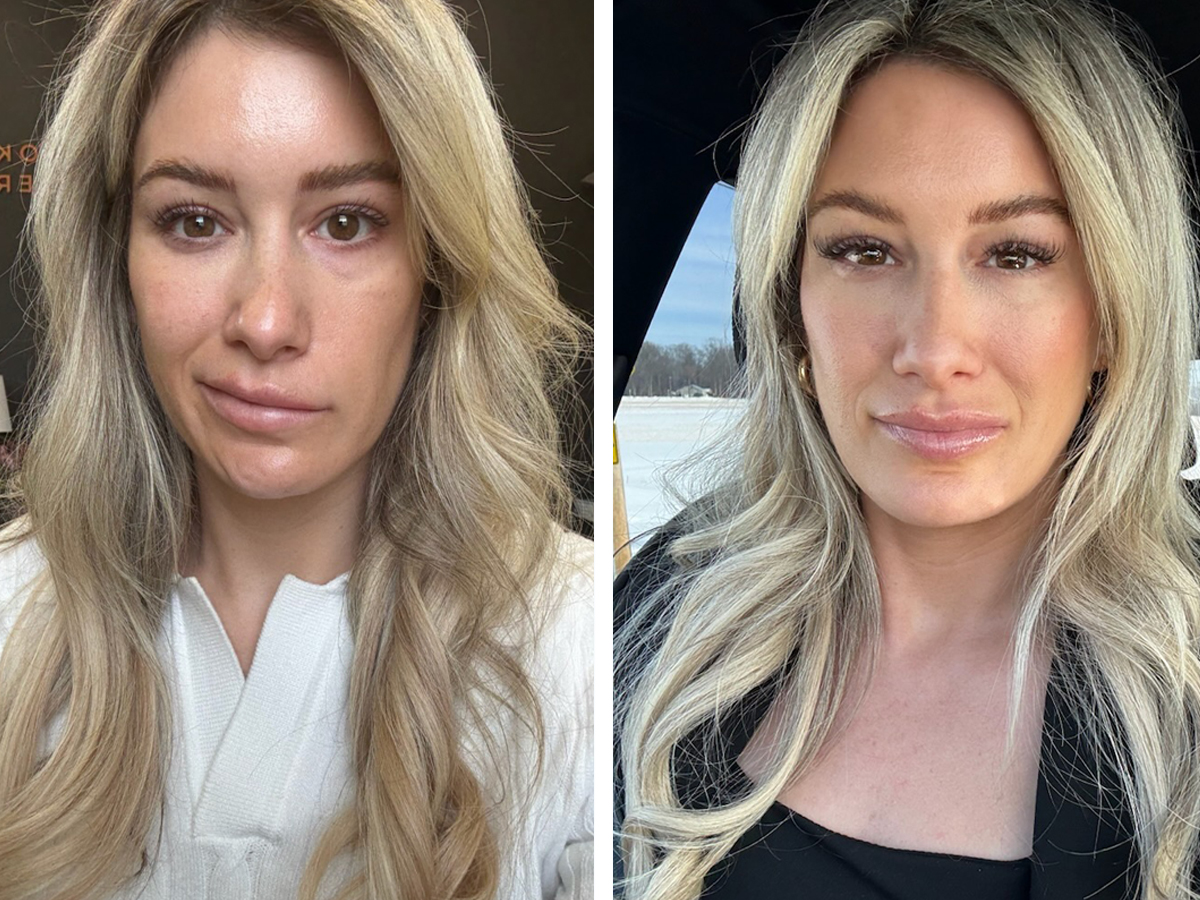
Brittani Snyder of York developed facial synkinesis after a tick bite. A combination of treatments helped her regain a more balanced smile and reduce unwanted muscle movements.
Brittani Snyder of York, Pennsylvania, never imagined a tick bite would change her life. A few weeks after she was bitten in July 2025, she woke up unable to move the left side of her face. She rushed to the emergency room, sure she was having a stroke. Doctors ruled out stroke and diagnosed Bell’s palsy, a form of facial paralysis without an identifiable cause. Later, testing showed she had Lyme disease from a tick bite, which likely caused her facial nerve damage
July 15, 2026Penn State Health News
Snyder was prescribed antibiotics, an antiviral medication and a steroid. At first, her symptoms improved, but three months later, her face began to twitch, and movement became uneven. The 36-year-old real estate agent was referred to the Penn State Health Facial Nerve Clinic, where Dr. Jessyka Lighthall quickly diagnosed the real problem: facial synkinesis
The chronic condition affects up to half of people who experience facial nerve paralysis
Synkinesis can develop after facial paralysis when nerves heal incorrectly. The nerves “misfire,” causing facial muscles to twitch, tighten or move in unintended ways
“Synkinesis is like being fish-hooked. The nerves are working overtime and constantly pulling,” Snyder says. “The muscles were especially pulling to the right, which made my facial symmetry look off.”
Lighthall, division chief of facial plastic and reconstructive surgery at Penn State Health, explains that facial paralysis can have many causes, including stroke, tumors, trauma, infections and Lyme disease. Bell’s palsy is a specific diagnosis made only after other causes have been ruled out
“With Bell’s palsy, some patients will eventually go back to normal, but many patients never fully recover function,” she said
Lighthall says synkinesis means the nerves are miswired. “The eye might close when eating, laughing or pursing the lips, or the mouth and neck may twitch and pull when blinking. It’s abnormal cross-talk and nerve regrowth.”
For Snyder, smiling, laughing or eating often caused one eye to close involuntarily. Her eyes are also more prone to excessive tearing, which leads her to wear sunglasses, as she describes on Instagram where she shares her recovery and daily life with synkinesis
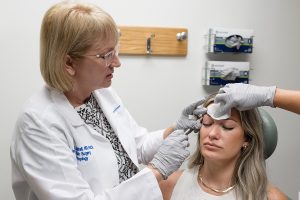
Dr. Jessyka Lighthall, left, uses Botox injections to help relax and retrain facial nerves in Snyder’s face every three months
Relief Through Specialized Treatment
Facial synkinesis has no known cure. However, Lighthall and her team offer multiple treatments to improve function and quality of life, including injections, specialized facial nerve therapy and surgery when appropriate
Snyder’s treatment plan includes Botox injections to help relax overactive muscle movement on the affected side of her face, as well as the unaffected side, to create better facial symmetry and reduce unwanted contractions. Snyder sees Lighthall every three months and says she has made progress with each session
“It’s a slow process. She uses a very small dosage and figures out what’s working and what’s not. We adjust it each time,” Snyder says
After three injection sessions, Snyder can now keep her eye open while eating, smiling and laughing. Her facial balance and function have also improved
Snyder’s care includes facial neuromuscular retraining from Nicole Fisher, a speech-language pathologist specializing in facial nerve therapy, who has been with the Facial Nerve Clinic since it opened 10 years ago. Fisher develops individualized exercise programs to relax overstimulated facial muscles and help patients regain control of abnormal facial movements
“Synkinesis is an overworked muscle that becomes tight and has limited motion,” Fisher says. “With Brittani, we’re decreasing muscle tightness, as well as increasing range of motion and lengthening the muscle. Depending on where patients are in their journey, the exercises and their program are very different.”
Snyder starts every morning with her facial exercises and repeats them several times a day. She says they have made a significant difference in her appearance and comfort level
Find a Penn State Health facial nerve disorder expert near you
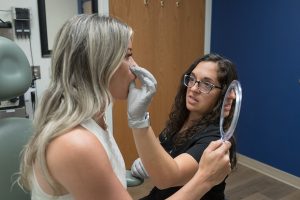
Nicole Fisher, right, a speech and language pathologist specializing in facial nerve therapy, teaches Snyder exercises to strengthen some facial muscles and relax others to achieve facial symmetry
Rebuilding Function and Confidence
Facial nerve disorders affect more than physical appearance, Lighthall and Fisher say. They can also take a significant emotional toll
“Facial weakness, palsies and facial nerve disorders have a psychosocial effect because everyone’s looking at your face, and when your face looks different, people are very self-conscious about it,” Fisher says. “Many people don’t want to go to work or go out or eat in front of people. Our clinic tries to address the whole patient.”
This year marks the 10th anniversary of the Penn State Health Facial Nerve Clinic. A new Facial Nerve Patient Support Group will launch in the coming months to help patients connect with others people who share similar experiences. For Snyder, the coordinated care she’s received has helped her regain her confidence and adapt to life with a chronic diagnosis
“There’s no reversing my condition, even with injections and exercises,” Snyder says. “But between the two of them, it’s dramatically helped and improved.”
Learn more about the Penn State Health Facial Nerve Clinic
Related content:
- Video: Santa Gets His Smile Back: How Jeffrey Schott Recovered from Facial Paralysis
- The Medical Minute: Know the risks from ticks this summer
- Video: Facial Nerve Clinic–Jessyka Lighthall
Facial Plastic and Reconstructive Surgery
The Medical Minute is a weekly health news feature produced by Penn State Health. Articles feature the expertise of faculty, physicians and staff, and are designed to offer timely, relevant health information of interest to a broad audience
If you’re having trouble accessing this content, or would like it in another format, please email Penn State Health Marketing & Communications
