

JULY 8, 2026 11:00
Tomatoes are one of the most everyday foods in the Israeli menu. They are found in our regular salad every day, and also in dishes like shakshuka, in pasta sauce, in matbucha, in soup, in a sandwich, and in a simple evening meal with cheese. Perhaps precisely because they are so available and cheap, it is easy to forget that this is one of the most researched and important foods in the Mediterranean diet
In a radio interview I conducted with tomato grower Ilan Ammar, we talked about different varieties, about taste, about ripening, and about the way the tomato became a basic ingredient in almost every home. From a nutritional standpoint, one of the most interesting things about the tomato is lycopene. This is a natural antioxidant, which gives the tomato its red color, and has been researched quite a bit in the context of the health of the heart, blood vessels, skin, and oxidation processes in the body.
What is lycopene and why is it important? Lycopene is a natural pigment from the carotenoid family. This is the same family to which beta–carotene belongs, the orange pigment in carrots and sweet potatoes, but lycopene has a slightly different structure and particularly strong antioxidant properties. In the body, it acts as part of the natural defense mechanism against free radicals, which are unstable molecules that can cause oxidative damage to cells
A review published in Antioxidants notes that lycopene, the red pigment in tomatoes, has been studied mainly for its ability to reduce oxidative damage and inflammation. This is in relation to cardiovascular health, blood pressure, blood lipids, skin health, and in some studies, also to reducing the risk of prostate cancer
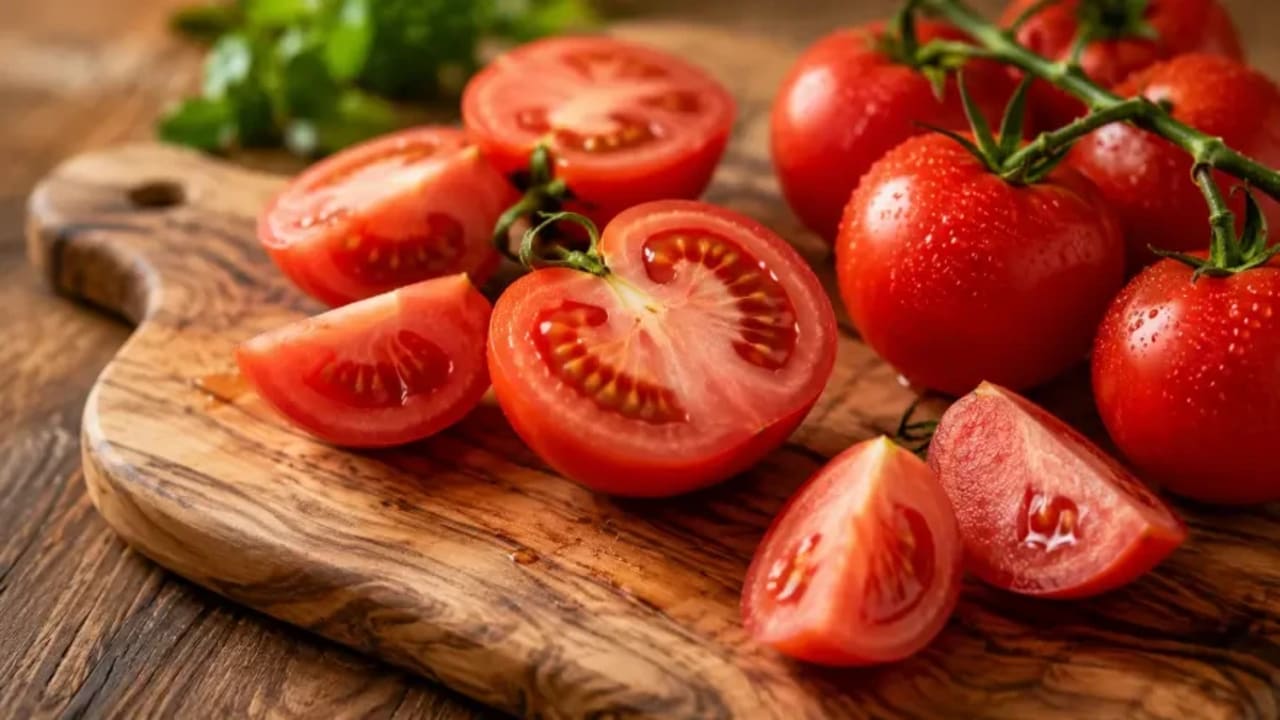
Why is a red tomato preferable? Lycopene is what gives the tomato its red color. Therefore, in general, a red and ripe tomato will contain more lycopene than a pale or greenish tomato. This does not mean that a less red tomato is “unhealthy,” but in terms of lycopene, the color is definitely a good clue. Lycopene is also found in watermelon, pink grapefruit, pink guava, and papaya. Yet, in our daily diet, the tomato is usually the most accessible and constant source. The reason is simple: Not everyone eats pink guava or papaya every day, but a tomato, tomato sauce, or tomato paste appears for many almost every day. This is precisely the beauty of a healthy diet: Sometimes the most important food is not the expensive and exotic one, but rather the one that is in the refrigerator all the time.
Tomatoes and heart health: One of the areas where lycopene has been extensively researched is cardiovascular health. Observational and intervention studies have found a link between higher consumption of tomatoes and tomato products and better measures of blood pressure, blood vessel function, and sometimes also a lipid profile. Consumption of lycopene originating from tomatoes was linked to a decrease in blood pressure and a moderate improvement in cardiovascular risk measures
According to the review, a daily consumption of 5 to 30 mg of lycopene, an amount that can come from one or two tomatoes or from tomato products, may have a health contribution. The practical significance – simply introducing tomatoes into the menu regularly: A salad with tomatoes, homemade sauce, shakshuka, tomato soup, or matbucha. All of these can be integrated into a healthy Mediterranean diet, which is anyway considered one of the best dietary patterns for heart health
Lycopene, skin, and sun: Another area that interests many is the connection between lycopene and skin health. Since lycopene is an antioxidant, the possibility that it might help reduce some of the oxidative damage caused to the skin following sun exposure was examined. A review published in “Critical Reviews in Food Science and Nutrition” examined studies on tomatoes, lycopene, and sun damage to the skin, and described evidence that the consumption of tomatoes or lycopene can contribute to protection from sun damage and skin aging related to radiation exposure.
Why is tomato sauce sometimes preferable to a fresh tomato? One of the most interesting things about lycopene is that it is absorbed better precisely after heating and crushing. Unlike vitamin C, part of which might be damaged by heat, lycopene becomes more available to the body when the cell walls of the tomato soften and break down. Therefore, tomato sauce, tomato paste, shakshuka, tomato soup, and matbucha are excellent sources of lycopene. According to studies, the addition of olive oil to cooked tomatoes significantly raised the levels of lycopene in the blood after eating. In simple words: A fresh tomato is excellent, but a good tomato sauce is also not “less healthy.” On the contrary, in terms of lycopene, it can be even more effective.
Why is it worth adding a little fat? Lycopene is a fat–soluble substance. Meaning, in order for the body to absorb it better, it is worth eating it together with some source of fat. This is one of the reasons why the Mediterranean combination of tomatoes and olive oil is so successful. Not much oil is needed. Even a teaspoon of olive oil in a salad, a little tahini, avocado, or nuts can help with absorption. Therefore, a tomato salad with olive oil, tomato sauce with a little oil, shakshuka with olive oil, or tomatoes alongside tahini are not only tasty, but also make nutritional sense.
Fresh tomato: Despite the advantage of tomato sauce in terms of lycopene, there is no reason to give up on fresh tomatoes. A fresh tomato provides vitamin C, potassium, dietary fiber, fluids, and additional antioxidants. It is relatively low in calories, contributes to volume and satiety in a meal, and fits into almost any menu
The bottom line: A tomato is a wonderful example of a simple, available, cheap, and healthy food. It does not need the definition of a “superfood,” and one does not need to buy a lycopene supplement to enjoy its benefits. A red and ripe tomato, a salad with olive oil, a homemade tomato sauce, or a good shakshuka can provide the body with lycopene, vitamins, minerals, and fiber in a natural and tasty way
