

“We will not learn how to live together in peace by killing each other’s children.”
Article continues below this ad
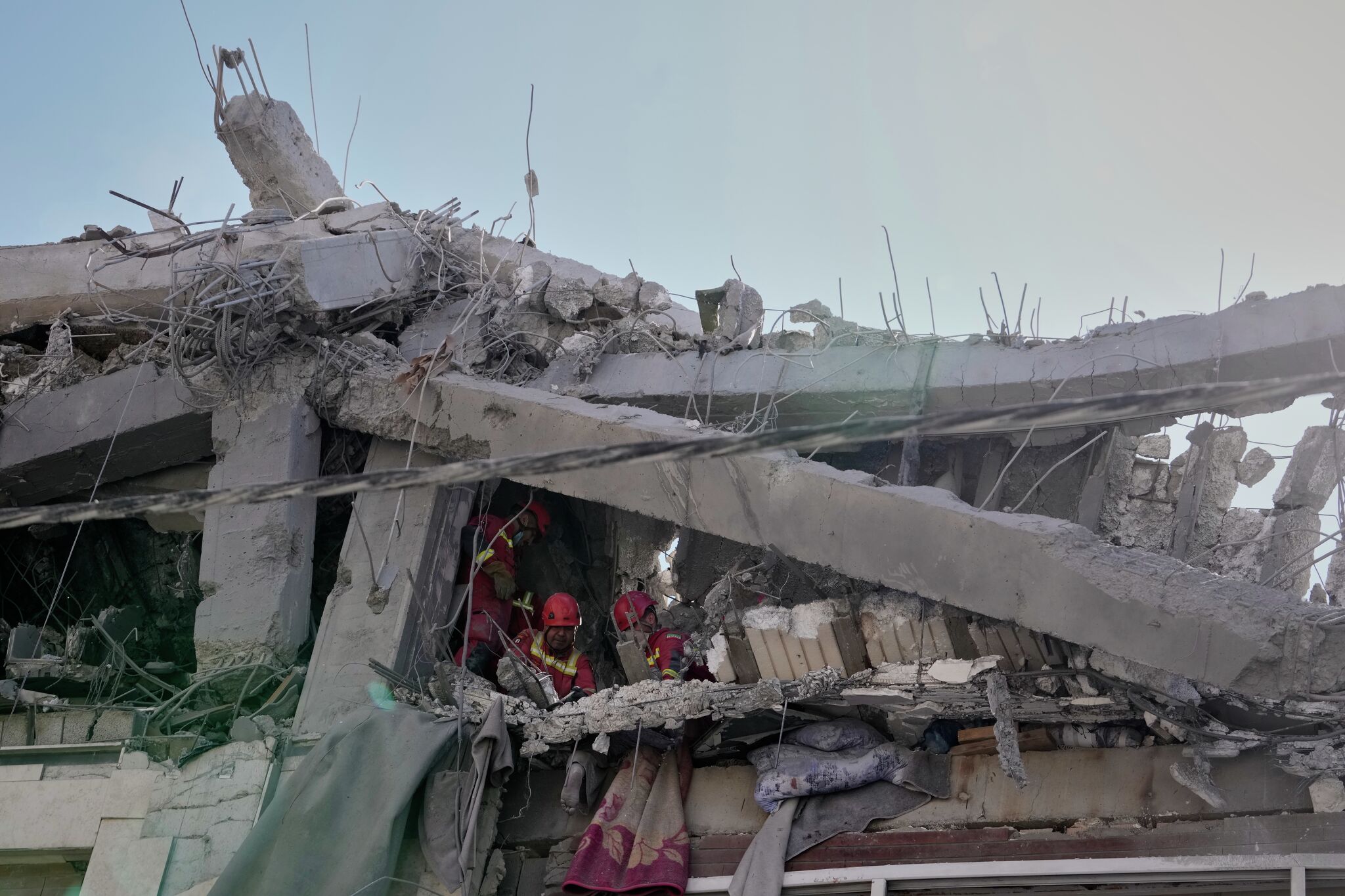
On. Feb. 28, the first day of President Donald Trump’s foolish and tragic war with Iran, U.S. missiles struck an elementary school in Minab, Iran, killing 156 civilians, including 120 schoolchildren
The British news outlet The Guardian reported on one distraught man standing in the ruins shouting, “These are the schoolbooks of the children who are under these ruins, under this rubble here. You can see the blood of these children on these books. These are civilians, who are not in the military. This was a school and they came to study.”
Those 120 children were among the first, and most important, costs of the war
The economic costs, however, are also staggering. According to WarCosts.org, a reliable website that keeps a comprehensive tracking of military spending, the Iran war had cost $42 billion by early July, roughly $283 per U.S. taxpayer
Article continues below this ad
That $42 billion could have funded “840,000 teacher salaries for a year (or) 420,000 full college scholarships.”
U.S. Secretary of Defense Pete Hegseth recently estimated the cost at $37.5 billion
MilitarySpend.org, another website that tracks defense spending, estimates that the money spent on the war could have funded more than 72,000 cancer research grants or 485,436 nurses’ salaries for a year
When the war started, I retrieved my copy of J. William Fulbright’s “The Arrogance of Power” to see what relevance it held for today’s war. Written in 1966, in the middle of the Vietnam War, Fulbright, a Democrat U.S. senator from Arkansas, observed: “The causes and consequences of war may have more to do with pathology than with politics, more to do with irrational pressures of pride and pain than with rational calculations of advantage and profit.”
Article continues below this ad
Applying those words to today, Trump took us to war because he wanted to, not because he needed to. And that reflects Fulbright’s arrogance of power
Fulbright defined that arrogance “as a psychological need that nations seem to have to prove that they are bigger, better, or stronger than other nations.”
That arrogance holds an “assumption … that force is the ultimate proof of superiority — that when a nation shows that it has the stronger army, it is also proving that it has better people, better institutions, better principles, and, in general, a better civilization.”
Today, Fulbright could have added “better ballrooms.”
Article continues below this ad
Fulbright’s emphasis on arrogance was echoed in a brilliant essay published in May by Foreign Policy In Focus, written by international relations expert Nii Lantey Bortey, titled “War, Arrogance, and the Unraveling of U.S. Power.”
Bortey writes that the United States is “approaching collapse because it has too often mistaken power for wisdom.”
Bortey notes the U.S. possesses armed forces “unmatched in reach,” along with a strong financial system and technology sector
“Yet these advantages can conceal a more dangerous condition,” Bortey says, “the erosion of judgment.”
Article continues below this ad
The U.S. is not on the brink of immediate collapse, Bortey argues. Rather, “it treats coercion as strategy, military reach as political authority, and exemption from rules as evidence of strength.”
The result is a “cumulative weakening of legitimacy, fiscal discipline, institutional trust, and strategic clarity.”
The war with Iran is simply “the latest expression of this disorder.”
The U.S “erosion of judgment” has reached its zenith in Trump’s reckless, wanton and impulsive decision-making. With a majority of Congress in lockstep with Trump, the future looks grim
Article continues below this ad
Maybe the situation will begin to change this November. Maybe
Roger C. Barnes is professor emeritus of sociology at the University of the Incarnate Word
