

Published On 16 Jul 2026
Seoul, South Korea – In 2023, Marie Wang began digging into her past for the first time
Growing up in Denmark, she had always known she had been adopted from South Korea in the early 1990s
Recommended Stories
list of 4 items
- list 1 of 4Which records has Kylian Mbappe broken at the World Cup?
- list 2 of 4Norway change World Cup team hotel in Miami days before England showdown
- list 3 of 4Venezuela’s turn to Israel is about survival, not conviction
- list 4 of 4Tense standoff at an anti-migrant protest in a South African town
end of list
And for decades, she believed the story contained in her adoption records: her birth mother, a university student, had been forced by circumstances to give up her baby
But as South Korean adoptees around the world uncovered a pattern of fabricated records and irregularities in their original country’s overseas adoption system, Wang decided to request her own file
What she found upended everything she thought she knew
“It said my birth mother believed I was dead, and that it was the doctor at the birth clinic who facilitated my adoption,” Wang told Al Jazeera
“I think Korea Social Service [KSS], my adoption agency, sent me that document by accident because they’ve refused to provide any additional information since. Every time I ask, they say privacy laws prevent them from releasing anything.”
Wang is among a growing number of overseas adoptees who have discovered evidence suggesting their adoptions were built on fabricated information
“My adoptive parents would never have adopted me if they’d known I had been separated from my family simply because everyone believed I was dead,” she said
Now 33, Wang has never returned to South Korea
![A photo of Mia Lee Hansen that was included in her adoption file [Courtesy of Mia Lee Hansen]](https://todaytrendnews7.com/wp-content/uploads/2026/07/A-photo-of-Mia-Lee-Hansen-that-was-provided-in-KSS-adoption-file-Handout-from-Mia-Lee-Hansen-1784002119-1-1784010638.jpg)
Mia Lee Hansen’s story follows a strikingly similar pattern
Also adopted to Denmark through KSS, Hansen spent years believing the account in her adoption papers until a visit to South Korea in 2011
Advertisement
“My adoptive parents and I met with a representative from KSS, who told us my files had somehow been fabricated,” she told Al Jazeera
“They said these kinds of errors happened because record-keeping wasn’t very good back then.”
Receiving little help from the agency, Hansen turned to commercial DNA testing in 2020
Months later she matched with a cousin in the United States
In 2022, she reunited with her birth family in South Korea
“My father thought it was a joke when he got the phone call telling him I was alive,” she said
“Everyone believed I had died.”
According to one of her siblings, when Hansen was born prematurely in the southwestern city of Gwangju in 1987, doctors told her mother she had not survived
“My grandmother returned the next day because she wanted to give me a proper funeral,” Hansen said
“Instead, hospital staff became angry and told her to leave.”
Her adoption file offers conflicting explanations for why she was given up, including poverty and her sex
Even the hospital listed differs from the one where her family says she was born
“When you’re adopted, you experience one separation after another,” Hansen said
“You’re separated from your birth mother and moved to the other side of the world. People think babies are too young to remember, but the body remembers.”
Overdue recognition
For years, overseas adoptees and advocacy groups accused South Korea’s adoption agencies and government of enabling fraudulent overseas adoptions
But last year marked a turning point
In a public statement, South Korean President Lee Jae Myung offered a “heartfelt apology and words of comfort” to overseas adoptees and their birth and adoptive families, saying he felt “heavy-hearted” thinking about the “anxiety, pain and confusion” many had endured after being sent abroad as children
His apology followed findings by South Korea’s Truth and Reconciliation Commission (TRC), which concluded last year that the government had played a central role in facilitating overseas adoptions through widespread human rights violations
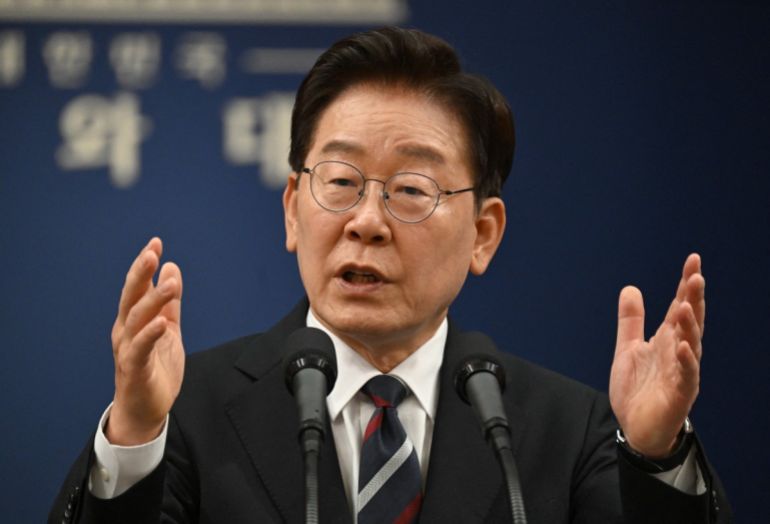
After a nearly three-year investigation into 367 cases, the commission uncovered fabricated records, identity tampering, fraudulent registrations portraying children as abandoned orphans, and failures to obtain legal consent from birth parents
Its conclusions echoed a landmark 2024 investigation by The Associated Press news agency and TV documentary series PBS Frontline, which found South Korea’s government, adoption agencies and Western partners had helped send about 200,000 children overseas despite mounting evidence that many had been separated from their families through deception or coercion
Advertisement
The investigation also found adoption agencies paid hospitals and orphanages for newborns and young children
South Korea’s overseas adoption programme began after the 1950-53 Korean War as a welfare initiative for war orphans
As the country’s economy developed during the 1970s and 80s, however, international adoptions accelerated dramatically, earning South Korea the reputation of being the world’s leading “baby-exporting” nation
The government has since begun confronting that history
Following Lee’s apology, South Korea formally joined the Hague Convention on Protection of Children and Co-operation in Respect of Intercountry Adoption, transferring responsibility for overseas adoptions from private agencies to the state
It has also pledged to end intercountry adoptions by 2029
Yet many adoptees say the government’s actions have not been accompanied by accountability
Advocates say tens of thousands of overseas adoptees remain without answers because many lack the documentation needed to pursue their cases
That tension was in the background of this year’s Overseas Korean Adoptees Gathering (OKAG)
The annual conference, organised by the governmental Overseas Koreans Agency, brings adoptees from around the world to South Korea to reconnect with their birth country
Anne Kim Loesch, who lives in Luxembourg, returned this year as one of the programme’s community leaders
“I’ve always wondered what my birth mother looks like,” Loesch told Al Jazeera
“When I see parents with their children, they resemble each other. I wonder whether I look like her. Is she tall? Is she small like me?”
The gathering has also become one of the few places where adoptees feel fully understood
“My closest friends back home aren’t adopted,” she said
“They care about me, but they can’t fully understand what we’ve lived through. Among adoptees, we don’t have to explain.”
![Anne-Kim-Loesch attends the Overseas Korean Adoptees Gathering at Lotte Hotel World in Seoul, South Korea, on May 19, 2026 [Courtesy of Anne-Kim-Loesch]](https://todaytrendnews7.com/wp-content/uploads/2026/07/Anne-Kim-Loesch-attending-the-2026-Overseas-Korean-Adoptees-Gathering-in-Seoul-Photo-by-David-D.-Lee-1784003468.jpg)
Yet reports of widespread fraud have changed how many adoptees experience returning to South Korea
“You inevitably start wondering whether your own files were manipulated too,” Loesch said
“You have to be emotionally strong not to disappear into that black hole.”
For Lee Do-hyun, founder of KoRoot, an organisation that has supported overseas adoptees since 2003, the annual gathering reflects good intentions but misplaced priorities
“The first priority should be investigating the responsibility of South Korean society and the government for what adoptees have experienced throughout their lives,” Lee told Al Jazeera
He argues that official programmes have focused more on creating positive experiences than confronting painful truths
“There has long been a sense of guilt toward overseas adoptees,” Lee said
“One response has been to put them in luxury hotels and create carefully curated experiences. But I question whether there has been the same commitment to listening to adoptees themselves or uncovering what really happened.”
Advertisement
Accountability still lacking
While South Korea’s apology marked an important milestone for many adoptees, Peter Møller argues that it has yet to produce meaningful accountability
Møller helps overseas adoptees navigate South Korea’s truth-seeking process through KoRoot, working closely with the TRC as thousands of cases move through the system
One priority has been coordinating with police over the 56 cases the TRC officially recognised as state-sponsored human rights violations
“But the police have rejected some cases without conducting any substantive investigation,” Møller told Al Jazeera
“The first five involved children falsely declared dead. Police dismissed them because the statute of limitations had expired,” Møller said
“But if you were abducted in 1974, you’re still abducted today.”
For Møller, the disconnect exposes a deeper problem
“It’s frustrating when one branch of government concludes serious human rights violations occurred, but the criminal justice system simply rejects the cases,” he said
Authorities also continue to reject adoptees’ requests for information, often citing privacy laws
“But if parents don’t even know their children are alive, how could they possibly consent to releasing that information,” Møller said
Last year, the Seoul Administrative Court referred part of the Special Adoption Act to the Constitutional Court, arguing that requiring birth parents’ consent before adoptees can access identifying information may violate fundamental rights
The court described the right to know one’s origins as “an innate and essential human right”
The case remains pending
Møller says many questions remain unanswered
KoRoot has asked the TRC to investigate the unusually high number of premature births among overseas adoptees
“We’ve identified cases where biological mothers appear to have been injected with drugs during pregnancy that resulted in premature deliveries,” Møller said
Since 2021, KoRoot has reviewed more than 4,000 adoption cases
“So far,” Møller said, “we haven’t found a single case where all the information was completely accurate.”
Møller had hoped last year’s apology would trigger broader institutional change, but he has been disappointed at the lack of reform
“We expected a trickle-down effect once the state acknowledged widespread manipulation,” he said
“We’re still waiting”
For Anders Riel Muller, official recognition has brought validation, but not closure
Like Wang and Hansen, he was among the 56 adoptees whose cases the TRC determined involved state-sponsored human rights violations
Today, he returns to South Korea every two years
“My relationship with South Korea is very complicated,” Muller, who is a professor at the University of Stavanger in Norway, told Al Jazeera
“It’s a country I love spending time in, but it’s also a country that I know didn’t want me.”
In 1980, Muller, then aged three, was placed in an orphanage by his uncle and aunt without his parents’ knowledge
Although the adoption agency knew his parents were alive, it designated him an orphan and assigned him a false name and birth date, making him almost impossible to trace
While the state has recognised that he was wrongfully adopted, Muller has many outstanding questions about his case
Advertisement
He has not reapplied for South Korean citizenship as he does not feel the need “to prove who I am”
Muller views assumptions about overseas adoptees needing to assert their identity as reflecting a broader misunderstanding of what they are seeking
“Many people in South Korea still assume adoptees ended up with better lives overseas,” he said
“That’s an argument that’s been used against Indigenous peoples all over the world.”
Then Muller paused
“But how do you repair exile,” he said
“How do you repair losing your language, your family and your culture?”
