

SEOUL – Technology’s brightest light too often bathes those already abundantly served. The newest phone gets a sharper camera, the already capable car inches toward autonomy, the fridge learns another trick
Yet for someone who cannot lift an arm to put on a jacket, or for a child living beside a vast but undrinkable lake, the question is simpler and more urgent: Who does technology serve?
Two professors at the Korea Advanced Institute of Science and Technology are each attempting to answer that question with new creations
Professor Ryu Jee-hwan of KAIST’s Department of Civil and Environmental Engineering is developing soft robotic clothing that can dress the wearer
Professor Bae Sang-min of KAIST’s Department of Industrial Design is building a low-cost solar device that makes saline or contaminated water safe to drink
Taken together, Professor Ryu’s self-dressing garment and Professor Bae’s SolarStill do more than add to the list of clever gadgets
They pose a harder question that lingers after the demonstrations end: What if innovation began at the margins rather than the center, and what if a breakthrough were judged not by how advanced it looks but by whose life it quietly makes more ordinary?
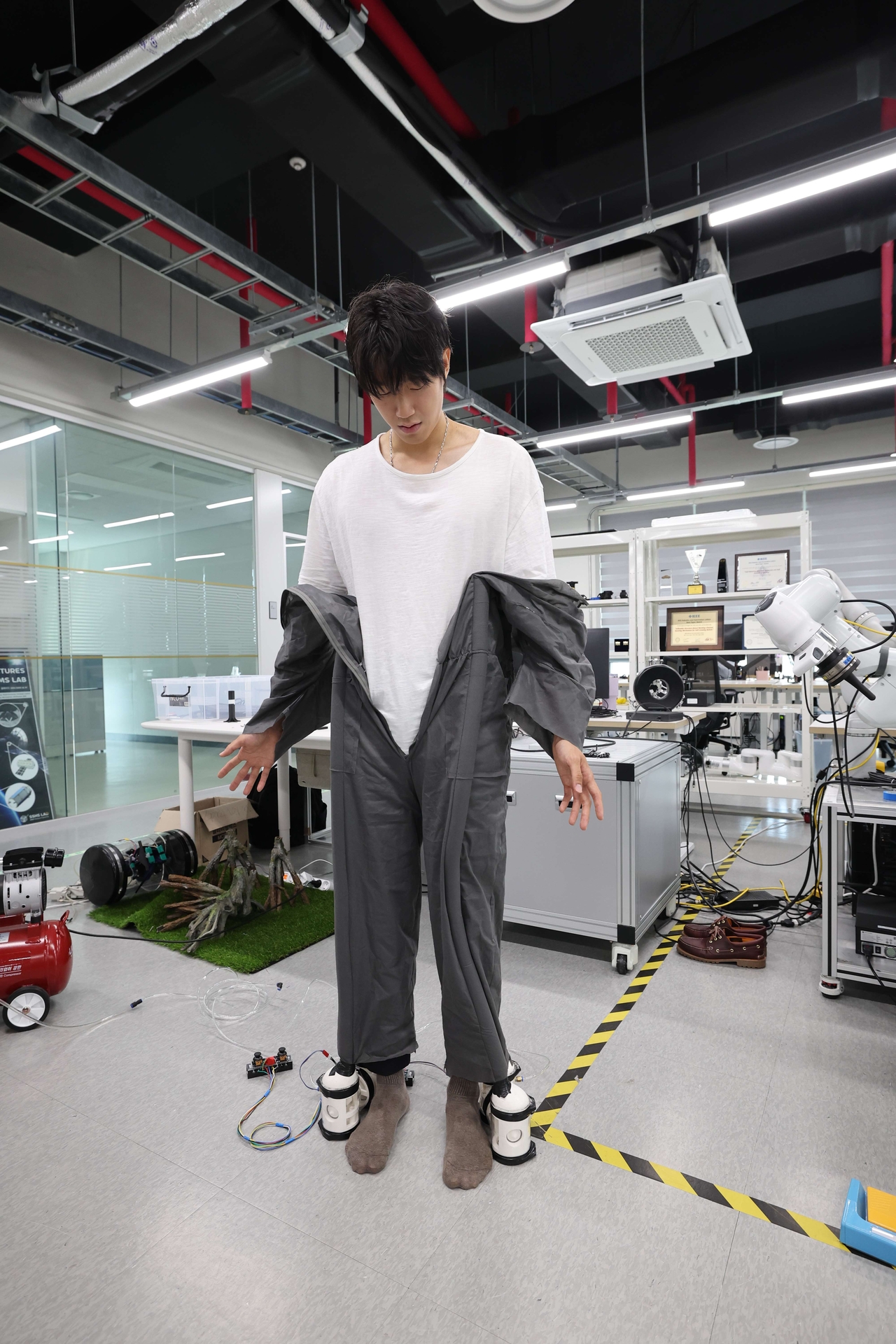
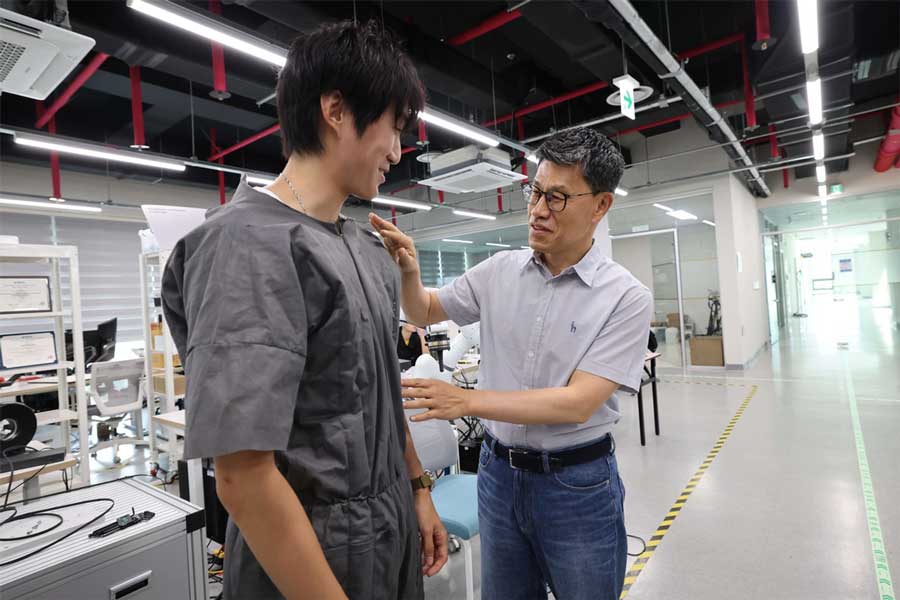
Hwang Jae-yun, a graduate student in the Department of Civil and Environmental Engineering at the Korea Advanced Institute of Science and Technology, demonstrates a self-dressing robot at KAIST in Daejeon on Monday
Clothing that becomes the robot
On Monday, Ryu’s research team demonstrated a self-wearing garment for The Korea Herald. As Kim Nam-gyun, the main researcher, turned a knob, a gray jumpsuit slowly unfolded over another researcher
Kim said the inspiration came while riding a bicycle
“If it starts raining while I’m riding, I have to stop and rummage through my bag to put on a raincoat,” Kim told The Korea Herald. “I thought it would be nice if I could just put it on with the press of a button.”
Rather than have a robotic arm manipulate fabric around a person, the team embedded pneumatic structures into the garment itself. As they inflate, the structures unfurl along the wearer’s body, effectively dressing the wearer
Conventional systems rely on robotic arms that require users to position their bodies in ways the machine can handle, Ryu said. His team’s mechanism follows the body instead
“Whether the arm is bent or straight, whether it is long or short, it can work regardless,” Ryu said. “That mechanical originality — being able to do it without being constrained by those conditions — is something we think is very meaningful.”
That adaptability could eventually matter most for older adults and people with disabilities
“If people have difficulty getting dressed, it doesn’t end there. They have to receive help from someone else,” Ryu said. “Then they may not be able to live independently, and in some ways it can even affect their dignity.”
The team’s work won the IEEE Robotics and Automation Letters Best Paper Award, selected among roughly 1,700 papers published in 2025
For Ryu, however, the project reflects a broader principle about how research problems should be chosen
“When deciding on research topics and directions, rather than simply following what others have done, we encourage research that can make a real contribution and have a social impact,” he said
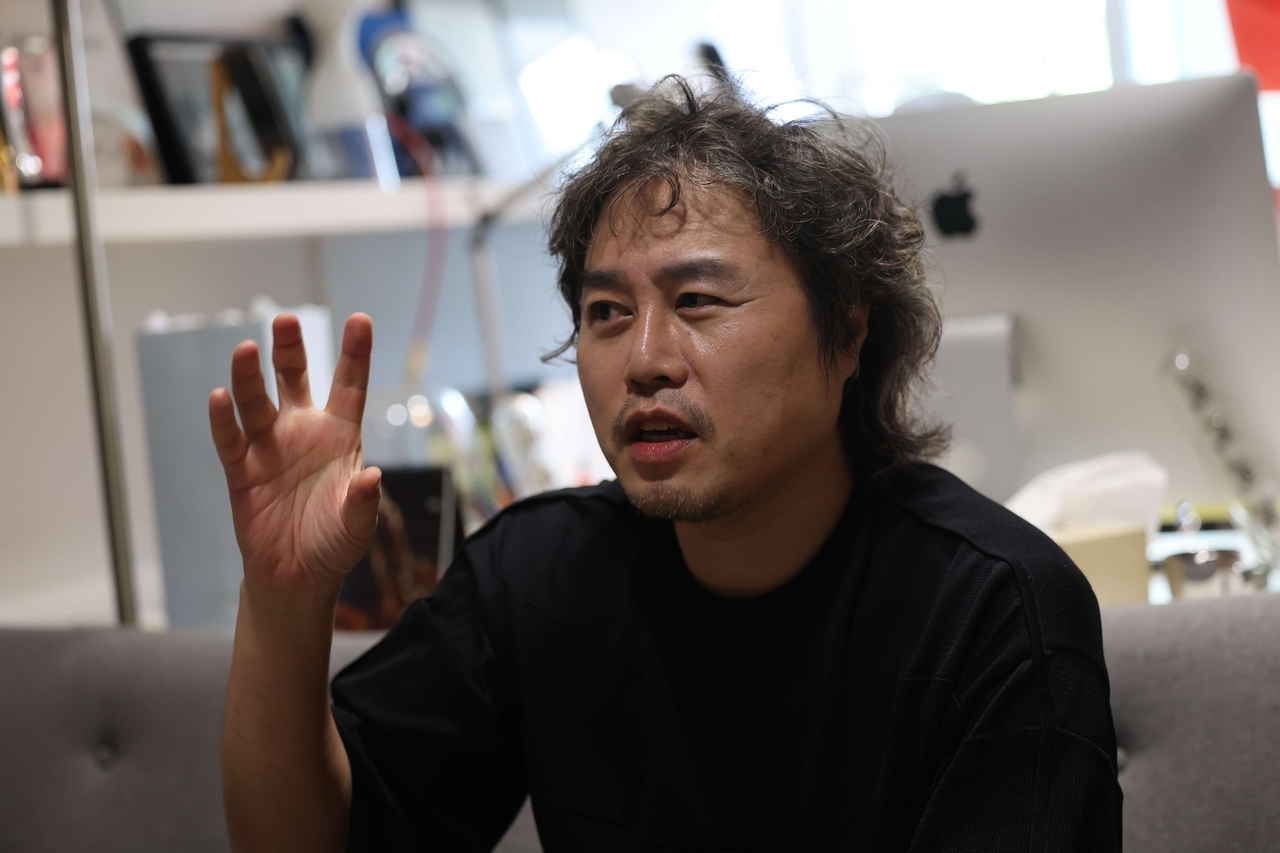
Professor Bae Sang-min of KAIST’s Department of Industrial Design speaks to The Korea Herald on Monday at KAIST in Daejeon
Finding the real problem
For Bae, identifying the right problem has been an obsession for nearly two decades
“Design is about finding a problem and solving it innovatively,” he said
But he came to believe that much of commercial design was failing its own definition
During his years studying in New York, Bae said he became disillusioned with producing attractive products for consumers who already had purchasing power
“We keep stimulating the desires of the top 10 percent,” he said, describing such work as feeling at times like “visual phishing” — making something so attractive that people want to buy it even when they already own something similar
Meanwhile, he said, the problems that determine whether others can drink clean water, receive an education or escape poverty often remain outside designers’ attention
“What is a good design? It is finding the real problem,” he said. “Finding the real problem properly, and solving it.”
That philosophy became the basis for Bae’s SEED Project, through which he and his students have conducted fieldwork in Africa since 2008
One lesson has repeatedly emerged: A problem viewed from an outsider’s perspective may look entirely different when lived on the ground
Bae recalled once becoming convinced that a community he visited needed better housing. Having studied in New York, he envisioned an inexpensive, minimalist modular home
Then he found almost exactly such a structure already standing in the village. It was occupied by sheep and goats. The Western-style house, Bae recalled being told by locals, was simply considered ugly
“It was arrogance,” Bae said
The experience revealed that fieldwork requires not simply visiting people but living alongside them long enough to understand their habits, preferences and even aesthetic sensibilities
“You have to become part of them,” he said. “Only then do you see the real problem.”
Bae Sang-min (second row, fifth from left), a professor of industrial design at KAIST, poses with residents of a village in Tanzania after a joint design workshop conducted as part of his field research for the SolarStill Box, a low-cost water desalination device
Water everywhere, but none to drink
That approach eventually led Bae’s team to Lake Eyasi in Tanzania
Unlike places suffering from a water shortage, the community had access to a large lake. The problem was that its water was saline
The researchers therefore set themselves a task: Create a system that could produce drinking water without electricity, fuel or replaceable filters and that would remain cheap enough to make sense in a low-re
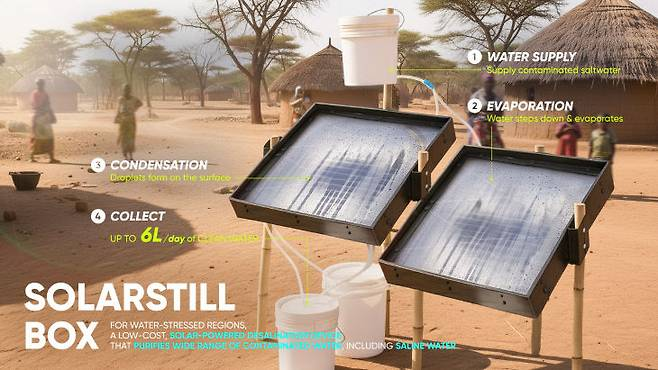
The result was the SolarStill Box
Contaminated or saline water flows across stepped trays inside the device, increasing the surface area exposed to sunlight. Water evaporates, condenses on a transparent cover and is collected separately, leaving salt and other contaminants behind
Its parts can be transported flat and assembled in about 20 minutes. The official prototype is designed to produce up to 6 liters of clean water a day for just $20
The project recently won the Best of the Best award in the social impact category at the 2026 Red Dot Award: Design Concept
Designing so the designer can leave
However, Bae said delivering the product would still leave the project unfinished
His long-term plan is for residents themselves to manufacture, distribute, repair and potentially sell the devices. KAIST says it is working with World Vision to develop a distribution system toward that goal
Bae said the idea grew out of an earlier ceramic water-filter project. Instead of handing residents filters, his team taught local young people how to make them from locally
When the researchers returned a year later, filters had spread throughout the community. Villagers, Bae recalled, did not say KAIST had made them. They named neighbors who had learned to make the devices
“That’s the important point,” he said
Aid that continually reminds the recipients of the giver, Bae argued, risks creating dependency while undermining dignity. His aim is to plant what he calls a “seed” and leave
“We help them so they can become independent,” he said
