

Report claims teachers unions are expanding DEI efforts into artificial intelligence
Fri, July 24, 2026 at 2:04 PM
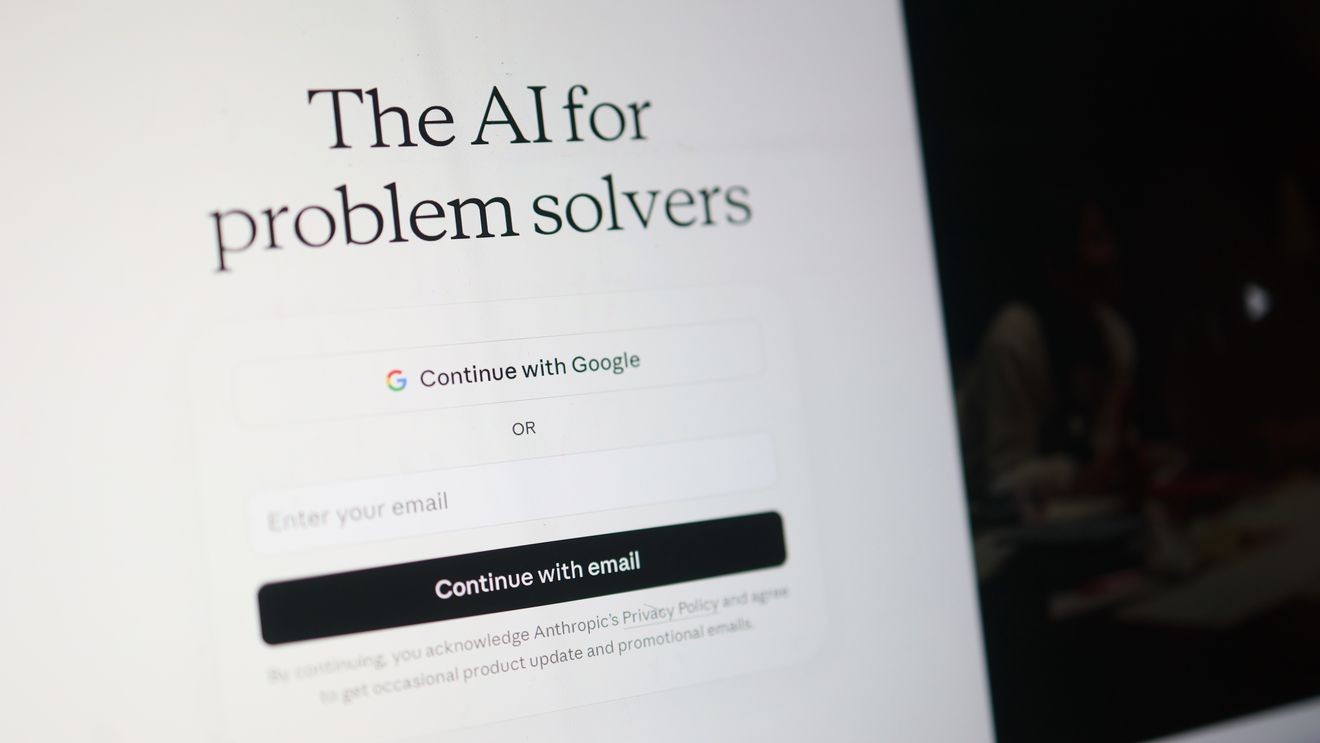
NEW YORK, NEW YORK – FEBRUARY 16: In this illustration, the Claude AI website is seen on a laptop on February 16, 2026 in New York City. (Photo illustration by Michael M. Santiago/Getty Images)
A new report from the education advocacy group Defending Education argues that the nation’s two largest teachers’ unions are increasingly focusing on artificial intelligence as a way to advance diversity, equity and inclusion (DEI) initiatives in schools, raising new questions about how AI could shape classroom instruction
Speaking with The National News Desk, Erika Sanzi, senior director of communications for Defending Education, said the organization’s investigation reviewed publicly available documents and materials from the National Education Association (NEA) and the American Federation of Teachers (AFT). According to the report, the unions are incorporating AI into broader discussions about bias, equity and educational policy
“If you think about it, their assumption is that there’s algorithmic bias,” Sanzi said. “The assumption they’re making is that the information would automatically be prejudiced or biased in a direction that they don’t agree with.”
Sanzi argued the report raises concerns about who determines what constitutes bias in AI-generated educational content
“Let’s say, for example, a person wanted to understand something about biological sex and males and females,” she said. “Their fear might be that the AI would spit out that sex is binary. They don’t want it to spit that out because they want people to think that it exists on a spectrum and that it’s not binary. They would prefer their worldview and ideology to be what drives the information coming out of AI.”
She acknowledged that artificial intelligence systems can often produce different responses depending on how questions are asked, saying that illustrates why transparency is important
“If you just put in something like, ‘I need an explainer about teachers unions,’ often something will come out that’s extremely positive,” Sanzi said. “Then if you tweak your prompt a little bit, you can now get something that talks about how terrible they are. If you don’t know anything and you’re only getting one worldview coming back at you, that is a concern.”
Sanzi said Defending Education’s report is based on documents published by the unions themselves
“Our report is based on the publicly available documents and on the websites of these organizations,” she said. “We know that this is a real thing.”
The report also examines recent actions taken at the National Education Association’s annual convention, where delegates approved a series of policy proposals and elected new leadership. Sanzi argued those actions reflect what she described as an increasingly political direction for the unions
“I just want everybody to understand that when they think of teachers unions, that is a totally different animal than when they think of teachers,” Sanzi said. “The rank-and-file teachers often have no idea what the leadership of these unions is doing.”
She said union leadership has become significantly more politically active than when she was a member decades ago
“Back when I was in a teachers union in the ’90s and early 2000s, they were a little political, but they were nothing like this,” she said. “They have become radical.”
Sanzi pointed to convention agenda items involving Israel, climate policy and abortion as examples of what she views as the unions’ expanding political focus
“There are new business items at these conferences that are related to Israel, climate change, abortion,” she said. “This is a political organization.”
She also claimed many classroom teachers do not necessarily share the views or priorities of union leadership
“Many rank-and-file teachers are extremely frustrated, even disgusted by their unions,” Sanzi said. “Others aren’t even really aware of how far things have gone.”
When asked what parents can do if they are concerned about the direction of teachers’ unions, Sanzi encouraged them to stay informed and engage in conversations with educators
“I do think awareness is the number one thing,” she said. “Just understand that when you hear about the AFT and the NEA and the teachers unions, you need to realize these are now hyper-political, hyper-ideological organizations.”
She added that while parents have limited influence over the internal decisions of private labor organizations, they can ask questions and encourage discussions within their local communities
“You can certainly ask questions,” Sanzi said. “Maybe when you’re with your teacher friends, you can start asking, ‘Hey, what’s going on with that conference agenda?’ If they don’t know, maybe try to fill them in.”
The National Education Association and the American Federation of Teachers have said their work on artificial intelligence is intended to help educators use emerging technology responsibly, promote equitable access, and ensure AI tools are implemented ethically in classrooms. Defending Education disputes that approach, arguing it risks embedding ideological viewpoints into AI-powered educational re
