

Food Safety Concerns in the Spotlight Amid Recall Fatigue
02:32
On the heels of a nationwide surge in cyclosporiasis, health officials are investigating an outbreak of salmonella linked to jalapeños, which has sickened nearly 350 Americans so far
Infections have been reported in 27 states, according to the U.S. Centers for Disease Control and Prevention. At least 36 people have been hospitalized with the foodborne illness
In an Aug. 5 food safety alert, the CDC identified thexico, and distributed by Coast Citrus Distributors to wholesalers and restaurants nationwide
After Coast Citrus Distributors initiated a recall of its jalapeño peppers, Taylor Farms followed suit, recalling its prepared foods made with the recalled jalapeños, including salsa and guacamole, per theFood and Drug Administration
The affected products were distributed to Whole Foods, Trader Joe’s and Target, among other retailers. Some tainted jalapeños were served at Chipotle and Qdoba and have since been removed from stores
Salmonella is a type of bacteria found in the intestines of humans and animals that can cause food poisoning known as salmonellosis. People become infected by ingesting contaminating food or water
Infection with salmonella causes severe and sometimes bloody diarrhea, vomiting, fever and stomach cramps, per the CDC. In rare cases, salmonella can enter the bloodstream and cause life-threatening complications
Most people recover on their own, but some groups are at higher risk of severe illness. These include adults over 65, young children and people with weak immune systems
Salmonella is a leading cause of food poisoning in the U.S., and infections are more common in the summer because the bacteria thrive in warm conditions, per the CDC
However, the recent outbreak has stoked fears about the safety of U.S. produce, especially after a summer of dodging the “diarrhea parasite” cyclospora linked to iceberg lettuce
Here’s what we know about the salmonella outbreak so far and how to stay safe:
Salmonella Outbreak 2026
On Aug. 5, the CDC announced it was investigating a multistate outbreak of salmonella which had sickened 345 people. Their illnesses began on dates ranging from June 19 to July 20, 2026
Of the 191 people interviewed, 93% reported eating at a quick-service Mexican-style restaurant before getting sick, the FDA said
Traceback investigations zeroed in on jalapeño peppers imported by Coast Citrus Distributors from one grower in Sinaloa, Mexico, which were served at Qdoba and Chipotle. Both chains have removed the affected jalapeños from stores
In response, Coast Citrus Distributors initiated a recall of impacted lots of jalapeño peppers nationwide
On Aug. 9, Taylor Fresh Foods— the supplier of the lettuce implicated in a massive cyclospora outbreak — announced it was recalling all its food products containing the affected jalapeños
To date, no illnesses have been reported linked to Taylor Farms products containing jalapeños, the FDA said
Whole Foods, one of the affected retailers, has also recalled its dips containing the recalled jalapeños from stores in 12 states, the supermarket announced on Aug. 12
It’s unclear how the jalapeños linked to this outbreak became contaminated. Investigations are ongoing
Salmonella can get into produce from contaminated soil that’s been fertilized with organic waste (like manure) or irrigated with improperly treated wastewater, Ahmed Yousef, Ph.D., a professor in the department of food science and technology at Ohio State University, tells TODAY.com
Vegetables can also become contaminated through contact with infected harvesters, handlers or shippers. It only takes a small amount of peppers to taint an entire large batch, Yousef adds
Map of Multistate Salmonella Outbreak
The outbreak of salmonella linked to jalapeños has sickened people in 27 states, per the CDC
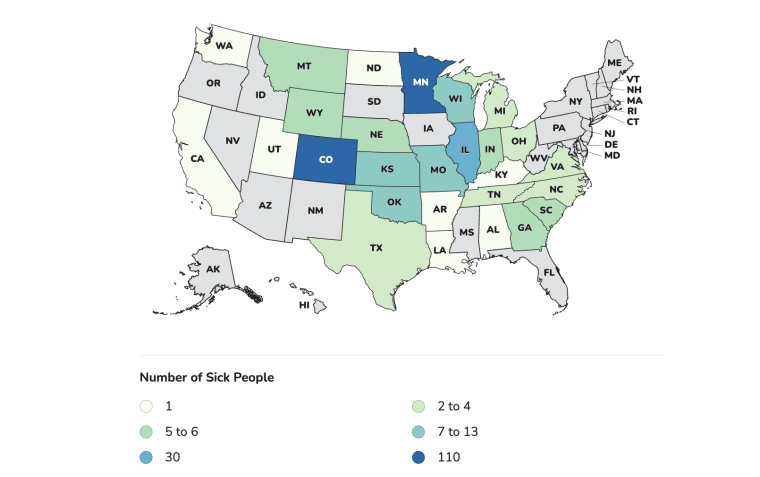
As of Aug. 10, cases have been reported in the following states:
- Colorado
- Georgia
- Illinois
- Indiana
- Kansas
- Michigan
- Minnesota
- Missouri
- Montana
- Nebraska
- North Carolina
- Ohio
- Oklahoma
- South Carolina
- Tennessee
- Texas
- Virginia
- Wisconsin
- Wyoming
Colorado and Minnesota are the hardest hit, with each reporting over 110 cases, followed by Illinois and Kansas
The true number of people sickened is “likely much higher,”the CDC said. That’s because many people who develop salmonella symptoms recover without seeking care and never get tested
Recalls Issued Due to Salmonella Outbreak
Several recalls have been issued by different stores and distributors due to the potentially contaminated jalapeños. The CDC and FDA urge people not to eat or serve any recalled jalapeño peppers or products containing them
Here is a full list as of Aug. 13:
- Coast Citrus Distributors recalled fresh jalapeño peppers imported from Sinaloa, Mexico, supplied to wholesalers, restaurants and food service companies nationwide.
- Taylor Farms recalled all foods containing recalled jalapeños from Coast Citrus Distributors, such as salsa, guacamole, dips, burritos and sandwiches. These have a “Best if Used By” date up to or on Aug. 16, 2026, and were distributed to 26 states and several popular chains, including Albertsons, Target, Kroger, Trader Joe’s, Stop and Shop, and Walmart.
- Whole Foods recalled salsa and guacamole made with the affected jalapeños. These have “Best Before/By” dates from Aug. 7-26, 2026, and were sold at stores in Arkansas, Illinois, Indiana, Iowa, Kentucky, Louisiana, Michigan, Missouri, Ohio, Oklahoma, Texas and Wisconsin.
- The U.S. Department of Agriculture issued a safety alert for poultry and meat products that may contain tainted jalapeños and should be returned or discarded. The full list includes several beef, chicken and pork dishes sold at Kroger, Walmart, Wawa, H-E-B and more.
- Costco notified members of two recalls of 5-pound bags of jalapeños. The first affects products sold between July 23 and Aug. 5 at the Orlando Business Center; the second applies to products sold between July 13 and Aug. 5 at the Dallas and Stafford Business Centers.
- Albertsons recalled 59 store-made items due to jalapeños from Coast Citrus Distributors and four other items, citing Taylor Farms.
- Hannaford recalled several deli and produce items due to the Coast Citrus Distributors recall.
- Kroger recalled dips, sandwiches and more due to risk of contamination with salmonella.
- Stop and Shop has recalled a chipotle chicken wrap and pico de gallo due to recalled jalapeños from Taylor Farms and Coast Citrus Distributors.
- Target recalled bean dip, guacamole and pico de gallo.
- Trader Joe’s recalled its fiesta salad with shrimp because it may have been prepared with the recalled jalapeños.
- Walmart posted about the recalls by Coast Citrus Distributors and Taylor Farms, as well as the FSIS warning, on its website.
- Wawa issued a recall of its fresh salsa and spicy chipotle chicken wrap.
An unrelated salmonella outbreak linked to eggs has also spurred recent recalls. Nearly 19 million shelled eggs distributed by Midwest Poultry Services L.P. were recalled last month in connection with an outbreak that has sickened nearly 100
Is Chipotle a
Earlier this summer, Chipotle Mexican Grill received jalapeños imported by Coast Citrus Distributors from Sinaloa, Mexico
Many of the people sickened with the strain of salmonella identified in this outbreak reported eating at Chipotle or Qdoba, another popular Mexican-style chain
After being notified of the outbreak, Chipotle stopped serving affected jalapeños “out of an abundance of caution,” and switched their pepper supplier on July 20, 2026, the FDA said. Qdoba also removed all jalapeños from restaurants on July 28, 2026
Given these actions, “the FDA does not consider there to be a current ongoing risk from these establishments to consumers in this outbreak,” the agency said
Is It Safe to Eat Jalapeños?
Most of the fresh jalapeños currently available at grocery stores in the U.S. are safe to eat, according to experts
However, consumers should follow CDC recommendations and avoid consuming any recalled products, Yousef emphasizes
Always check where your jalapeños — and any items containing jalapeños — came from, and if the description matches the products listed in the recall, trash it
“I haven’t changed my habits. Summer is a great time to eat fresh fruits and vegetables,” Donald Schaffner, Ph.D., professor of food microbiology in the Department of Food Science at Rutgers University, tells TODAY.com
If you’re concerned, cooking jalapeños can help prevent salmonella, Schaffner adds. Heating the peppers to an internal temperature of 165 degrees Fahrenheit is effective to kill both salmonella and cyclospora
The good news? “We are currently near the end of this disease outbreak. It actually started in June and peaked in mid-July,” says Yousef
Consumers are only being alerted now because salmonella investigations take some time. “After a case is reported, it takes three to four weeks to connect the dots, meaning it takes that much time to determine if this sick person is part of (an) outbreak,” Yousef says
Are Salmonella and Cyclospora Connected?
Cyclosporiasis is caused by a parasite, whereas salmonellosis is an infection with bacteria
Although the two pathogens have both been linked to produce from Mexico, the recent outbreaks of cyclospora and salmonella do not appear to be connected. “I think it’s really a coincidence that they’re happening at the same time,” Schaffner adds
Mexico is one of the top suppliers of fresh produce to the U.S. — so are imported vegetables any less safe? “I don’t think we can make a definitive blanket statement that all Mexican produce is riskier than all domestic produce,” Schaffner told NBC News
The FDA is responsible for ensuring the safety of all produce, domestic or imported
However, only 2% of all imported products are inspected, Barbara Kowalcyk, director of the Institute for Food Safety and Nutrition Security at George Washington University, told TODAY in a segment aired Aug. 5
Recent cuts to budgets and staffing of foodborne illness surveillance programs may be playing a role, experts say, though the current presidential administration has denied these claims
“We have not invested in food safety the way we should, and that … really impacts the entire system,” said Kowalcyk
How to Prevent Salmonella
Food poisoning isn’t always 100% avoidable. However, you can take steps to lower your risk of getting sick with salmonella
Here are some prevention tips from the CDC:
- Wash your hands before and after eating.
- Avoid eating raw or undercooked meat, eggs or seafood.
- Wash all produce with running water before consuming.
- Separate all raw foods from uncooked produce.
- Cook food to at least 165 degrees Fahrenheit before eating.
- Refrigerate prepared food within 2 hours.
If you develop symptoms of salmonella, contact your health care provider
