

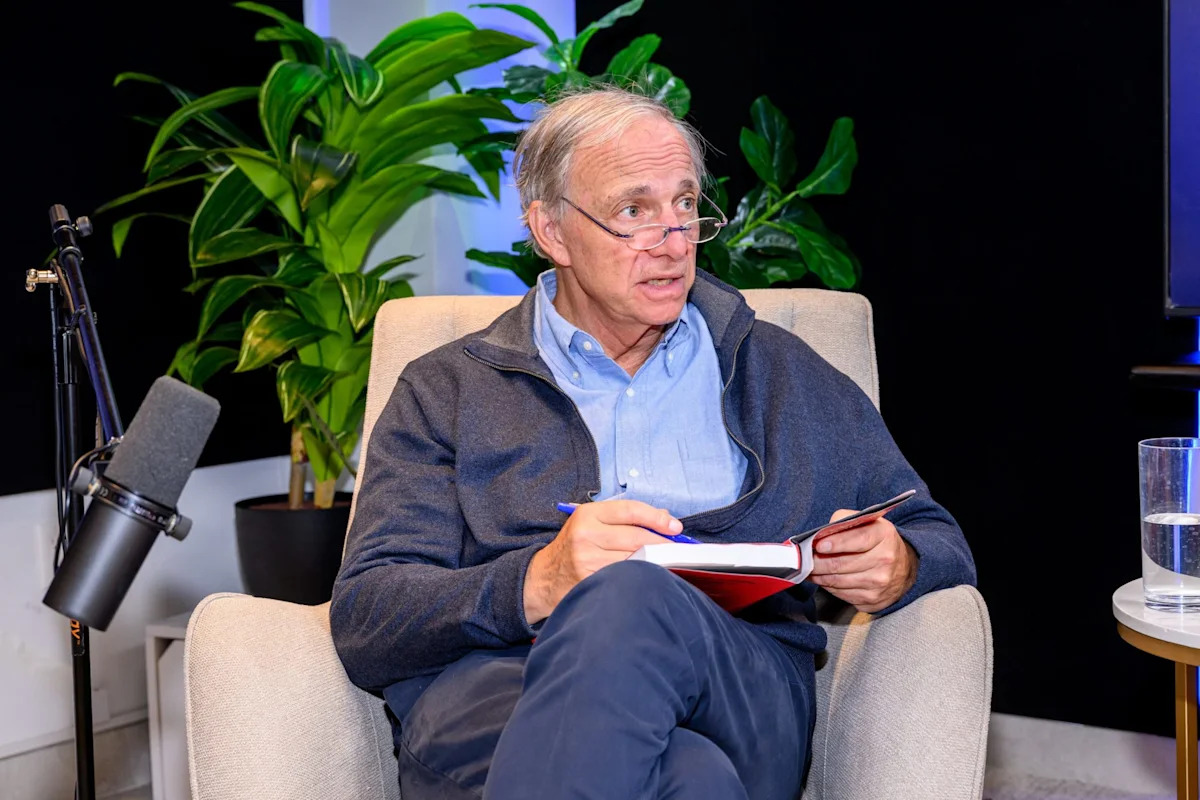
Ray Dalio on the AI bubble nearing 1929, 2000 levels and the lesson people always forget: ‘Wealth is not the same as money’
Nick Lichtenberg
Tue, August 4, 2026 at 12:30 PM GMT+5:30
6 min read
- SPCX
+9.80%
Ray Dalio, the billionaire founder of Bridgewater Associates, delivered one of his starkest warnings yet on the current market environment during a wide-ranging appearance on The Diary of a CEO podcast with host Steven Bartlett, arguing AI enthusiasm has pushed markets into bubble territory reminiscent of 1929 and 2000. His warning arrives just as the market prepares to test his thesis in real time: SpaceX has already gone public in the largest IPO ever, and Anthropic and OpenAI are barreling toward trillion-dollar valuations—precisely the kind of speculative issuance surge that market historians treat as a bubble’s clearest warning sign.
Bartlett opened by referencing a prior guest, Jeremy Grantham, who told the show that markets are staring down “the biggest investment bubble in American history.” Dalio’s response was direct: “He’s right,” he said
That call is consistent with Grantham’s long track record. The GMO cofounder called the Japanese asset bubble before it collapsed in the early 1990s and the dotcom bubble before it burst. Additionally, he wrote inFortunein September 2007 that U.S. housing was in “genuine bubble territory” months before the Great Financial Crisis, at a time when even the Federal Reserve was dismissing bubble talk
When Grantham talked toFortune in April about his memoir, The Making of a Permabear, Grantham laid out the framework underpinning his current AI call: a “bubble within a bubble.” The original super-bubble was already inflating dangerously through 2021, he told Fortune, and it even cracked—with the S&P 500 falling roughly 25% from January through October 2022—before ChatGPT’s arrival reversed the decline. “The day after Chat came out, the Mag Seven lifted the market on its broad shoulders and staggered forward,” he said, arguing that AI didn’t fix the underlying overvaluation but “deferred it while making it larger.”
Grantham’s January 2026 paper with financial historian (and memoir coauthor) Edward Chancellor found the market’s price/book ratio and cyclically adjusted earnings multiples at extremes surpassed only in 1929, 1972, 1999–2000, and 2021—each followed by a devastating correction
The Four Horsemen are assembling
Acadian Asset Management’s Owen Lamont has framed the clearest test of whether markets are truly in bubble territory around four conditions he calls the “Four Horsemen of the Bubble Apocalypse”: extreme overvaluation, widespread “bubble beliefs” (investors who admit prices are too high but expect them to rise anyway), a surge in equity issuance, and a flood of new market participants
