

Getting your Trinity Audio player ready…
One of the biggest threats to trees in summertime is lawn care. A good way to protect them is with mulch
“Spreading a wide area of mulch around the base of a tree will keep lawn mowers and string trimmers from getting too close and damaging the bark,” said Sharon Yiesla, plant knowledge specialist in the Plant Clinic at The Morton Arboretum in Lisle
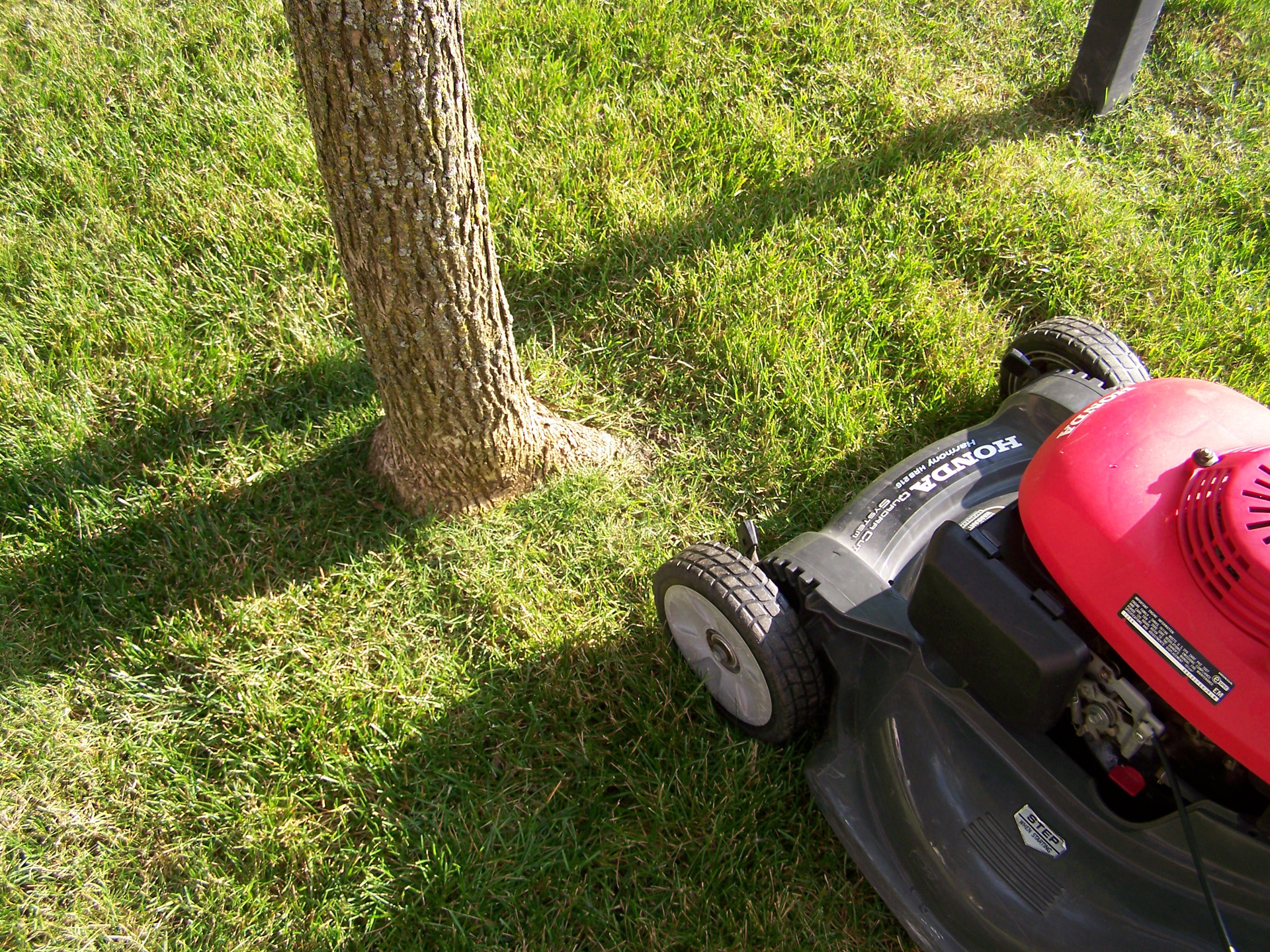
Power tools can easily do serious harm to trees. Where grass grows right up to a tree’s trunk, the lawnmower will inevitably follow, banging and chipping the bark or scalping bark off roots that are exposed above the soil. A string trimmer that is used to edge turf or attack weeds around a tree can slice right through even thick-looking bark
Bark is important. Just inside it is one of the most critical parts of a tree — the tissue where water and nutrients flow between the roots and the leaves. If that tissue is cut so the tree can’t move water up into its crown, leaves and branches will dry out. When the bark is damaged all the way around the trunk, a tree may die
As tough as tree bark looks, it can’t withstand power tools. Young trees, with thin bark, are even more vulnerable
To protect a tree, replace the turf around its base with mulch such as shredded wood or wood chips. Spread it in a wide, even layer 3 to 4 inches deep that extends at least a couple of feet all around the tree. If there are exposed roots around the tree, make sure the mulch covers them
Don’t pile it against the trunk. “That’s another way to damage the bark,” she said. “Heaped-up mulch can trap moisture that can lead to rot.” Instead, make sure to leave a couple of inches of space between the trunk and the mulch
The mulch layer will do more than create a buffer zone. It will insulate the tree’s roots against extremes of heat and cold. In summer’s heat, it will keep moisture from evaporating from the soil so roots don’t dry out. As it slowly decays over time, it will improve the soil with organic matter and nutrients
The mulch layer can help deter weeds, but it won’t eliminate them. “Mulch will shade out weeds’ seeds in the soil so they can’t germinate, but it can’t stop weed seeds that arrive on the wind or the rain,” Yiesla said
Pull any weeds from the mulch around a tree by hand, so no one is tempted to use a string trimmer against them and risk damaging the bark
To learn more about the right way to use mulch to protect trees and other plants, see mortonarb.org/how-to-mulch
Another approach is to surround a tree with a planting of a ground cover that doesn’t need to be mowed or trimmed. A shade-tolerant ground cover will likely look better than grass, because it will be more suited to living in the low light under a tree’s dense canopy of leaves. Lawn grasses, even those labeled for shade, are usually patchy and thin in shade
Healthy, mature trees add beauty to a home landscape and increase property values, but they take years or decades to grow. “It’s worth protecting that investment from damage by lawn care,” Yiesla said
For tree and plant advice, contact the Plant Clinic at The Morton Arboretum (630-719-2424, mortonarb.org/plant-clinic, or plantclinic@mortonarb.org). Beth Botts is a staff writer at the Arboretum
