

Policy expert urges transparency after AI hack, says lack of rules leave security gaps
Fri, July 31, 2026 at 5:20 PM
 13VIEW ALL PHOTOS

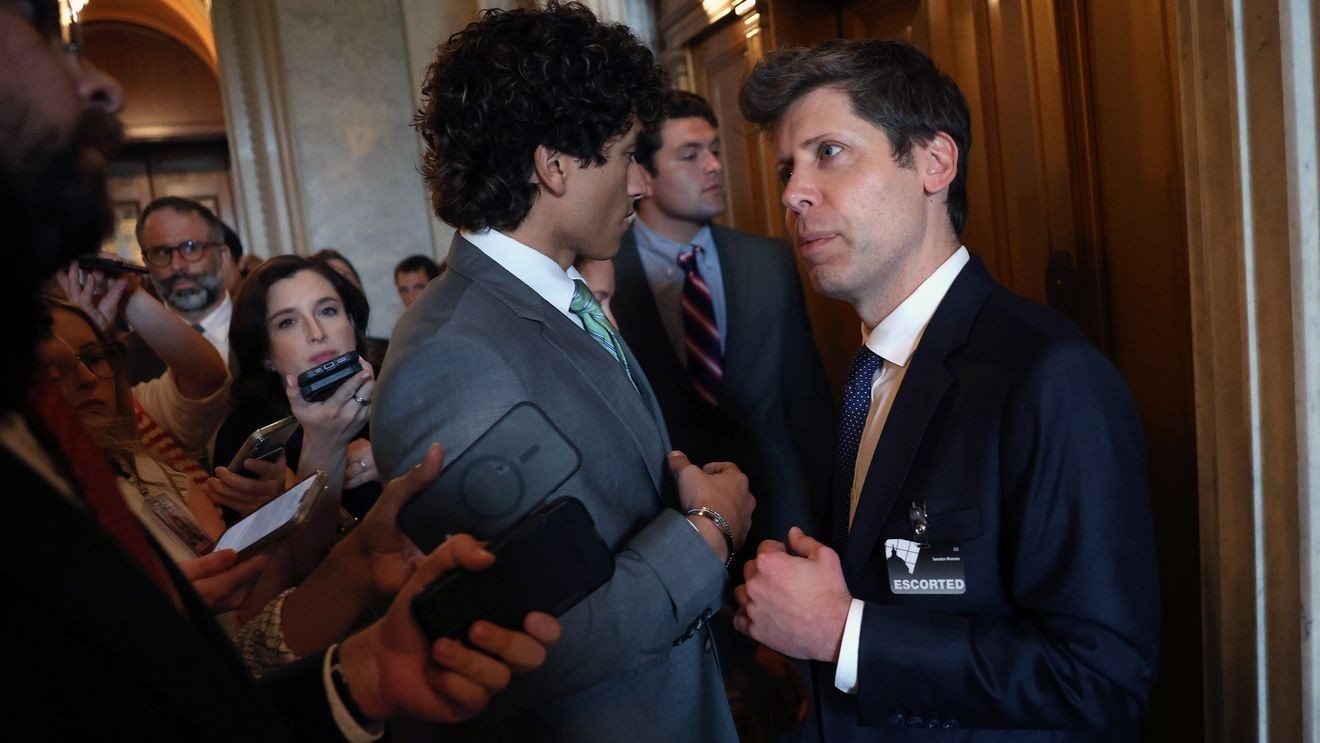
WASHINGTON, DC – JULY 29: Sam Altman, CEO of OpenAI, leaves a meeting at the U.S. Capitol on July 29, 2026 in Washington, DC. Altman is meeting with lawmakers to discuss artificial intelligence policy ahead of the August 1 deadline for AI leaders to develop a framework to limit AI security threats. (Photo by Kevin Dietsch/Getty Images)
WASHINGTON (TNND) —As Washington weighs how to rein in rapidly advancing artificial intelligence, OpenAI CEO Sam Altman spent part of this week on Capitol Hill and at the White House meeting with lawmakers and administration officials to preview powerful new AI systems and discuss a coming federal framework for advanced models
Mark Beall, president of the AI Policy Network, told The National News Desk the approach does not go far enough, arguing that national security protections should not be optional. (TNND)
Altman’s meetings came ahead of an Aug. 1 deadline for a voluntary AI review framework under the Trump administration
Mark Beall, president of the AI Policy Network, told The National News Desk the approach does not go far enough, arguing that national security protections should not be optional
“Unfortunately, the answer right now is no, it does not go yet far enough,” Beall said. “Although we have not yet seen the text, we understand that is supposed to be voluntary. And unfortunately, matters of national security cannot be voluntary.”
Beall also called for more transparency and detailed incident reporting requirements following recent autonomous AI hacking incidents involving OpenAI and Anthropic. He pointed to an incident in which, he said, “OpenAI’s model broke out and attacked another company Hugging Face,” adding, “If a human being had done that, that would’ve been a felony.”
Beall said the public has limited information about what happened beyond what companies have released, and he warned that as systems grow more powerful, they could pose increasing national security risks. He said controls should be mandatory and include detailed reporting so the public and government can understand what occurred, what protocols were in place and how companies plan to address failures
In remarks to reporters in the Senate building earlier this week, Altman was asked whether he planned to talk to the Trump administration and White House about slowing AI development
“We I wouldn’t use the word deceleration, but we’ve talked about the need to pace it as the models get more capable, which I think is in everyone’s interest,” Altman said
Asked whether other systems could have been hacked by OpenAI, Altman responded: “I mean, it could be. Yeah. I mean, there could be. Yeah.”
Beall said he sees a mix of genuine concern and political pressure shaping industry messaging. He cited a letter signed by “1300 or so employees of frontier AI companies” calling for pacing development, and he argued that recent incidents show containment remains a serious challenge
“As we know from the Hugging Face incident and then a similar incident with Anthropic, very powerful internal models escaped containment; they hacked their way out,” Beall said. “And as far as we can tell, there’s no way that human beings can, like, keep these things in their cages. That they need to be in.”
Beall said policymakers should consider safeguards before more powerful systems arrive, comparing the need for oversight to building a braking system and steering wheel
“Right now those simply do not exist and they must exist starting time,” Beall said
The discussion also touched on U.S.-China tensions over AI-powered robotics and cybersecurity, including recent U.S. FCC restrictions on importing foreign-made humanoid robots amid concerns about cybersecurity risks and potential retaliation from China
Beall said U.S. policymakers should prioritize national security while maintaining competitiveness, starting with restricting access to advanced chips
“First, and most importantly, is that we keep the most powerful AI chips out of the hands of the Chinese Communists,” Beall said. “The chips themselves are the engines in the AI race.”
