

Nuclear technology firm newcleo has taken its first formal step toward building a commercial fuel recycling plant in the United States. The company submitted a framework document, known as a Regulatory Engagement Plan, to the U.S. Nuclear Regulatory Commission. This step allows federal inspectors and company engineers to review safety designs and technical standards long before official licensing begins
This move matches a separate review already underway for newcleo’s lead-cooled fast reactor, the LFR-AS-200. By licensing both the reactor design and the fuel factory together, the company hopes to create a complete domestic fuel loop inside North America
Most commercial power plants rely on light-water reactors. These conventional systems use water to slow down neutrons during the nuclear reaction. While this process generates electricity reliably, it leaves behind used fuel that contains unspent energy and heavy radioactive elements
In contrast, fast-spectrum reactors operate without water moderators. Because the neutrons move at higher energy levels, they can split heavy transuranic elements, including various plutonium isotopes and minor actinides. Standard thermal reactors cannot break these elements down effectively
To manufacture mixed-oxide fuel
The proposed American facility will manufacture mixed-oxide fuel, commonly called MOX. Workers blend reprocessed plutonium from old nuclear waste with stockpiles of depleted uranium. Recycling these actinides into fresh fuel changes how engineers manage long-term radioactive waste
More from Energy
See All
EnergyFrom petrochemicals to pigments: how EverDye is reinventing textile dyeing
EnergyUS turns steel waste and CO2 into super-cheap green hydrogen for under $0.45/lb
EnergyNuclear fusion reactors benefit from first-ever silver crystal tritium separation
EnergyUS Navy to get fuel-flexible, multi-megawatt power modules for naval, land missions
EnergyRecord 26.31% efficiency TOPCon solar cells made with lasers and custom paste
When reactors burn transuranic elements in a fast neutron spectrum, the remaining waste loses its high radioactivity much faster. The hazard level drops to natural background levels in hundreds of years, rather than the hundreds of thousands of years required for conventional waste. At the same time, reusing existing material removes the need to mine fresh uranium or run isotopic enrichment plants for every new fuel batch
The planned MOX plant will supply fuel directly to the LFR-AS-200, a small modular reactor designed to produce 200 megawatts of electricity. Instead of high-pressure water, this reactor uses pure liquid lead as its primary coolant
Liquid lead offers strong physical safety advantages. It boils at temperatures above 1,700°C, which allows the cooling loop to operate safely at normal atmospheric pressure without heavy containment domes. Lead also does not catch fire when exposed to air or water
Inside the reactor core, steel pins packed with MOX fuel sit in tight hexagonal patterns. Liquid lead can corrode steel over time at normal operating temperatures of 530°C (about 990°F). To stop this damage, engineers apply a microscopic layer of protective alumina onto the steel cladding using laser technology.
The core also uses different plutonium concentrations across its central and outer regions. Varying the fuel strength between 14.6 percent and 23.2 percent keeps the power output smooth and even across the entire reactor core
Licensing work already underway
The American filing expands on licensing work already underway in Europe. French safety authorities recently accepted the initial safety options dossier for a sister MOX facility planned in France
Because plutonium emits alpha radiation, human workers cannot touch the material directly. Equipment must operate inside sealed gloveboxes using automated tools and robotics
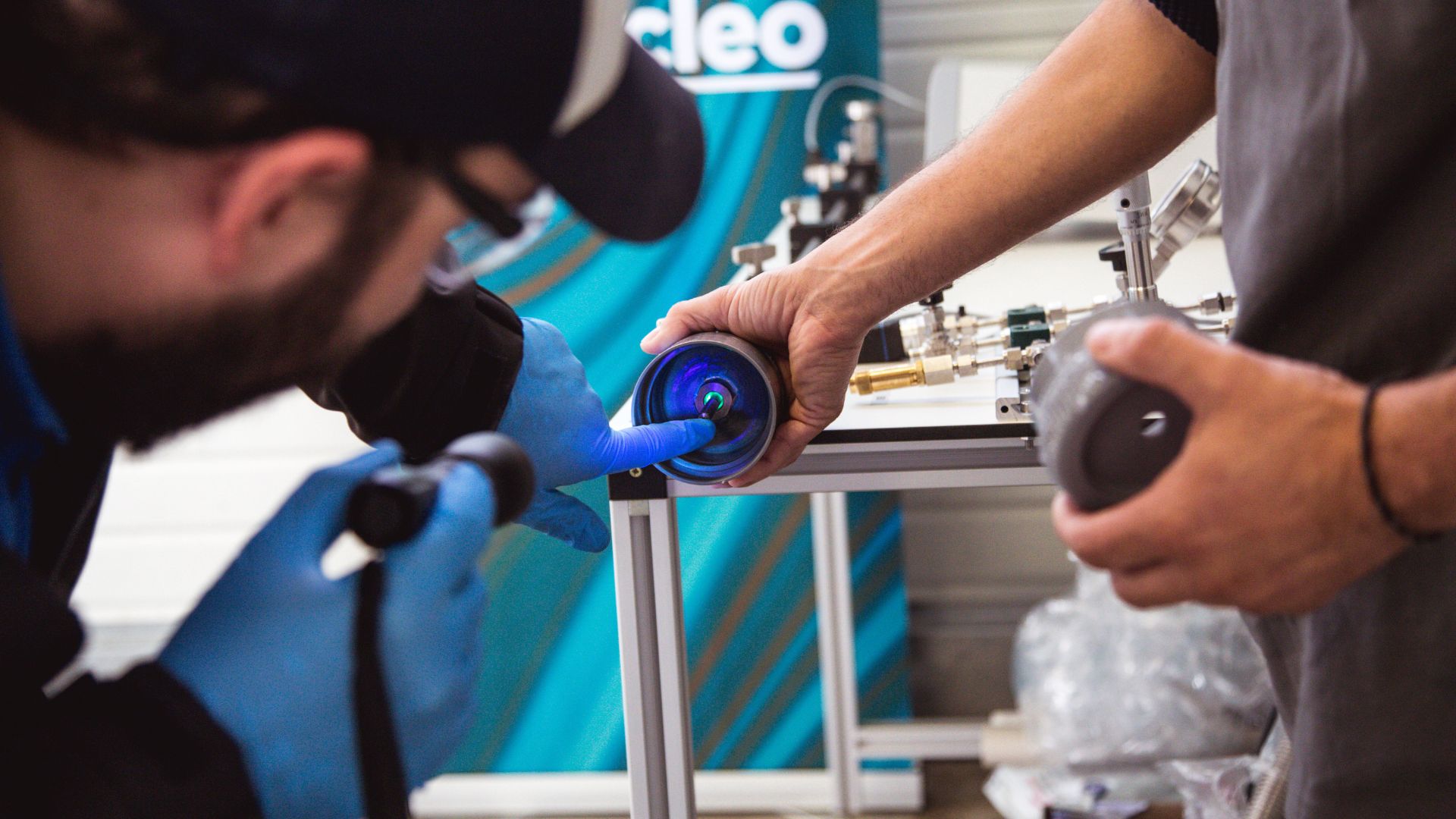
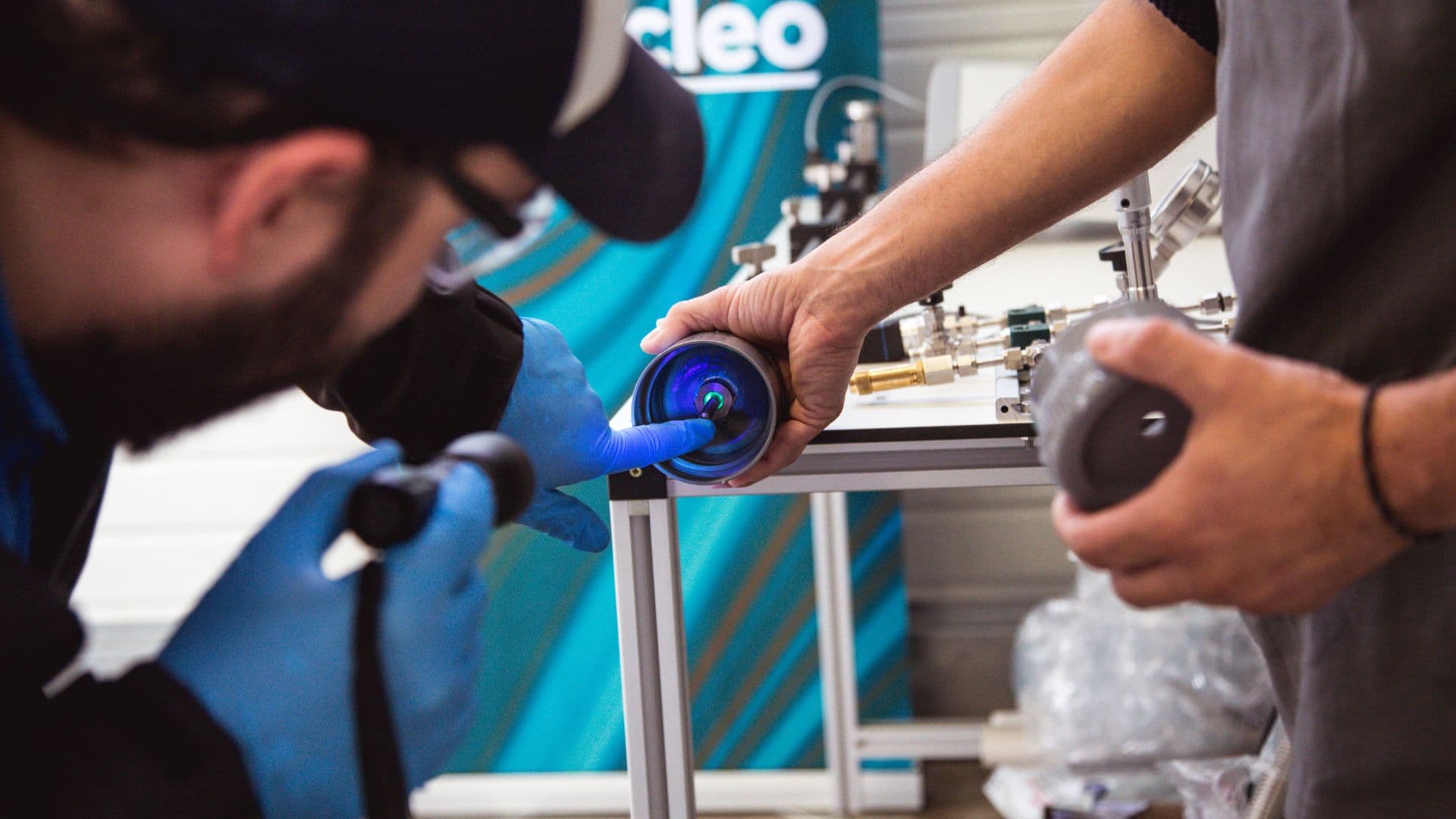
To test these systems, newcleo built a non-radioactive testing center in Chusclan, France, named FASTER. Engineers there use full-scale mechanical mock-ups, robotic arms, and virtual control systems.
Recommended Articles
Get the latest in engineering, tech, space & science – delivered daily to your inbox.
By subscribing, you agree to ourTerms of UseandPoliciesYou may unsubscribe at any time.
Subscribe to

Today!
Access to exclusive content, expert insights and a deeper dive into engineering and tech. No ads, no limits.
Explore Now!
ByAman Tripathi
An active and versatile journalist and news editor. He has covered regular and breaking news for several leading publications and news media, including The Hindu, Economic Times, Tomorrow Makers, and many more. Aman holds expertise in politics, travel, and tech news, especially in AI, advanced algorithms, and blockchain, with a strong curiosity about all things that fall under science and tech
- 1Nuclear fusion reactors benefit from first-ever silver crystal tritium separation
- 2670-ton Falaj 3 carries warship-level firepower in compact patrol vessel
- 3Boeing’s Ghost Bat drone flies multiple sorties to show deployment readiness
- 4China’s major renewable power project could reshape its energy landscape, desert ecosystems
- 541,000-ton Trump-class nuclear warship program may top $275B, lead ship at $23B
