

Written by Juergen T Steinmetz
Follow continuously updated coverage of the Middle East conflict through the lens of travel, tourism, a airspace changes, airline operations, destination safety, humanitarian developments, tourism policy, and the broader impact on travelers, destinations, and the global tourism industry
Iran Threatens Hotels Sheltering U.S. Troops, Raising New Risks for Gulf Tourism
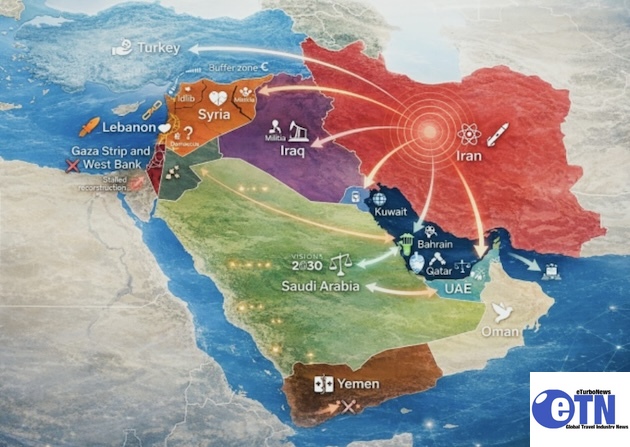
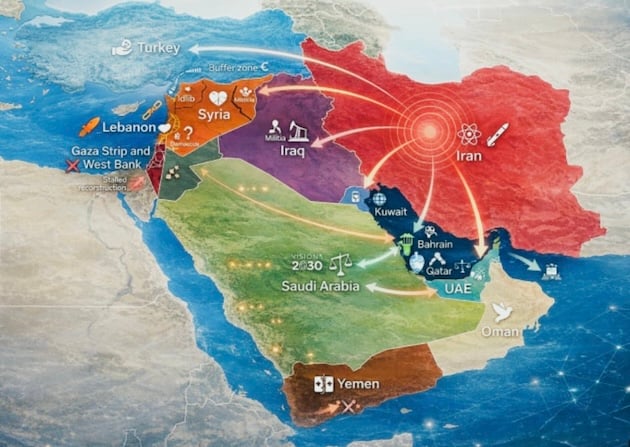
25 July 2026- Iran has warned hotels and resorts across Gulf countries against accommodating U.S. military personnel, claiming American service members fled military bases after Iranian strikes damaged or destroyed several U.S. installations in the region. Tehran said hotels hosting U.S. troops could become legitimate military targets, a claim that has not been independently verified. The warning raises new concerns for the hospitality industry, tourism operators, and travelers in Bahrain, Kuwait, the UAE, and other Gulf destinations, where many international hotels also host business travelers and tourists.
UAE Airports Stay Open as Gulf Travel Advisories Rise and Hotel Security Warning Emerges
Airspace Risks Grow as Middle East Conflict Continues to Disrupt Global Travel
25 July 2026: Travel disruption remains one of the clearest impacts of the escalating Middle East conflict. Aviation authorities continue expanding no-fly recommendations across the region, governments are warning travelers about sudden flight cancellations and airspace closures, and maritime security concerns persist around the Strait of Hormuz. Meanwhile, deteriorating humanitarian conditions inside Iran—including water shortages and infrastructure damage—highlight the growing intersection of conflict, human rights, and the future of regional tourism
Strait of Hormuz maritime security remains a major tourism and cruise concern
25 July 2026: Iran’s Revolutionary Guards said they stopped four ships attempting to transit the Strait of Hormuz in the past 24 hours. While details remain limited, the incident highlights continuing risks for commercial shipping, cruise operators, and regional tourism logistics
Cruise itineraries, cargo supply chains, and maritime tourism remain vulnerable or impossible
U.S. Worldwide travel warnings remain in effect
24 July 2026: Governments continue urging travelers to exercise caution
- possible flight cancellations
- sudden airspace closures
- disrupted airport operations
- rapidly changing security conditions
Travelers are advised to check airline schedules before departing for airports
Airspace disruptions continue
24 July 2026; The European Union A has expanded its recommendations by advising airlines not to operate within Jordanian airspace through 31 August because of the heightened military risk. Similar advisories remain in place for Iran, Iraq, Lebanon, Bahrain, Kuwait, Qatar, the UAE, and parts of the Gulf region
Travel impact
- longer flight routes
- higher operating costs
- possible delays
- last-minute schedule changes
Humanitarian situation in Iran worsens
24. July 2026 – Reports describe worsening conditions for civilians, including:
- water shortages
- power outages
- internet disruptions
- continued human rights concerns
- ongoing airstrikes affecting civilian life
These developments have implications for tourism, cultural exchange, and future destination recovery
Tourism throughout the Gulf remains under pressure
25 July 2026- Although major Gulf carriers continue operating many services, governments continue warning that the situation may change rapidly
Travel advisories stress that:
- flights can be canceled with little notice
- airports may experience disruption
- travelers should monitor airline updates closely
Human Rights Crisis Leaves East Jerusalem Without Tourists
24. July 2026- According to the United Nations Office for the Coordination of Humanitarian Affairs:
Tourism has effectively come to a standstill in East Jerusalem as the humanitarian situation across the Occupied Palestinian Territory continues to deteriorate. According to the UN Office for the Coordination of Humanitarian Affairs, violence, demolitions, settlement expansion, and access restrictions in the West Bank—including East Jerusalem—are driving displacement, casualties, and damage to homes, schools, water systems, and livelihoods. Fatalities linked to settler attacks in 2026 have already exceeded the total for all of 2025, while nearly 90 Palestinians were displaced during the latest reporting period. In Gaza, worsening health conditions, repeated displacement, and devastated infrastructure continue to deepen the humanitarian crisis, with thousands of miscarriages reported and millions of tonnes of debris still blocking recovery efforts.
